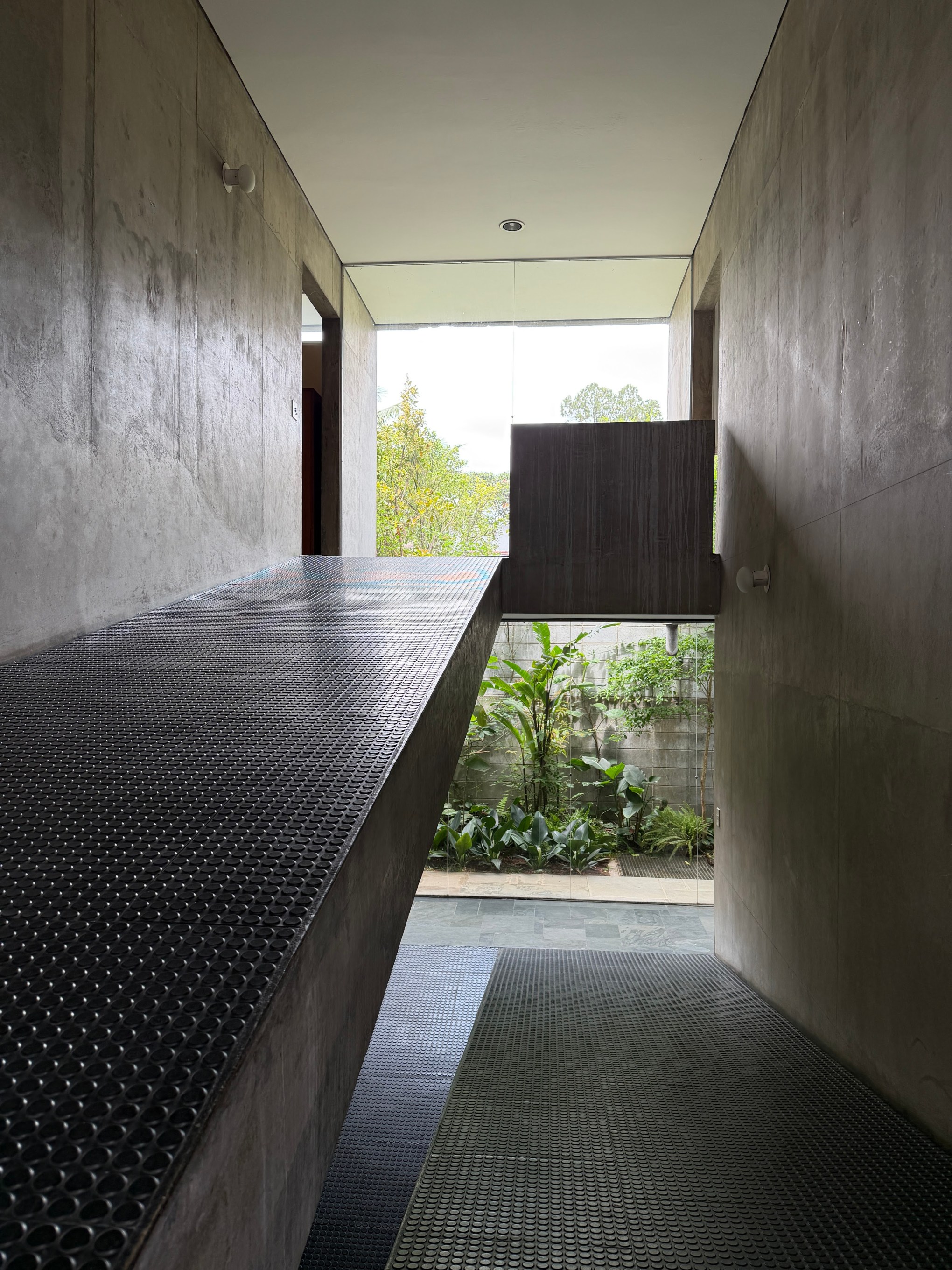
Like drinking from the firehose while on this extensive Brutalism tour, my journey in using LLMs has been a flood of experiences. I’ve decided that I need to limit my prompts to 2- that’s right just 2, otherwise, the time suck is just insane. I could write a paper on each of these! The first house on our tour, the Casa Domschke was opened for us by family themselves which felt really special as working with Insight Architecture tour really tapped into the truly local gems.
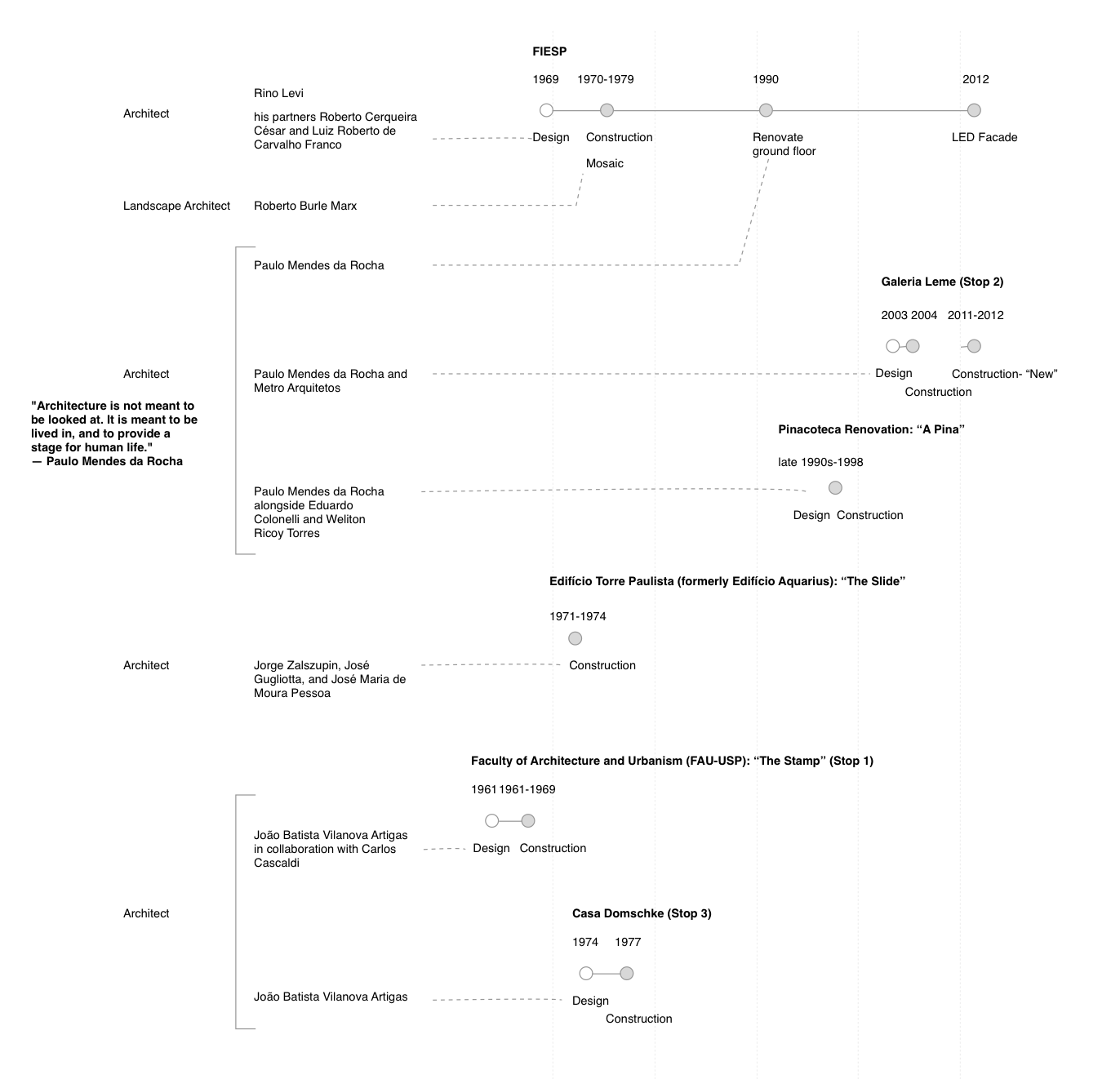
Designs by Artigas om 1974 and finished construction in 1977:
The house was commissioned by Alfred Domschke, an engineer, and his wife Lydia for their family. Alfred had actually been a student of Vilanova Artigas during his undergraduate studies at the Escola Politécnica of the University of São Paulo (USP).
Because Alfred lived just a block away from Artigas at the time, the two met weekly to discuss the project, forging a close friendship between their families.
For decades, Casa Domschke remained a strictly private family residence. However, it made headlines in the art and architecture world when it opened its doors to the public for the very first time in August 2023. It served as the host venue for ABERTO2, a major exhibition that filled the home with site-specific works by over 70 Brazilian and international artists, designers, and architects.
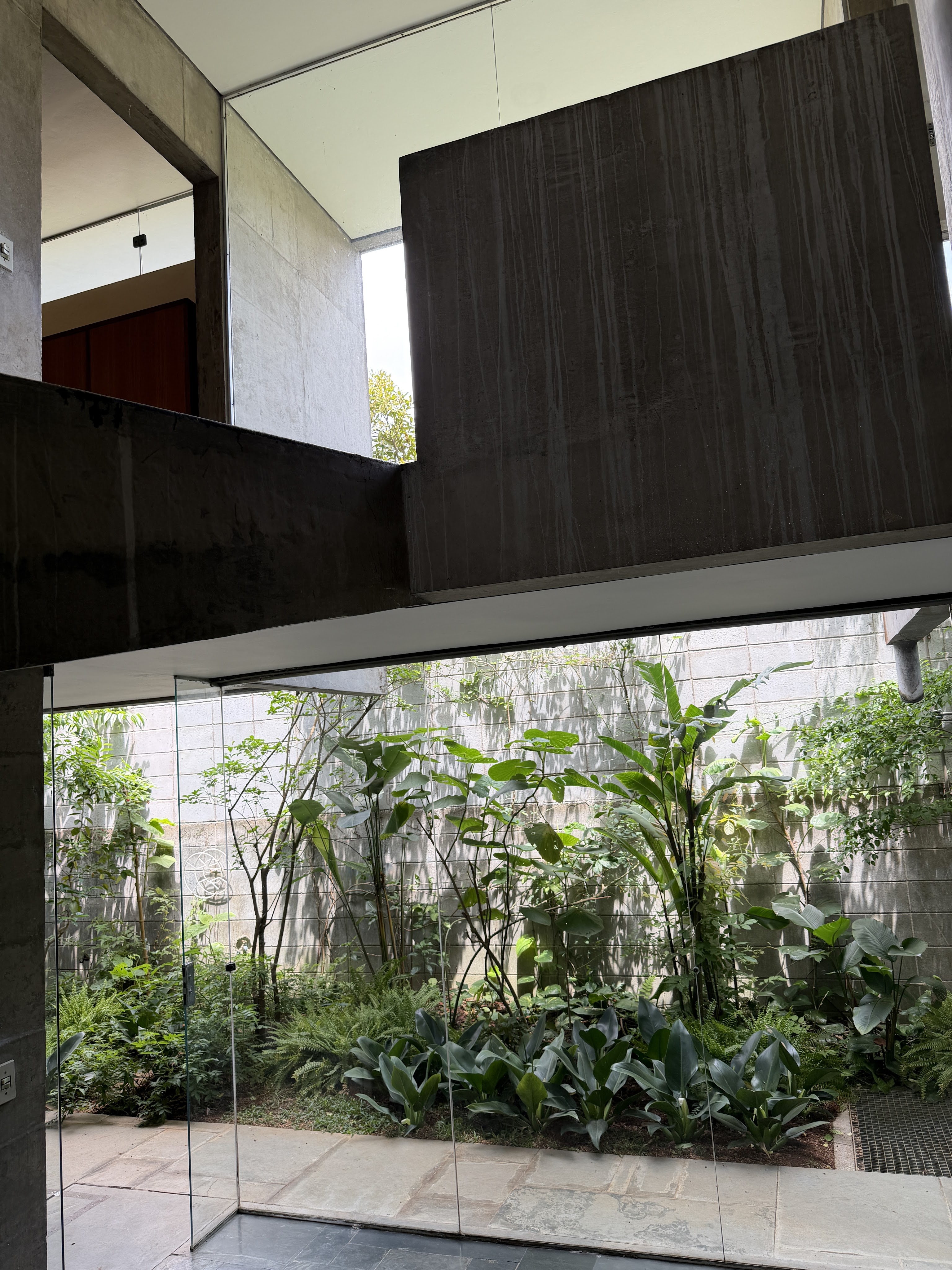
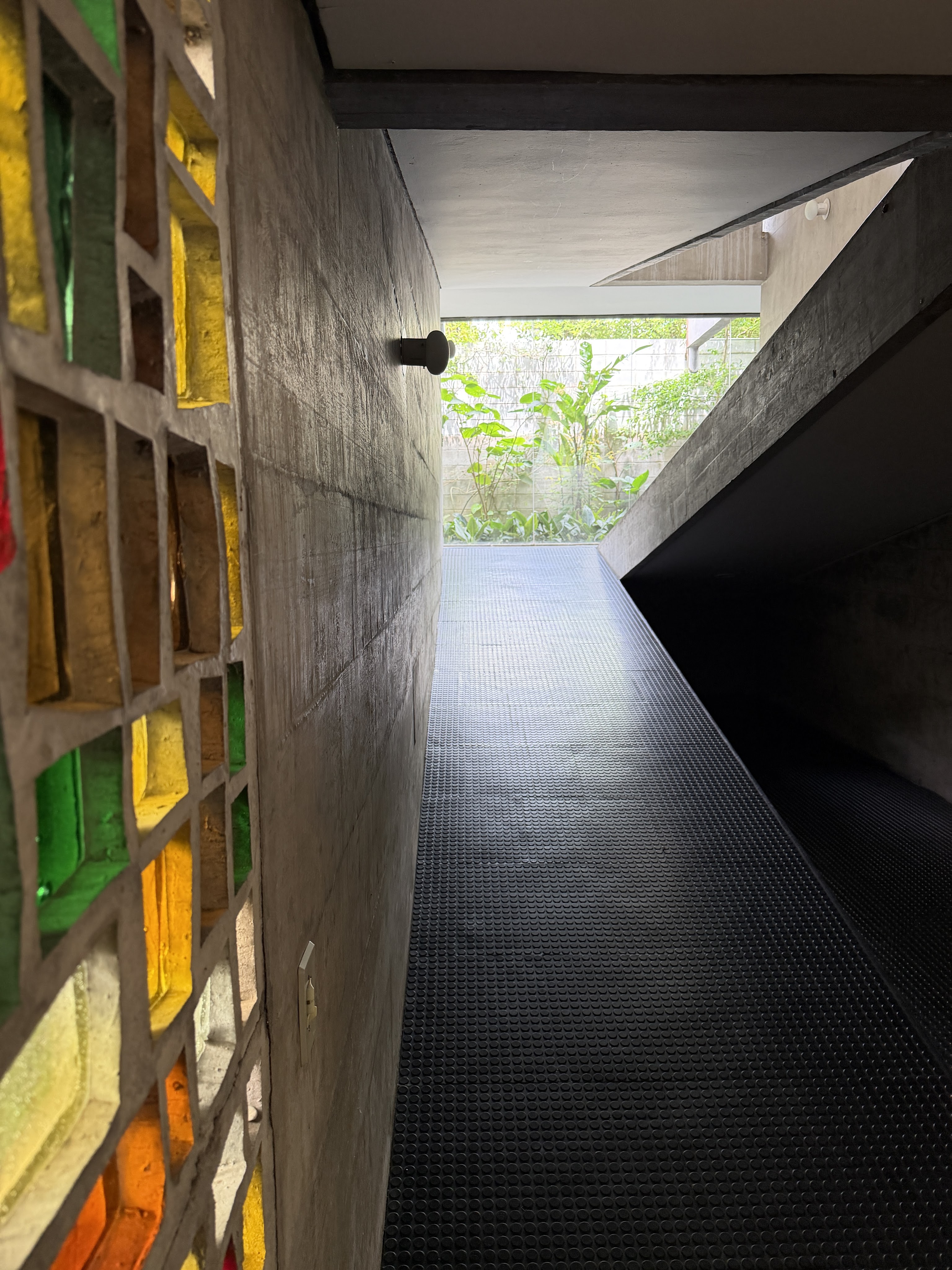
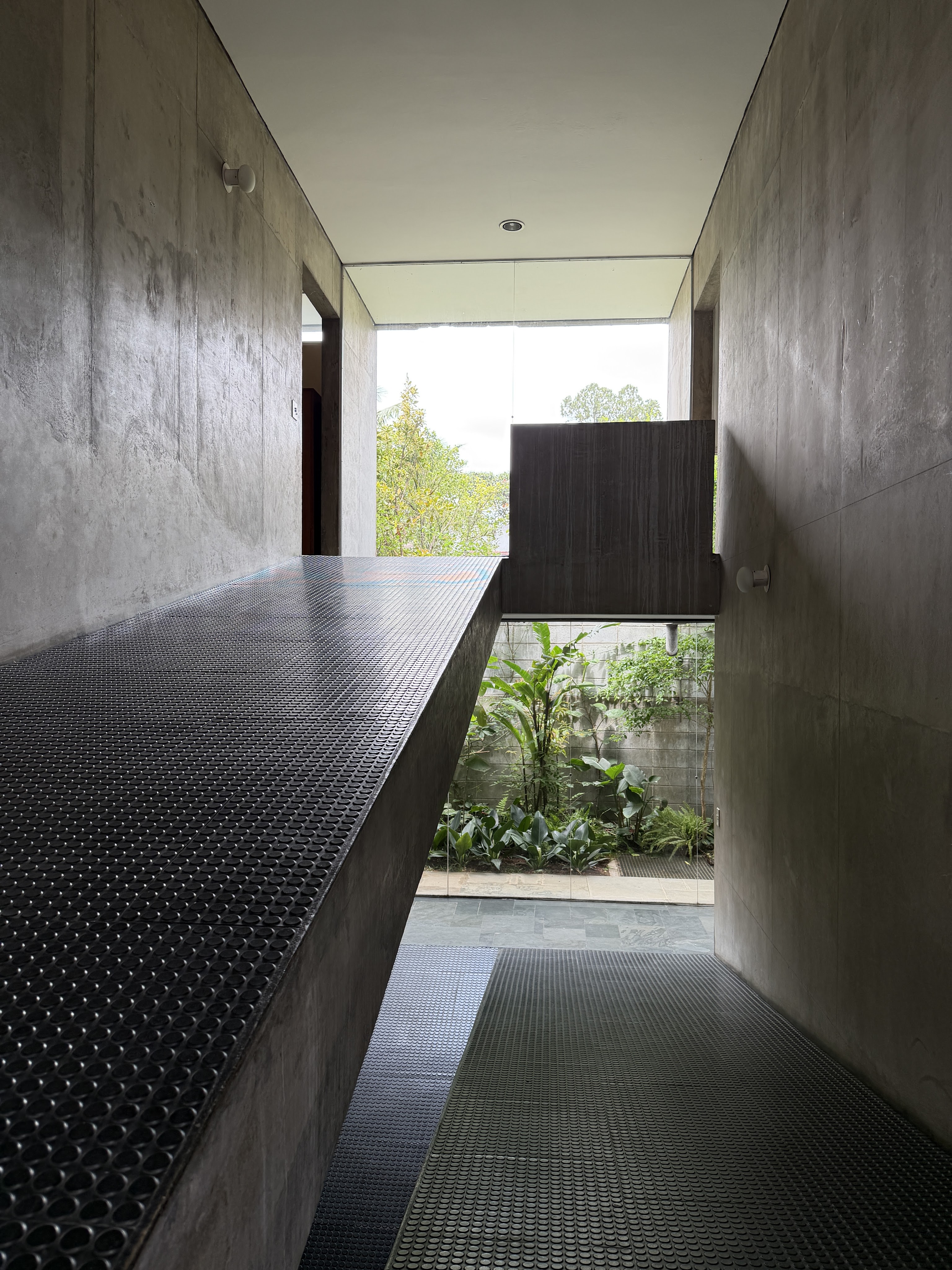
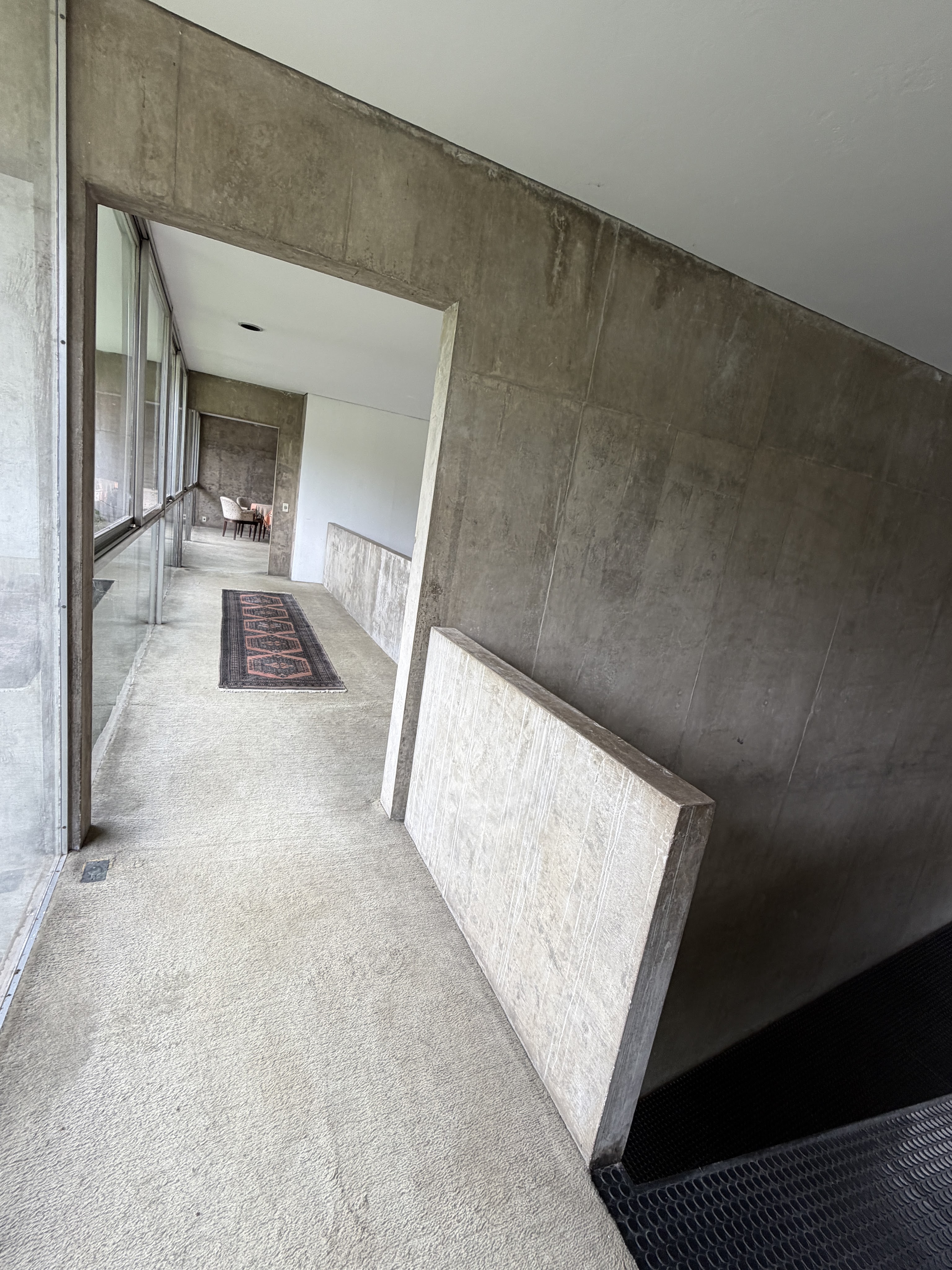
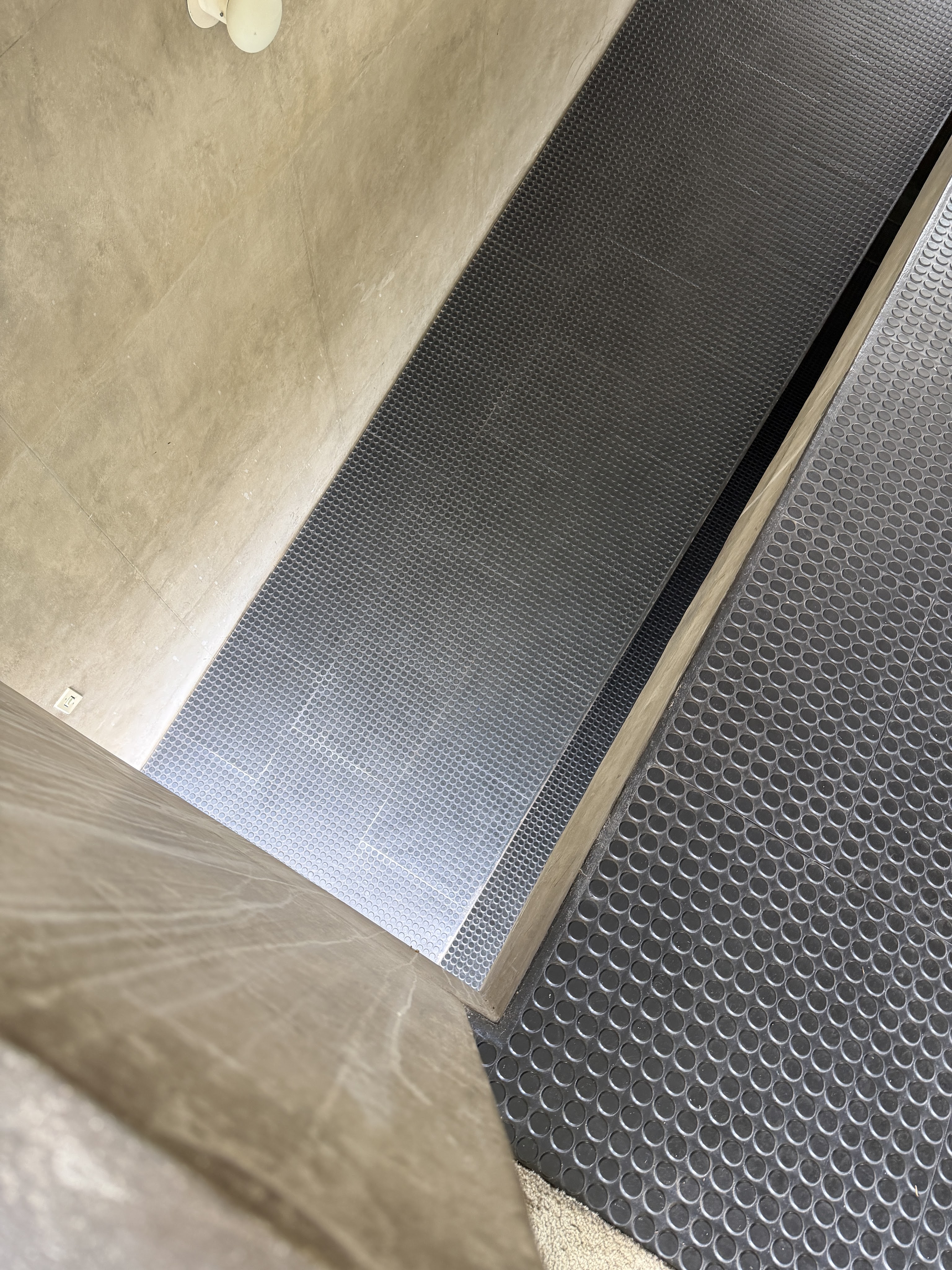
A consistent theme in his work is ramps (see the Faculty of Architecture) – and well, a lack of railings. The continuity of the line across these ramps are stark and truly honest- abiding to the Paulista school principles. This purity was held steadfast despite children being raised in this house. They learned to walk along the wall – it begs the question of how much do we need guardrails versus what do we need to learn to keep ourselves safe?
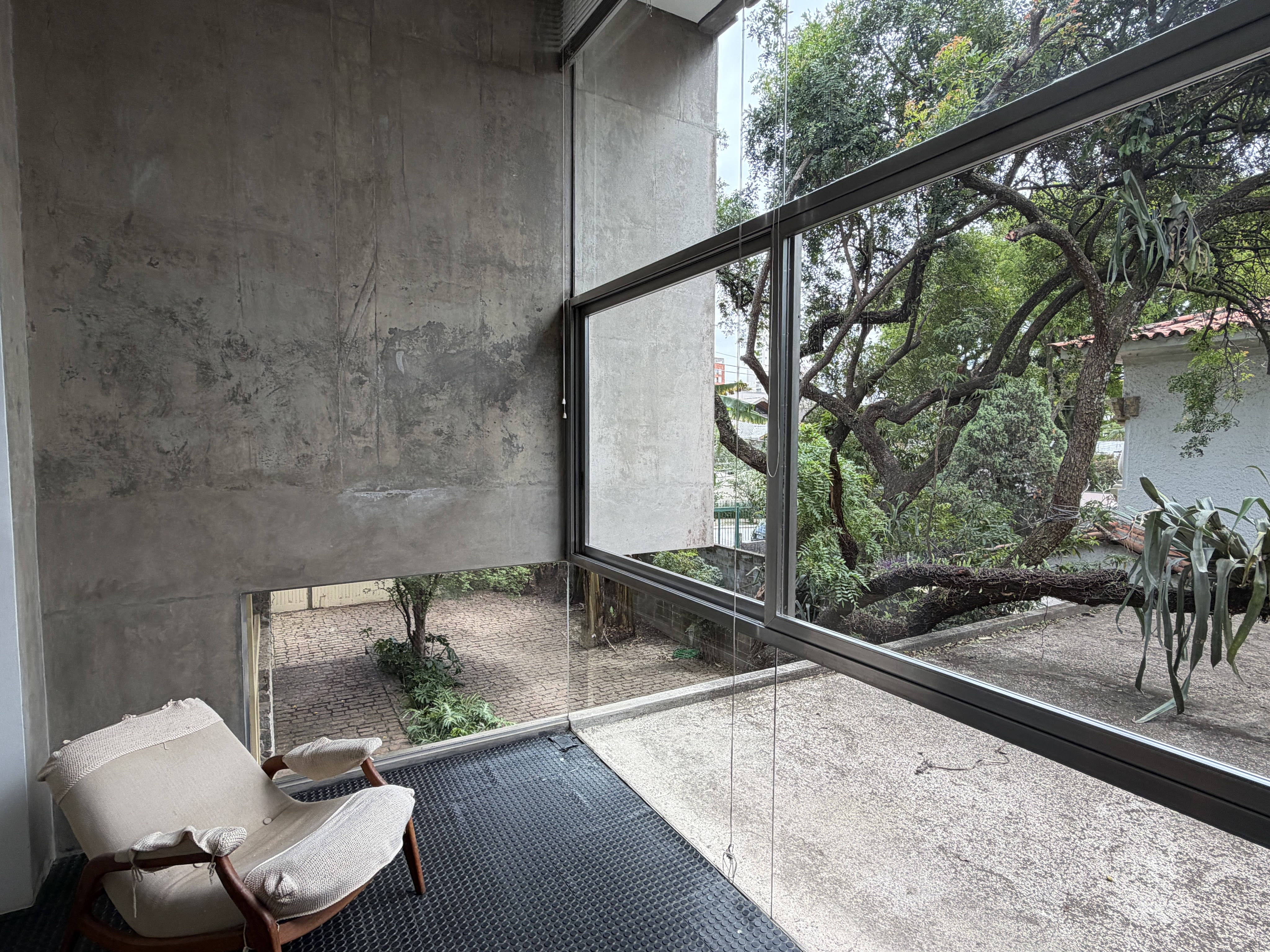
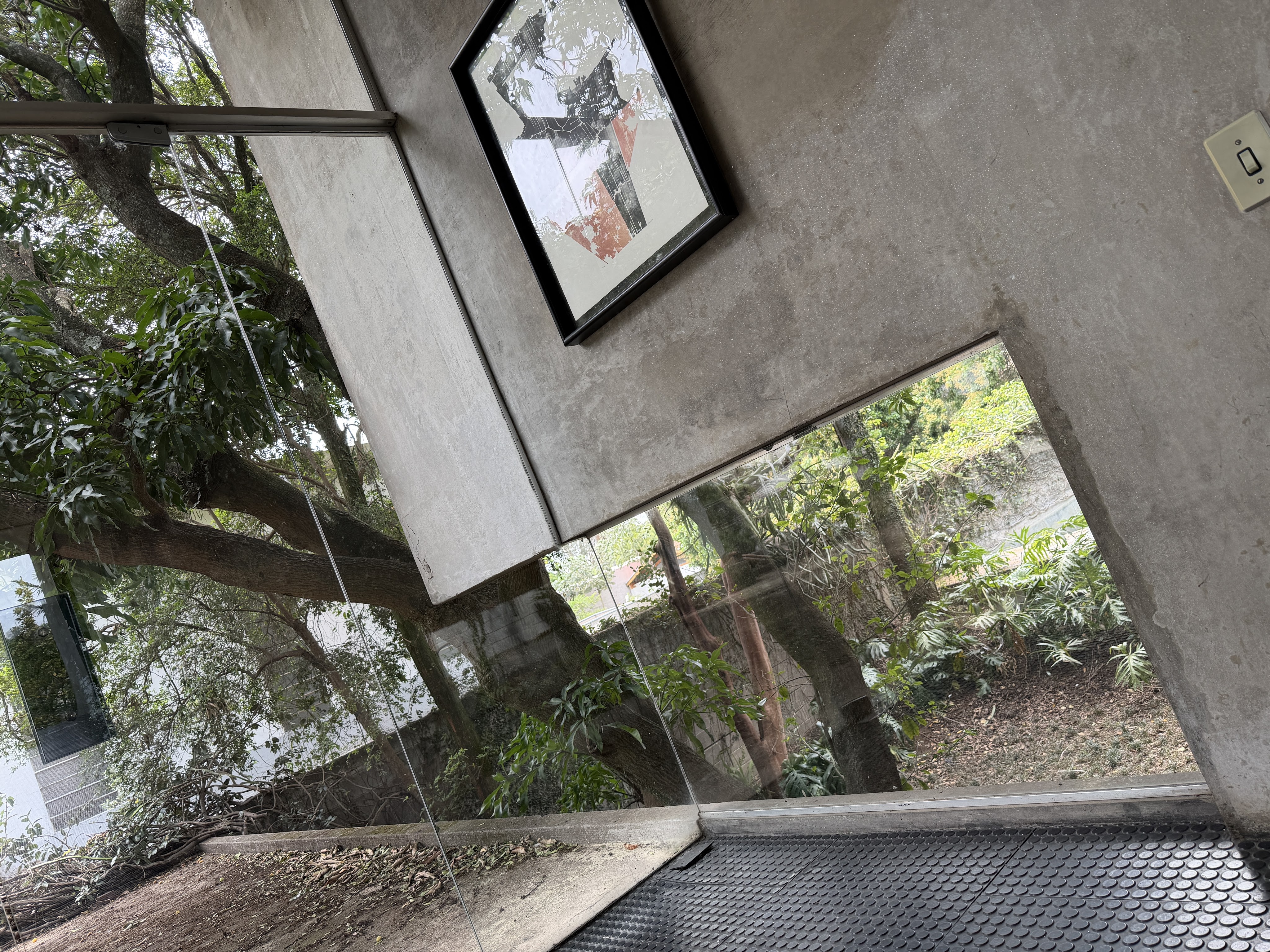
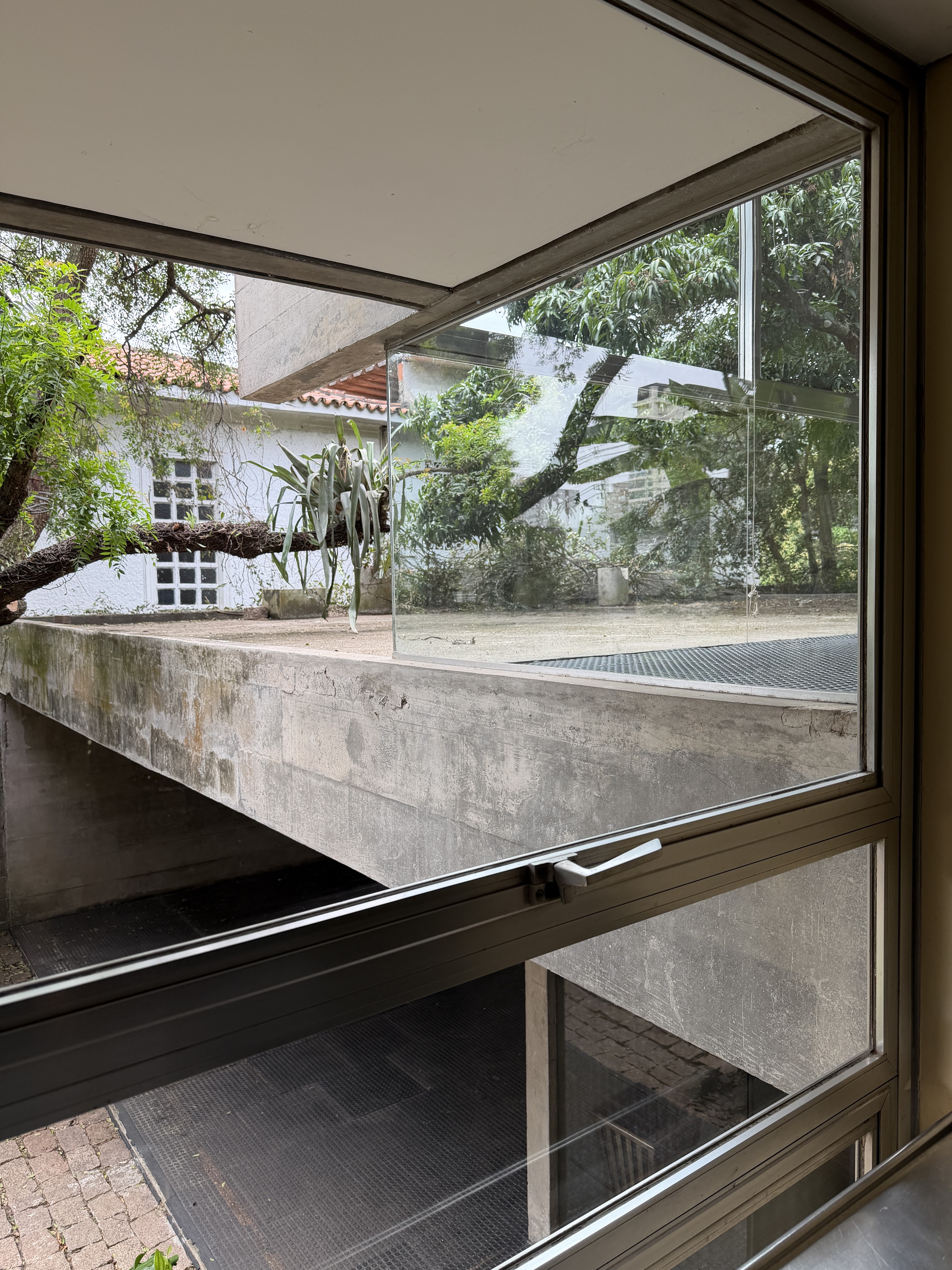
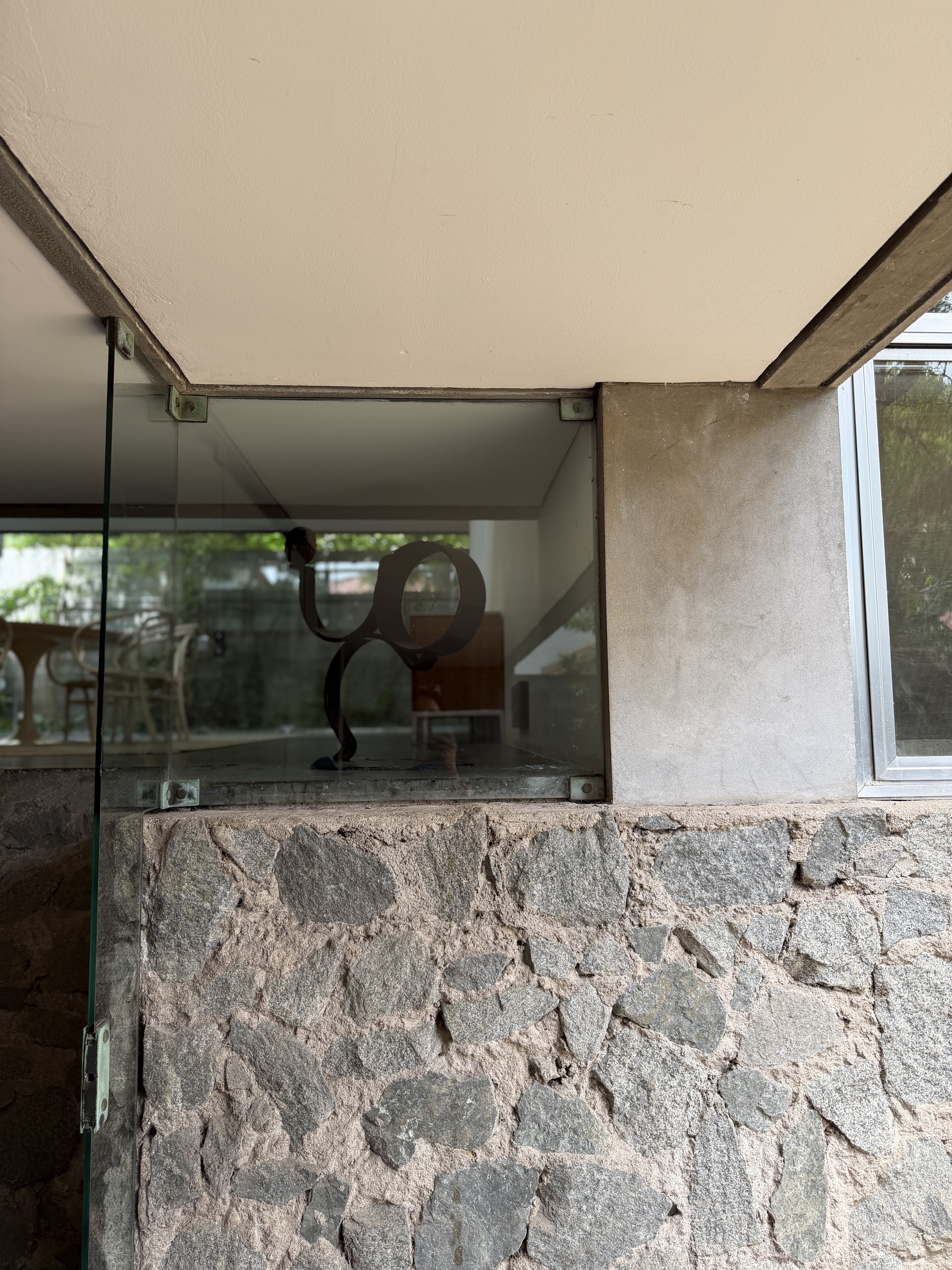
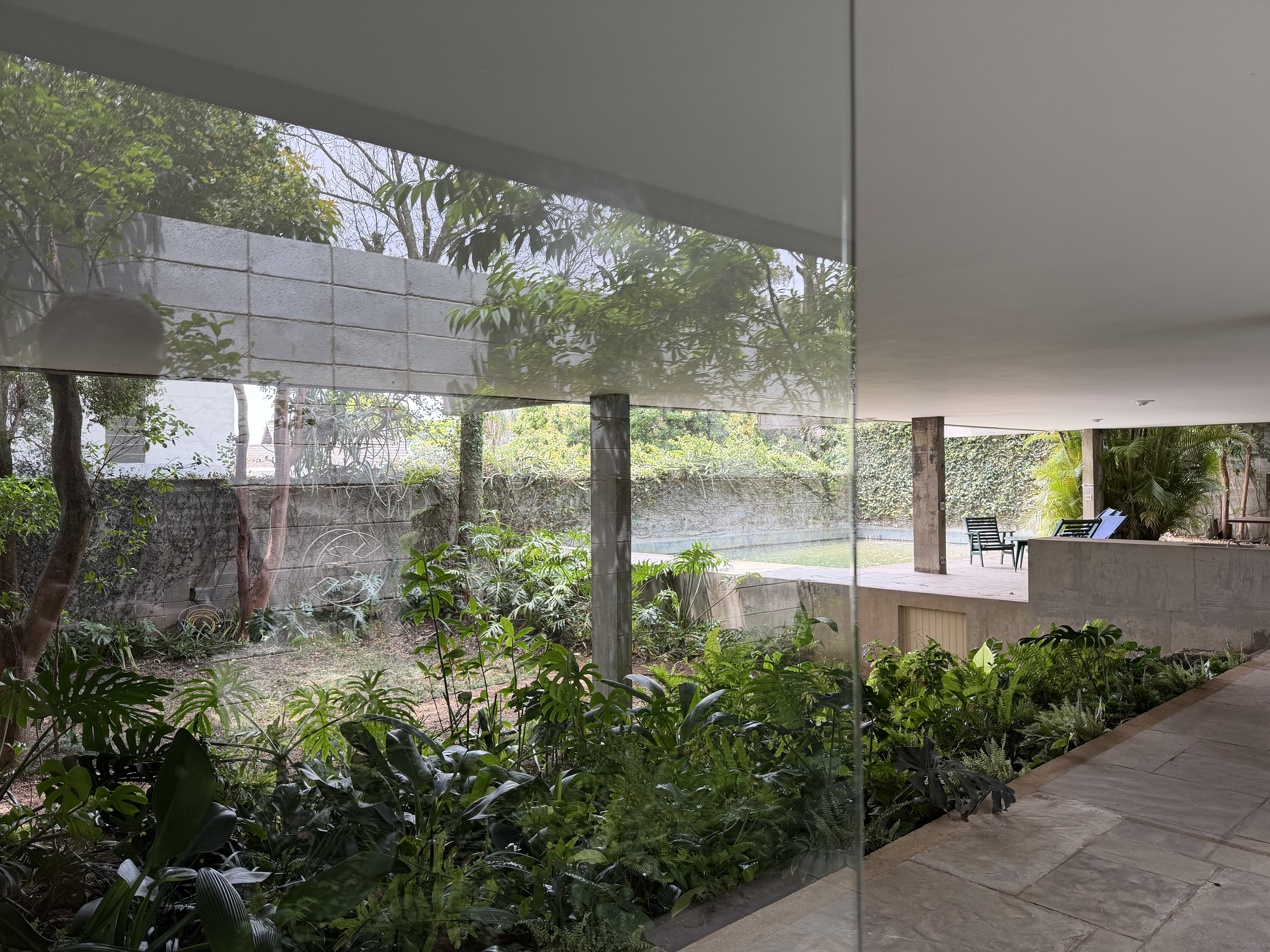
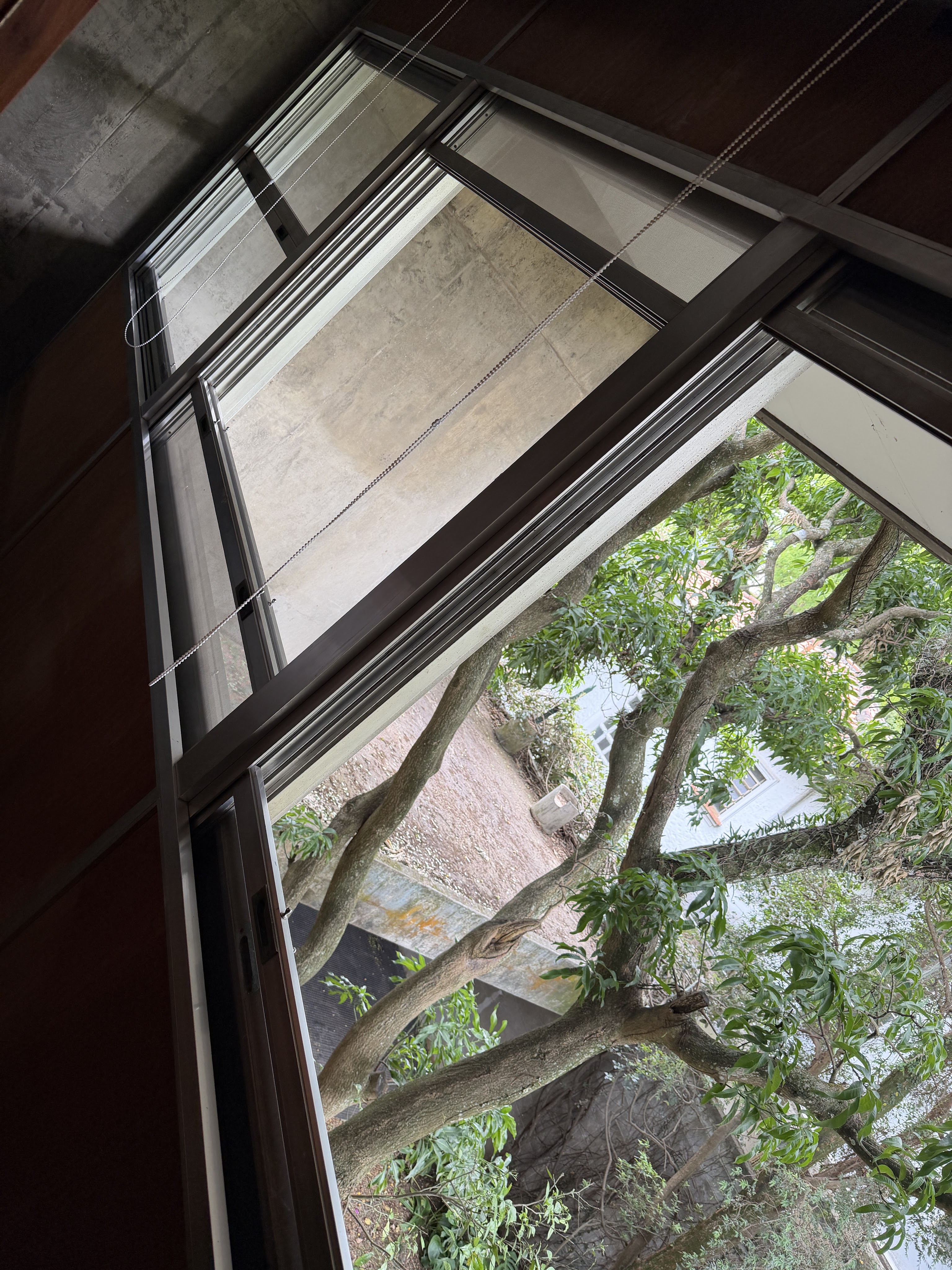
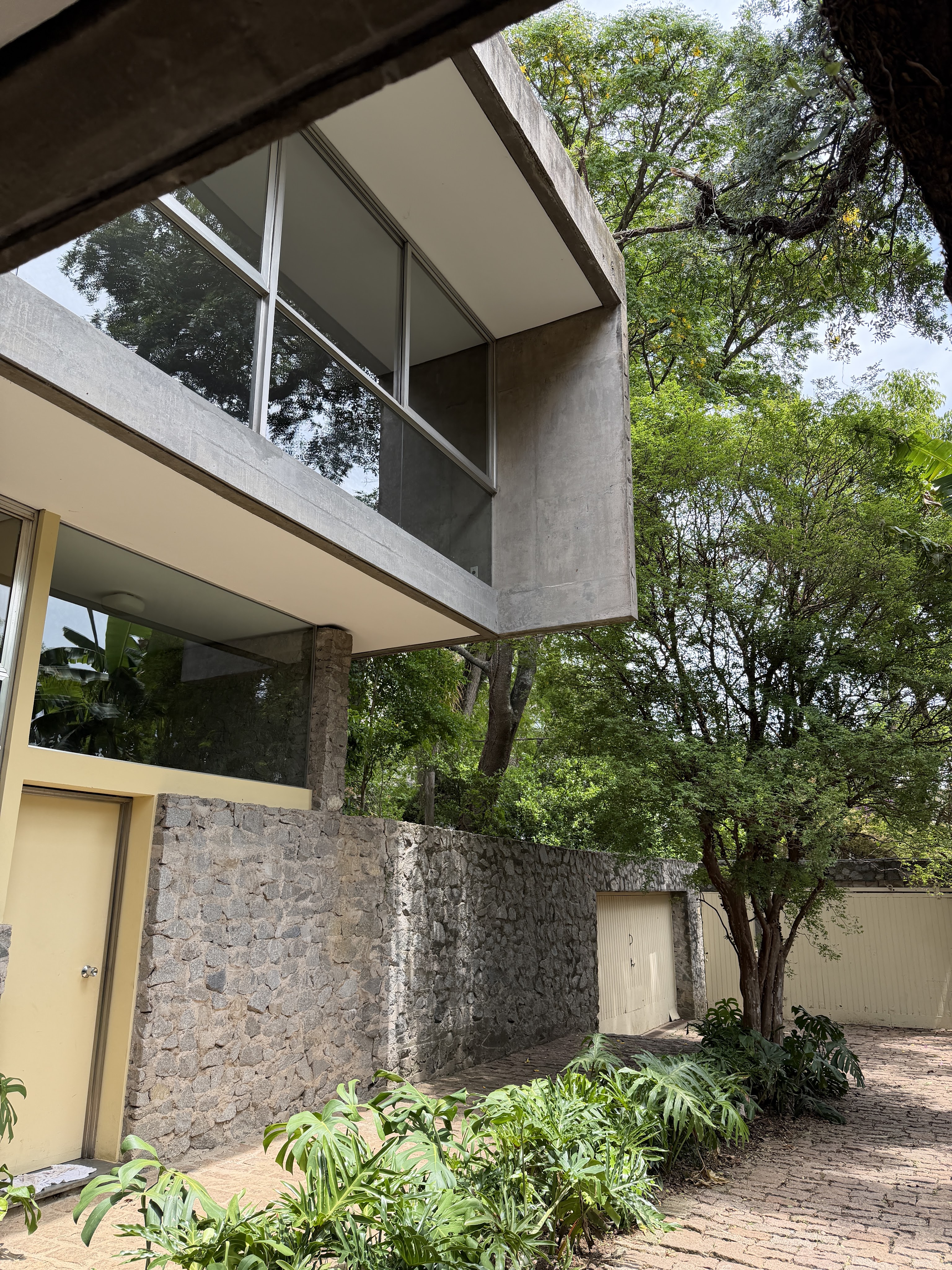
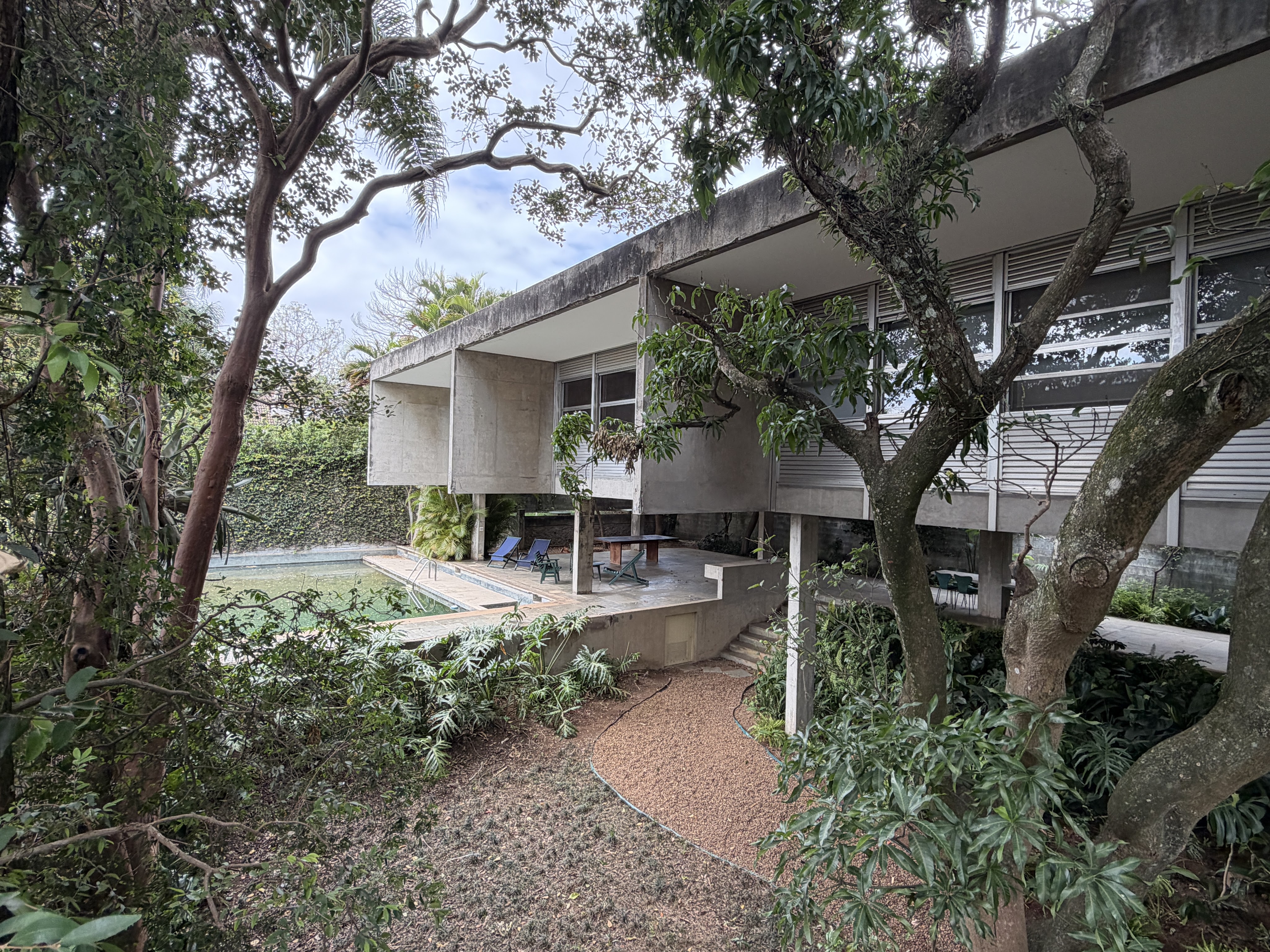
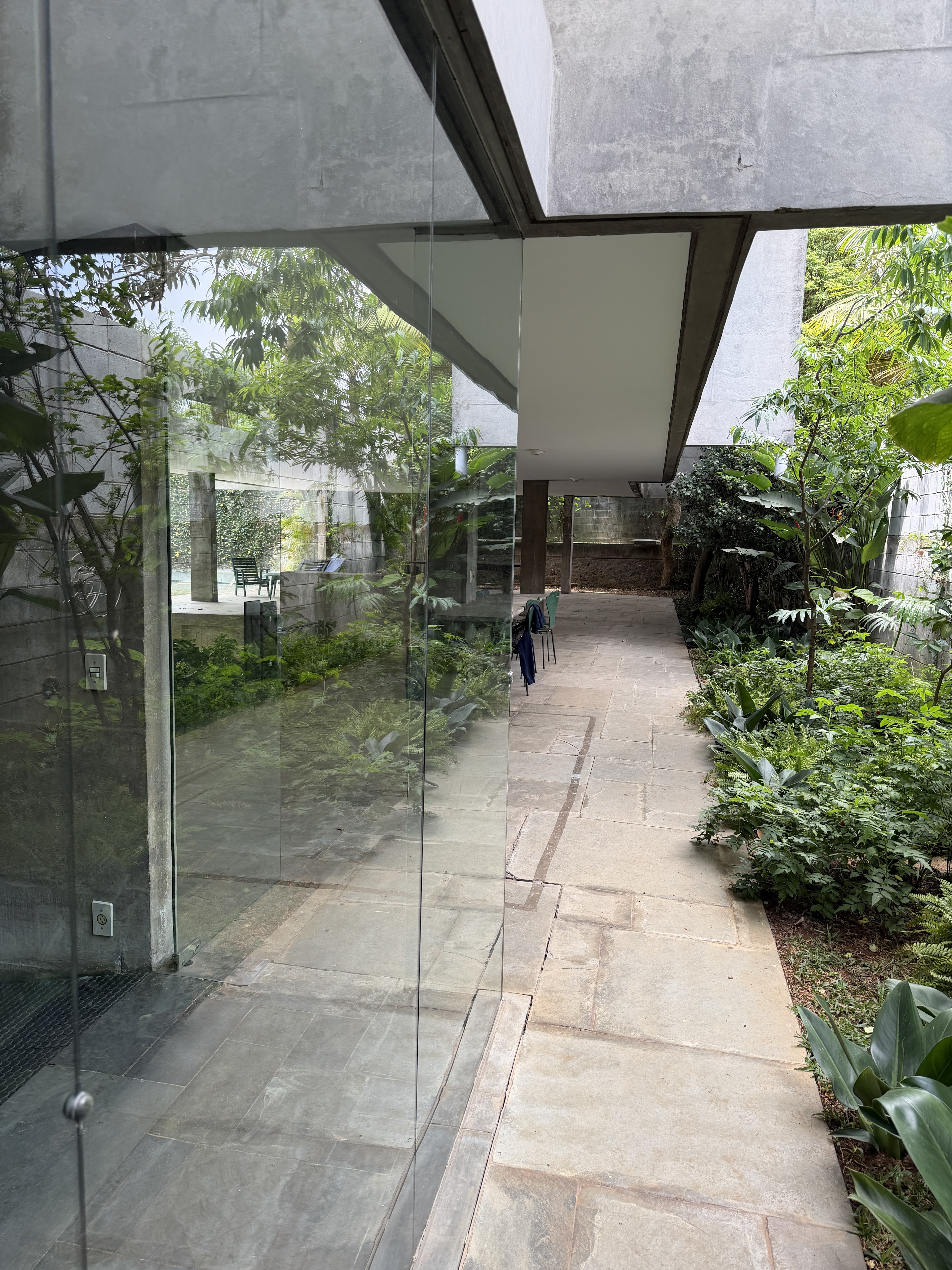
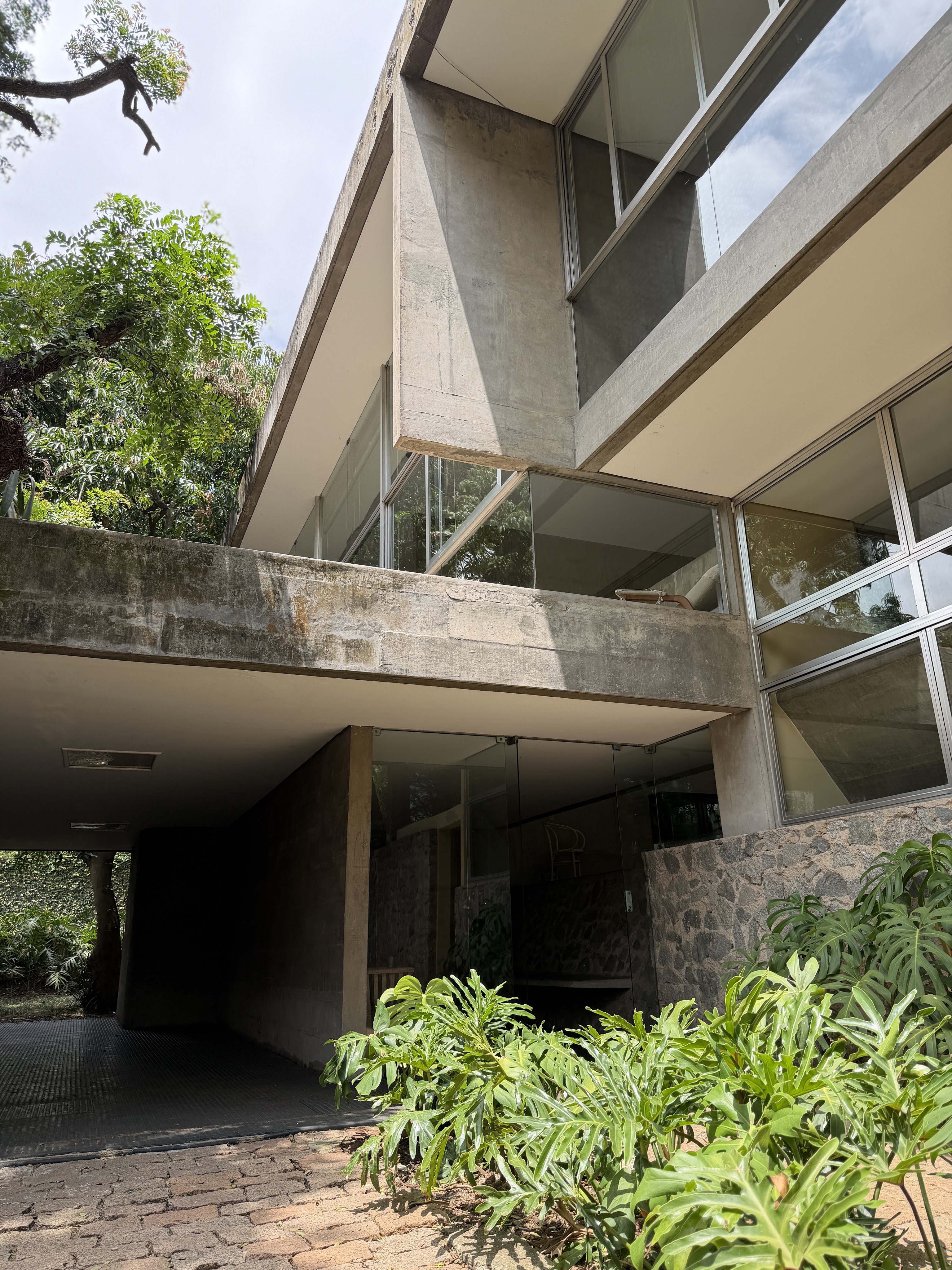
Another demonstration of the technicality of this construction are the numerous glass corners – they create a blending between spaces and extend the eye beyond what is inside and what is outside. The levity and openness would have created a marvel in the mind trying to understand how this building was defying gravity.
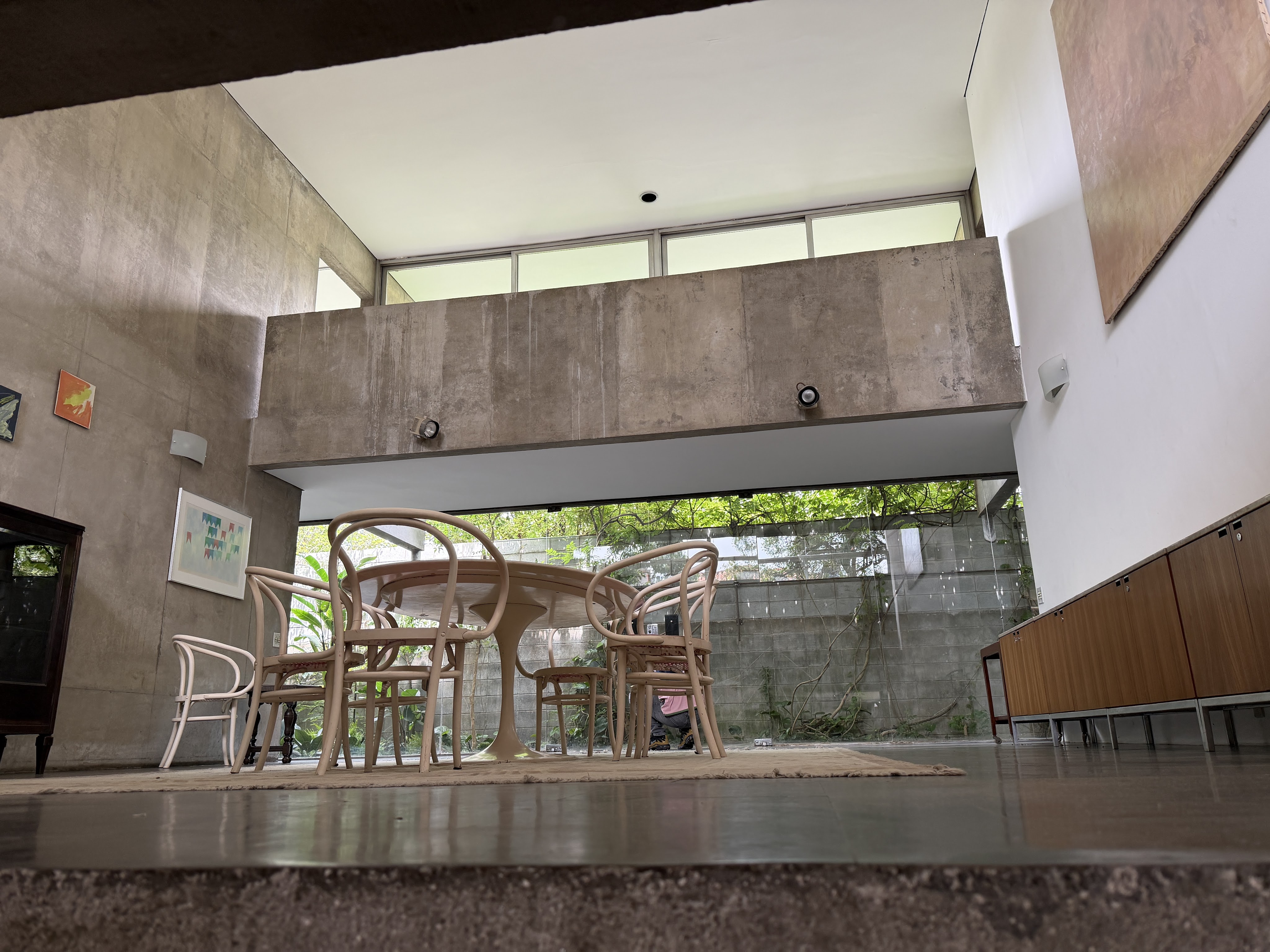
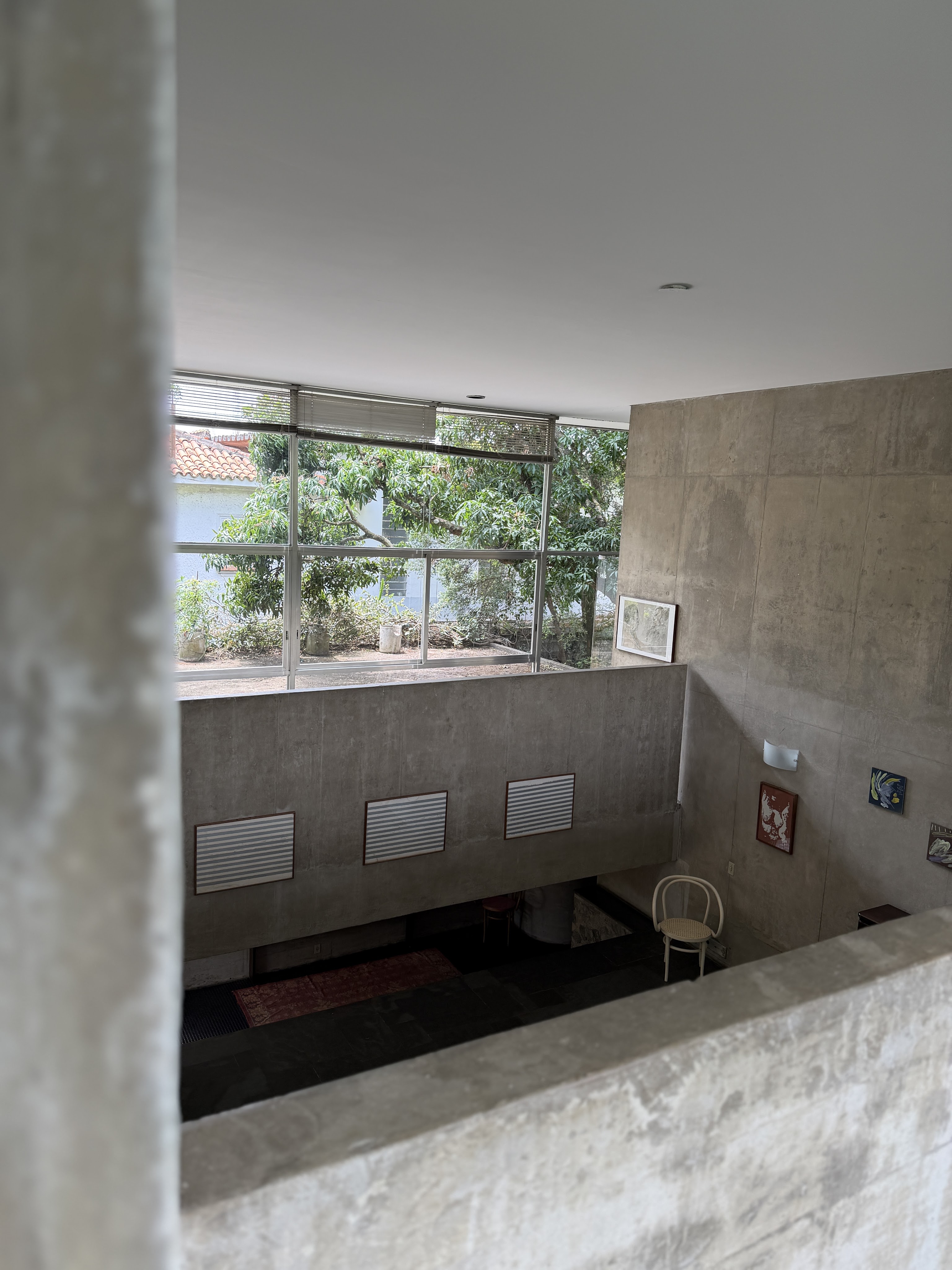
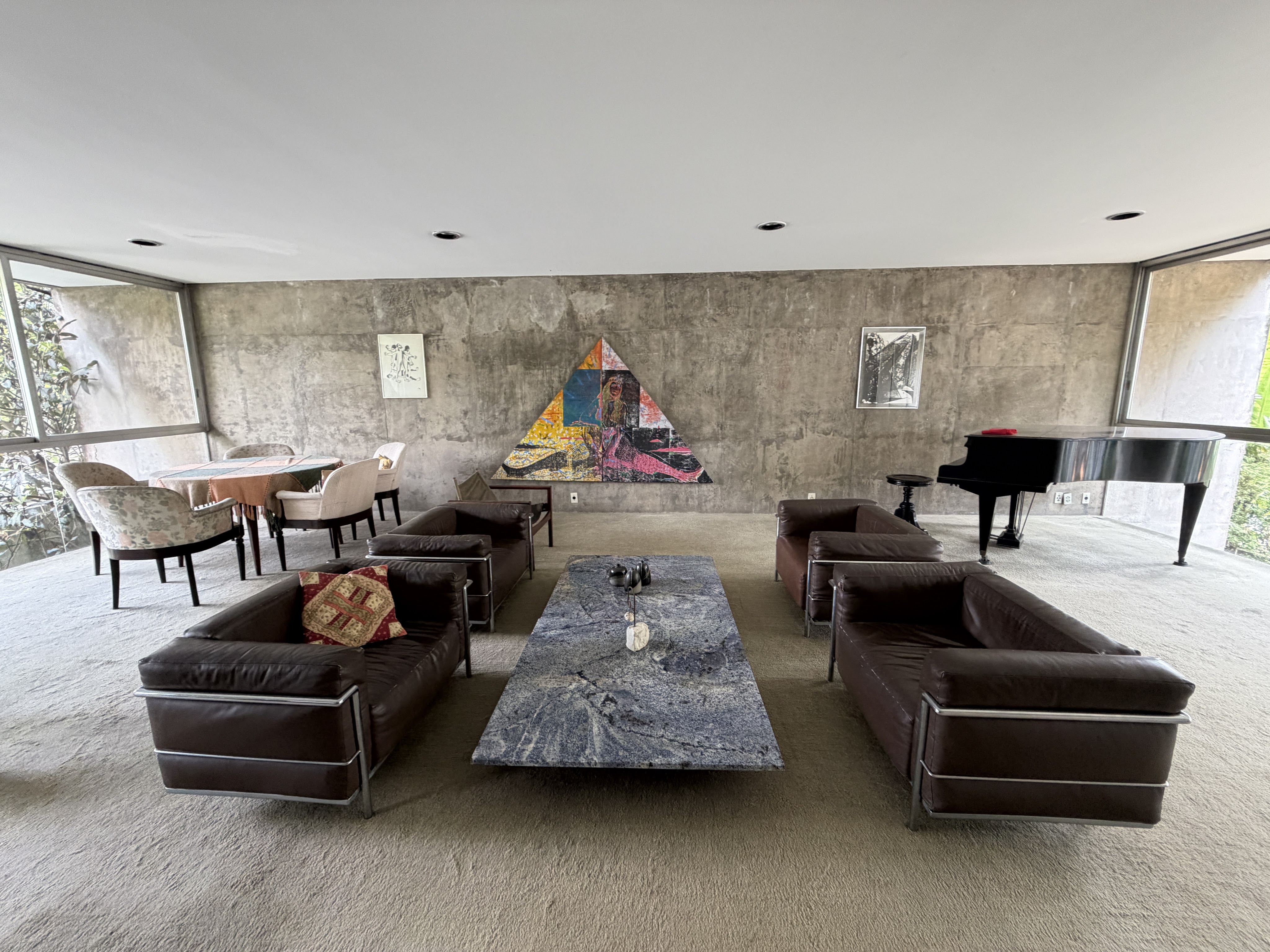
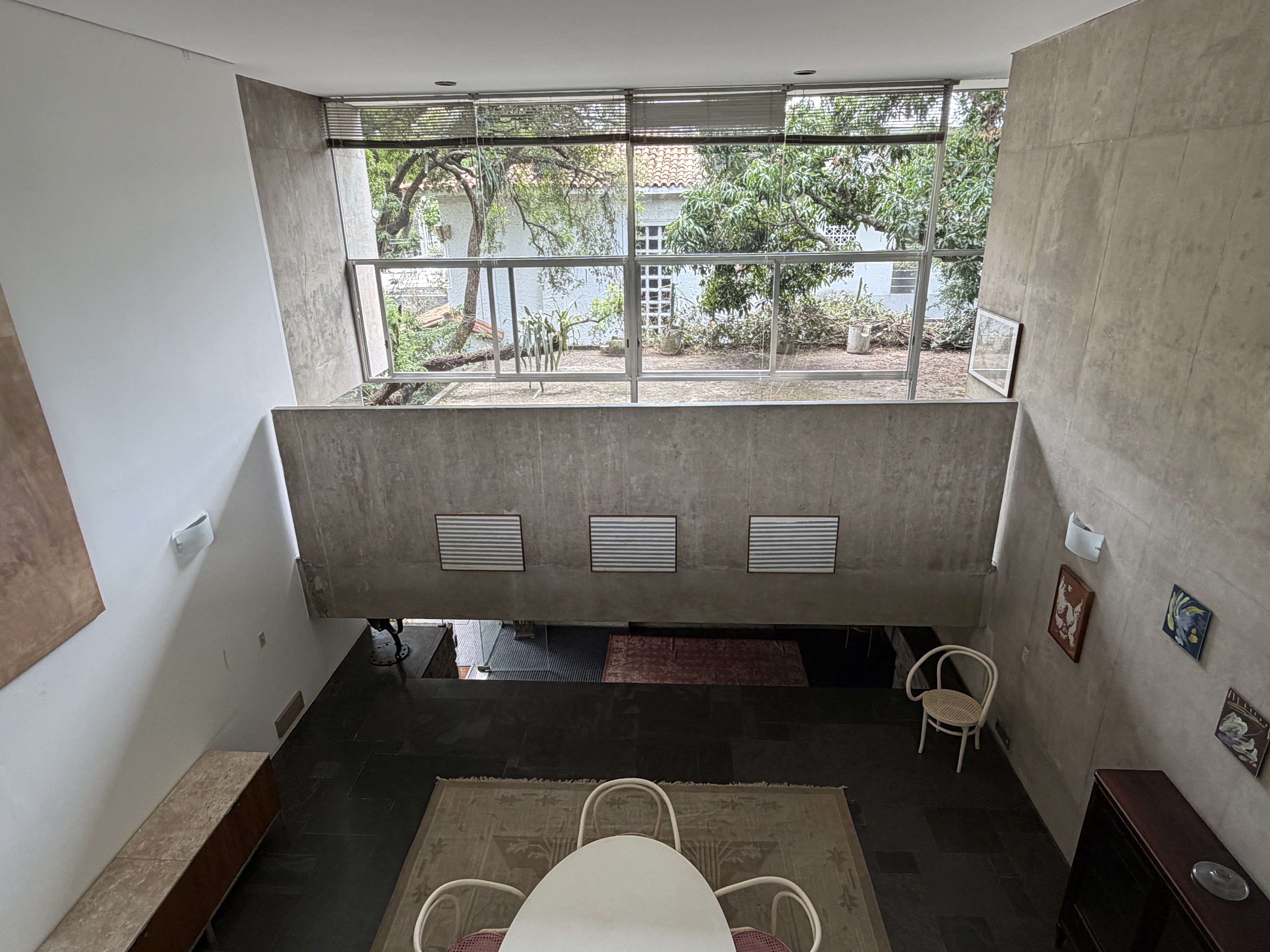
Spatial Integration: The layout is highly integrated. The dining room acts as the heart of the home and is visible from four different levels of the house, creating a unified, communal living space.
There is a play on scale similar to Frank Lloyd Wright where he moves from a narrow compressed space into a wide open area. The navigation into the house starts in a small very un-grand foyer that peaks from below into the dining room and wraps around past he ramps into the common and private spaces. Almost as if the house gives you a moment to prepare to join the rest of the house.
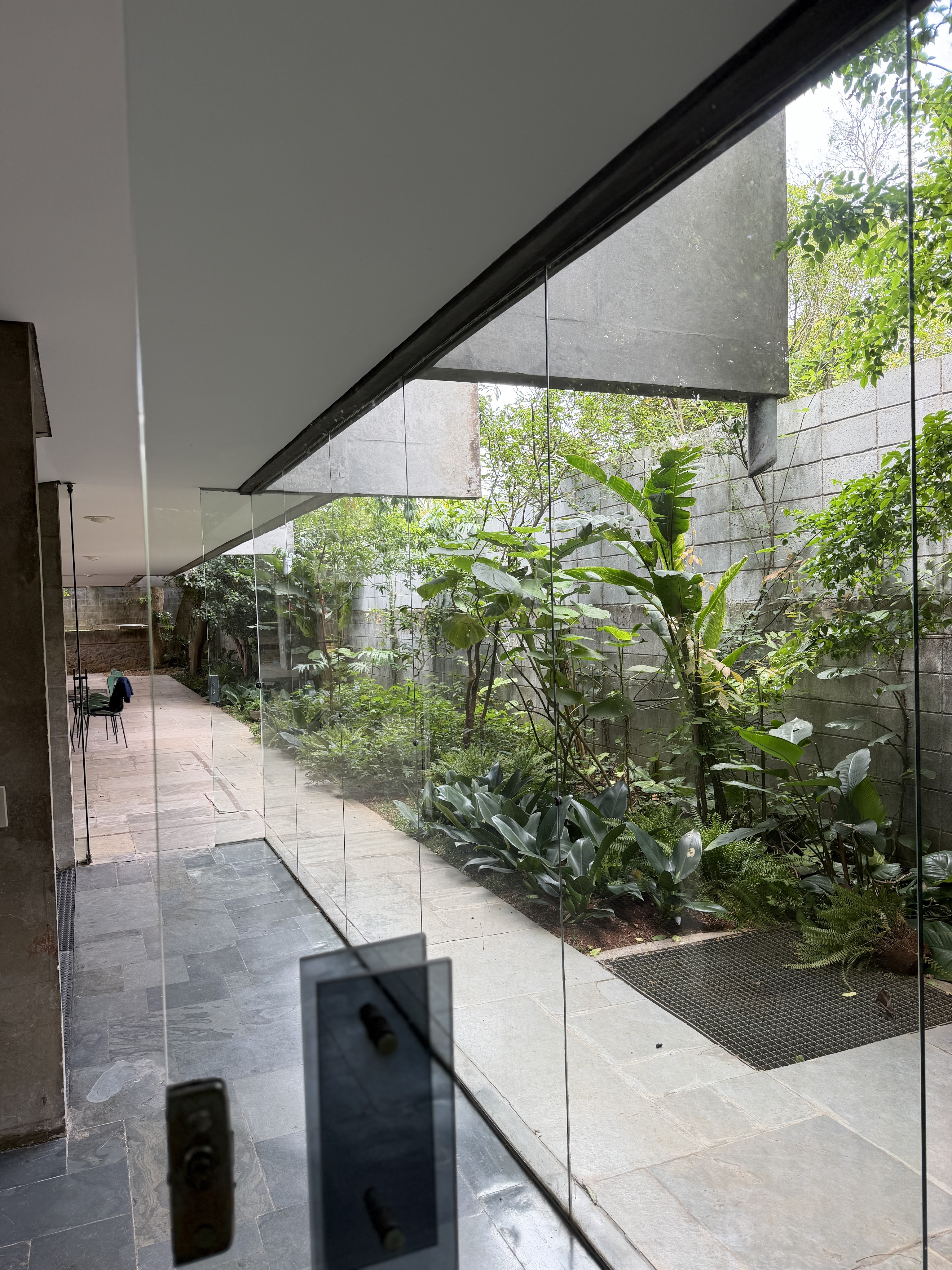
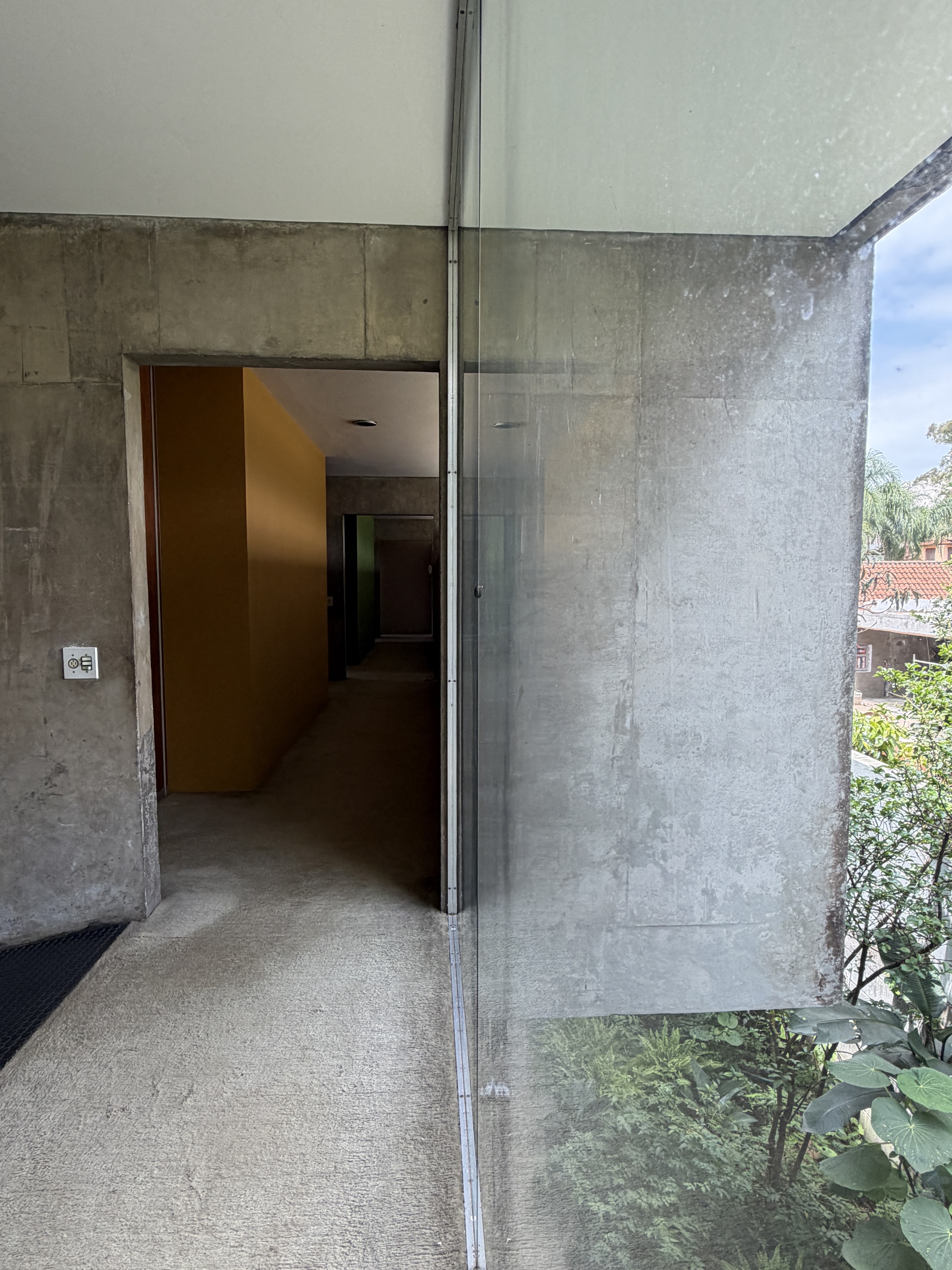
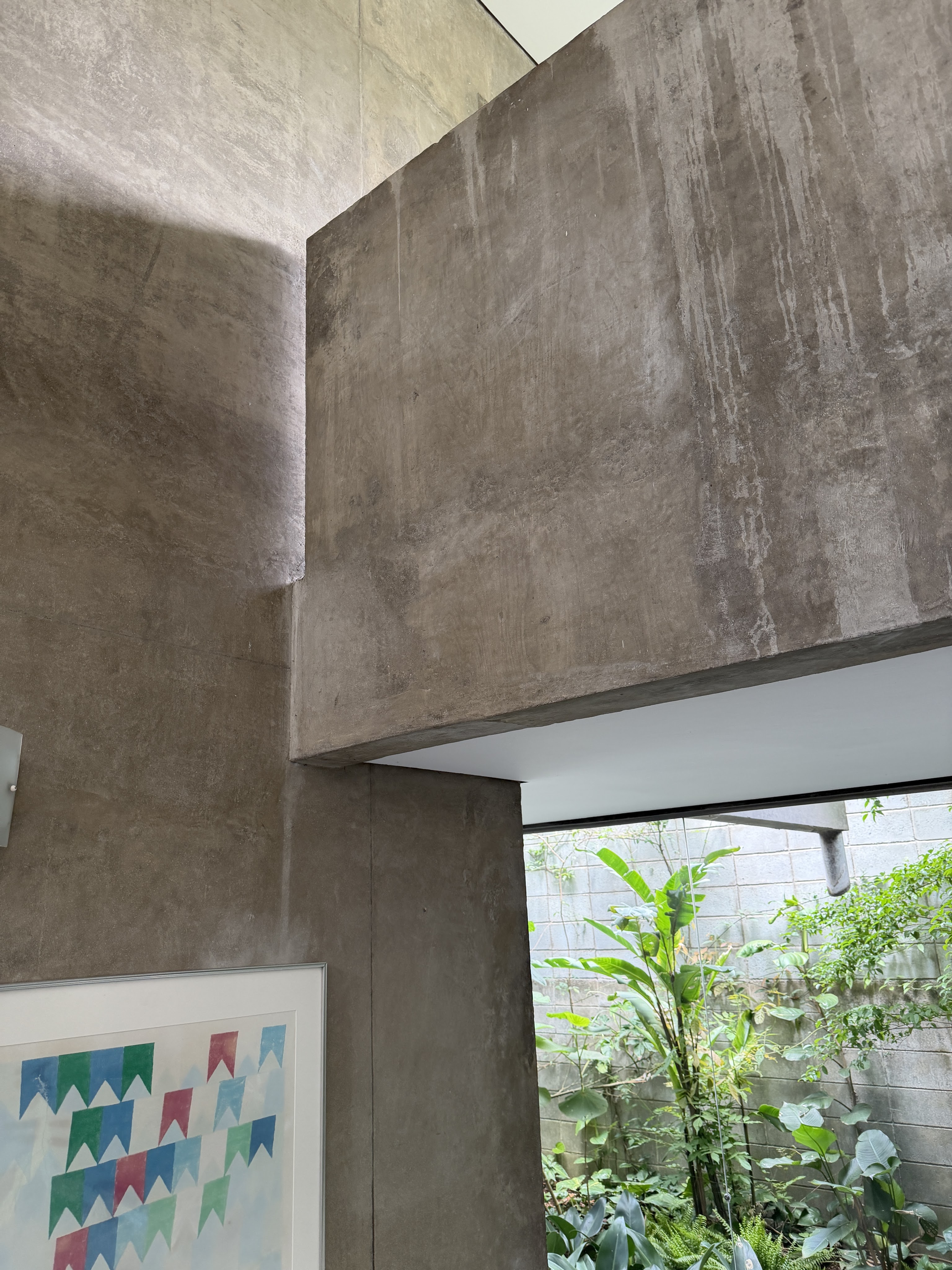
More love of these split views. With these uninterrupted large glass panes, there’s a serene integration of the foliage outside into the house.
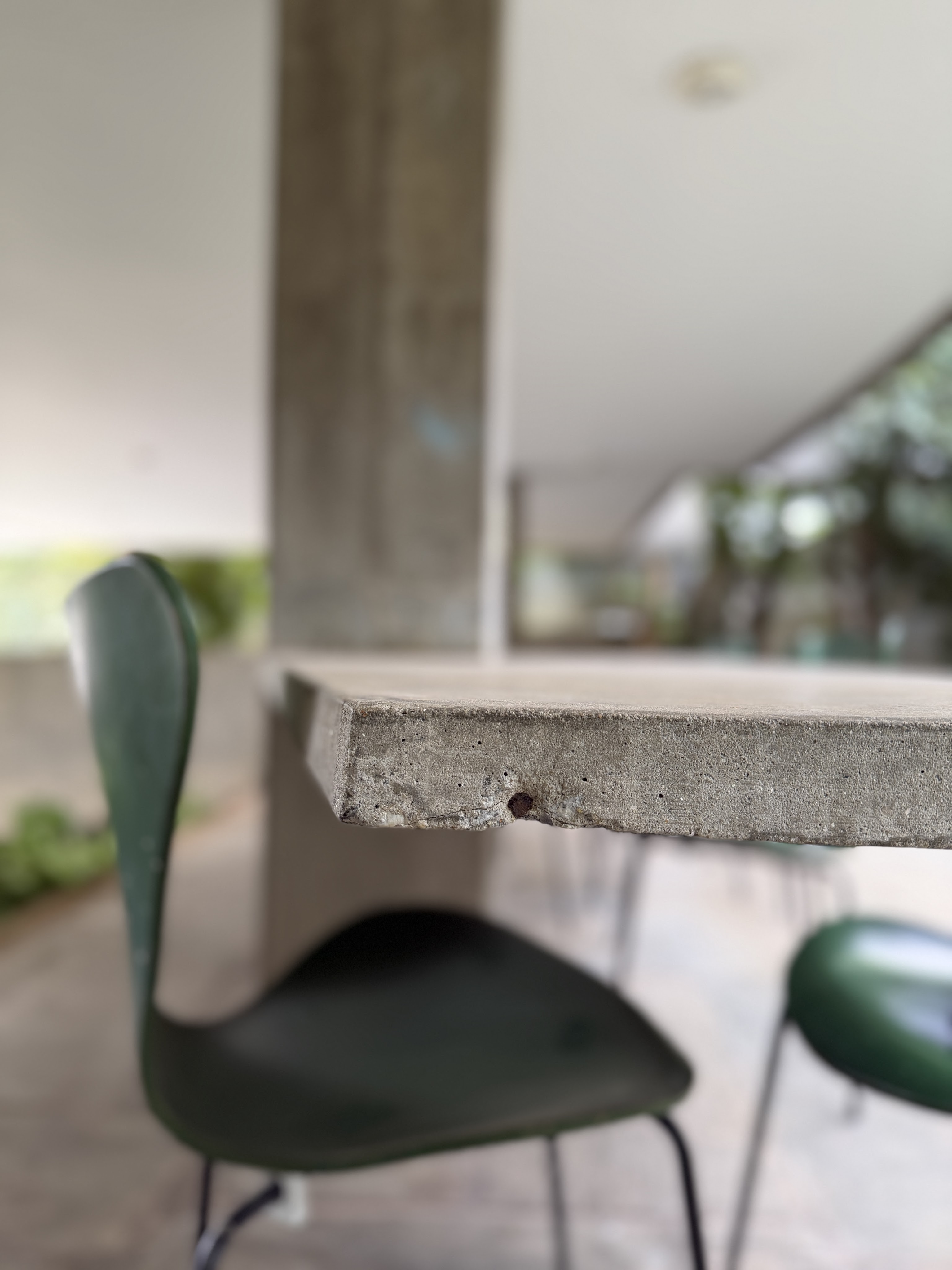
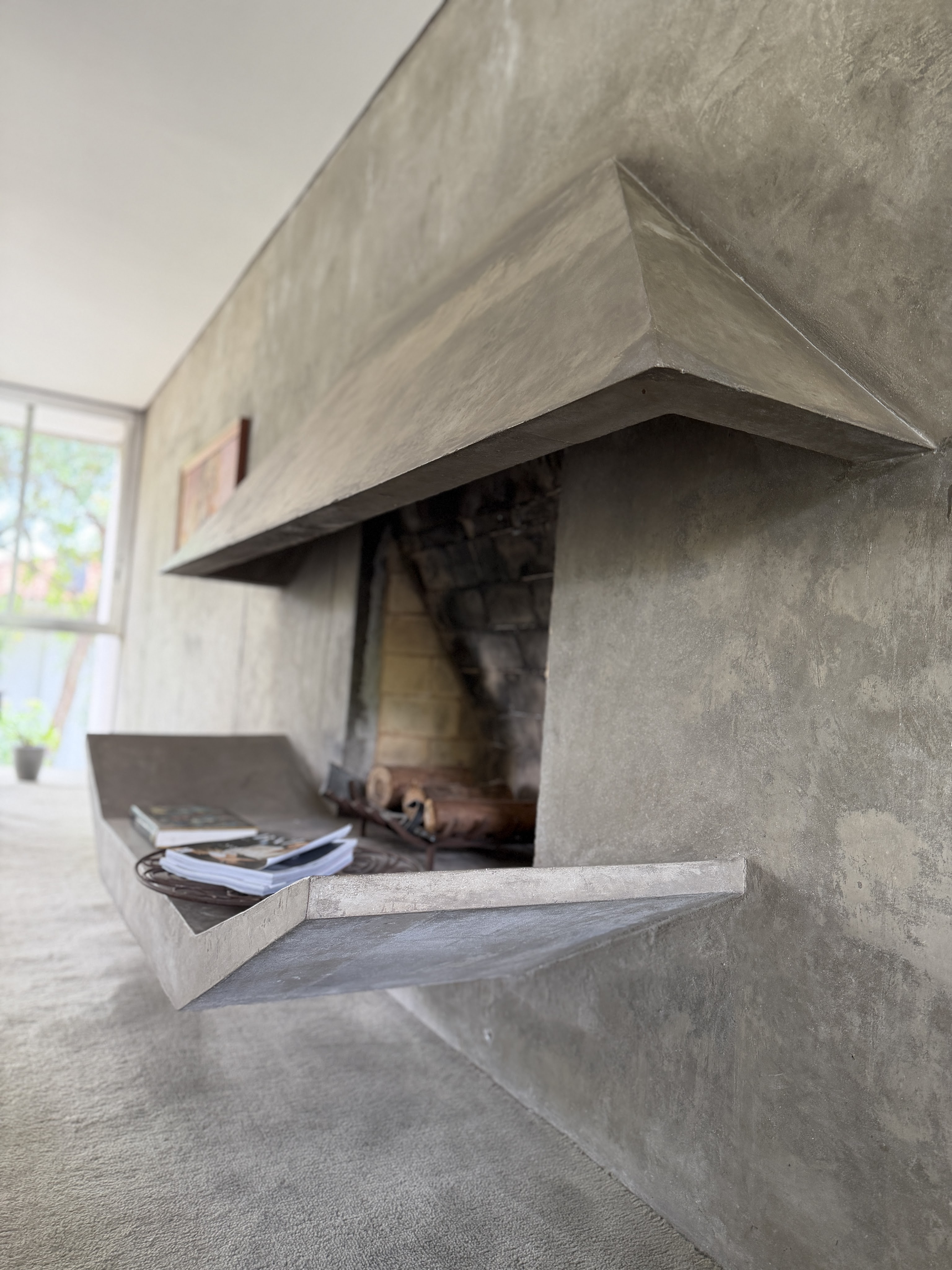
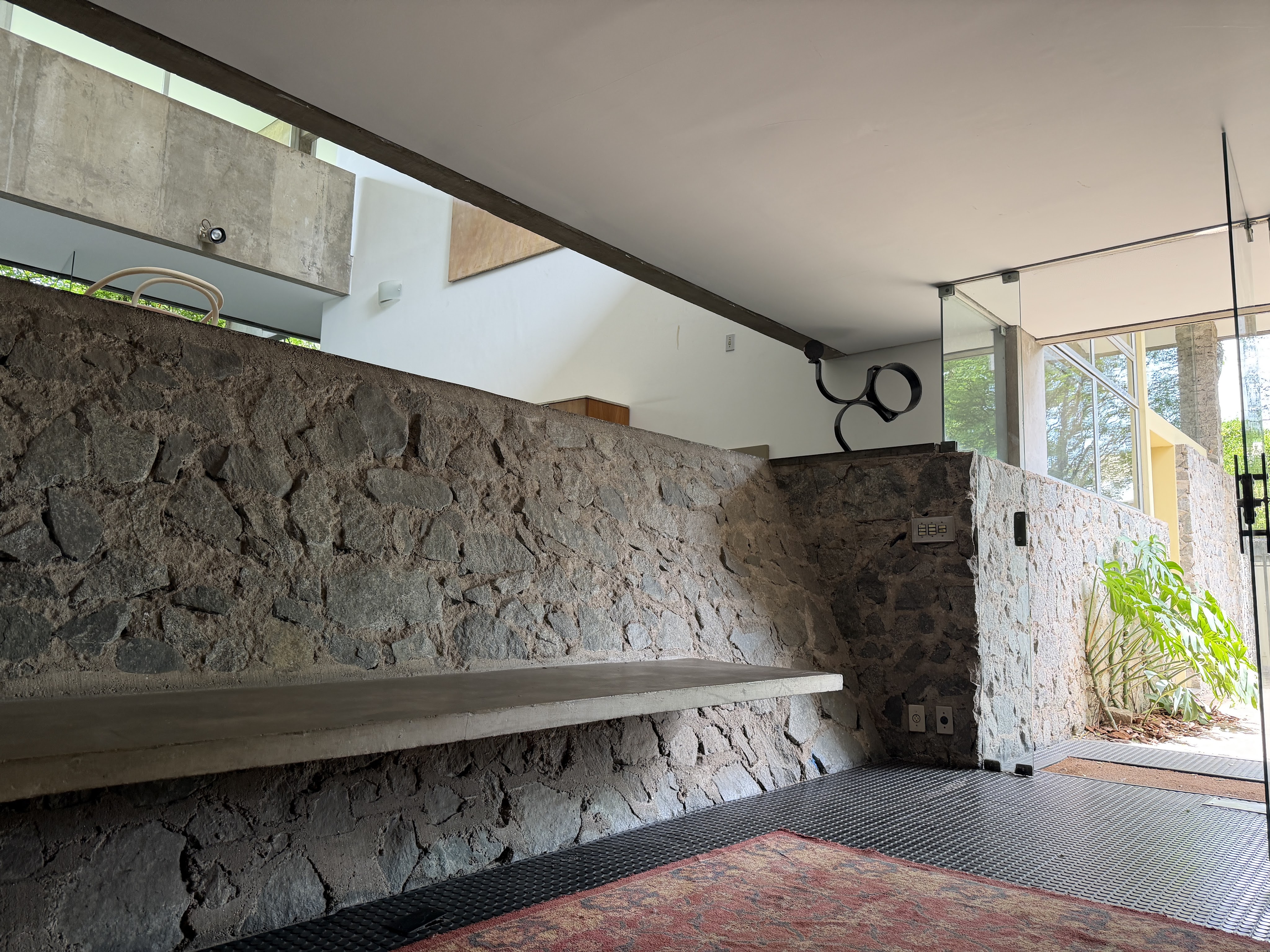
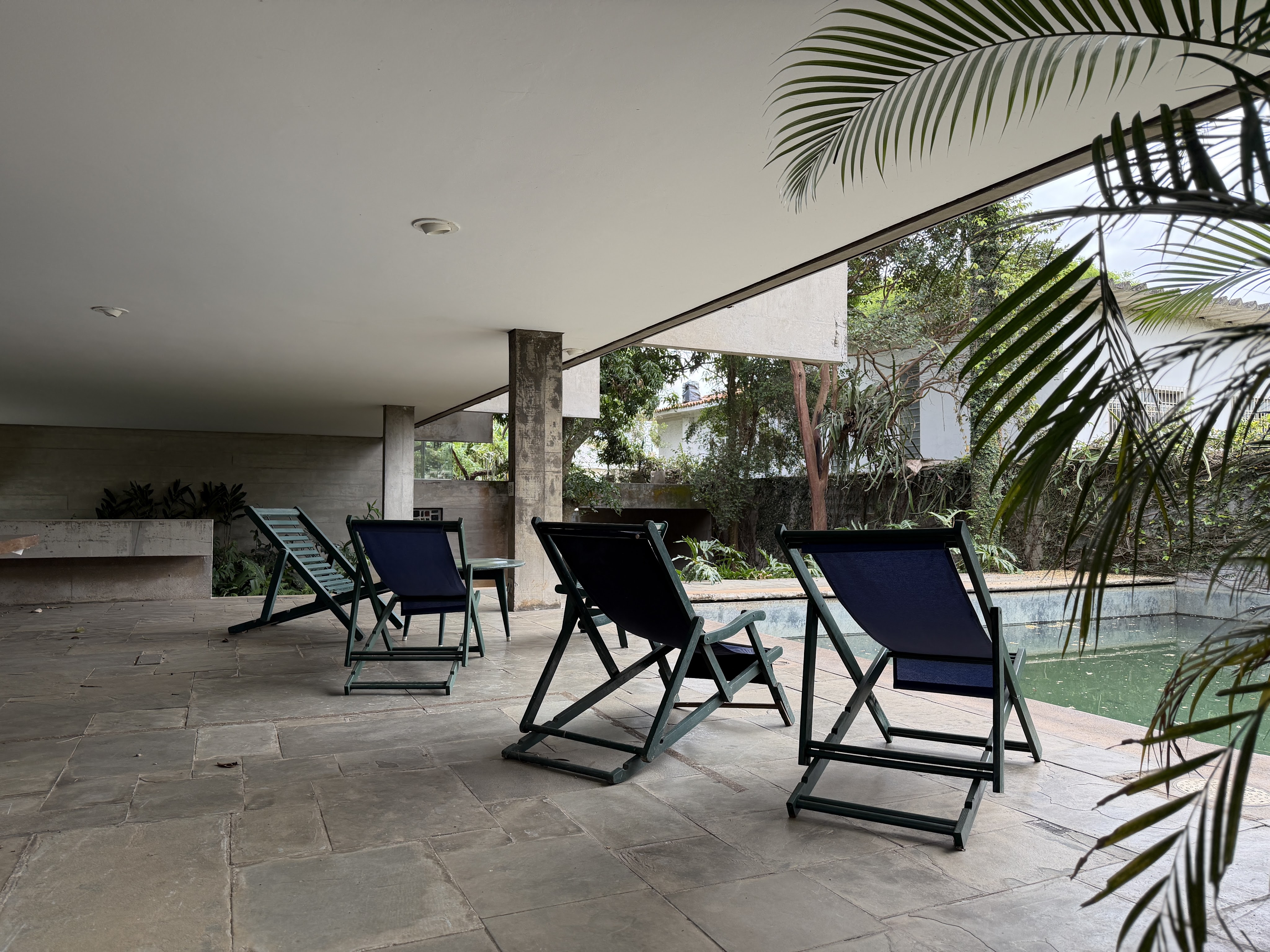
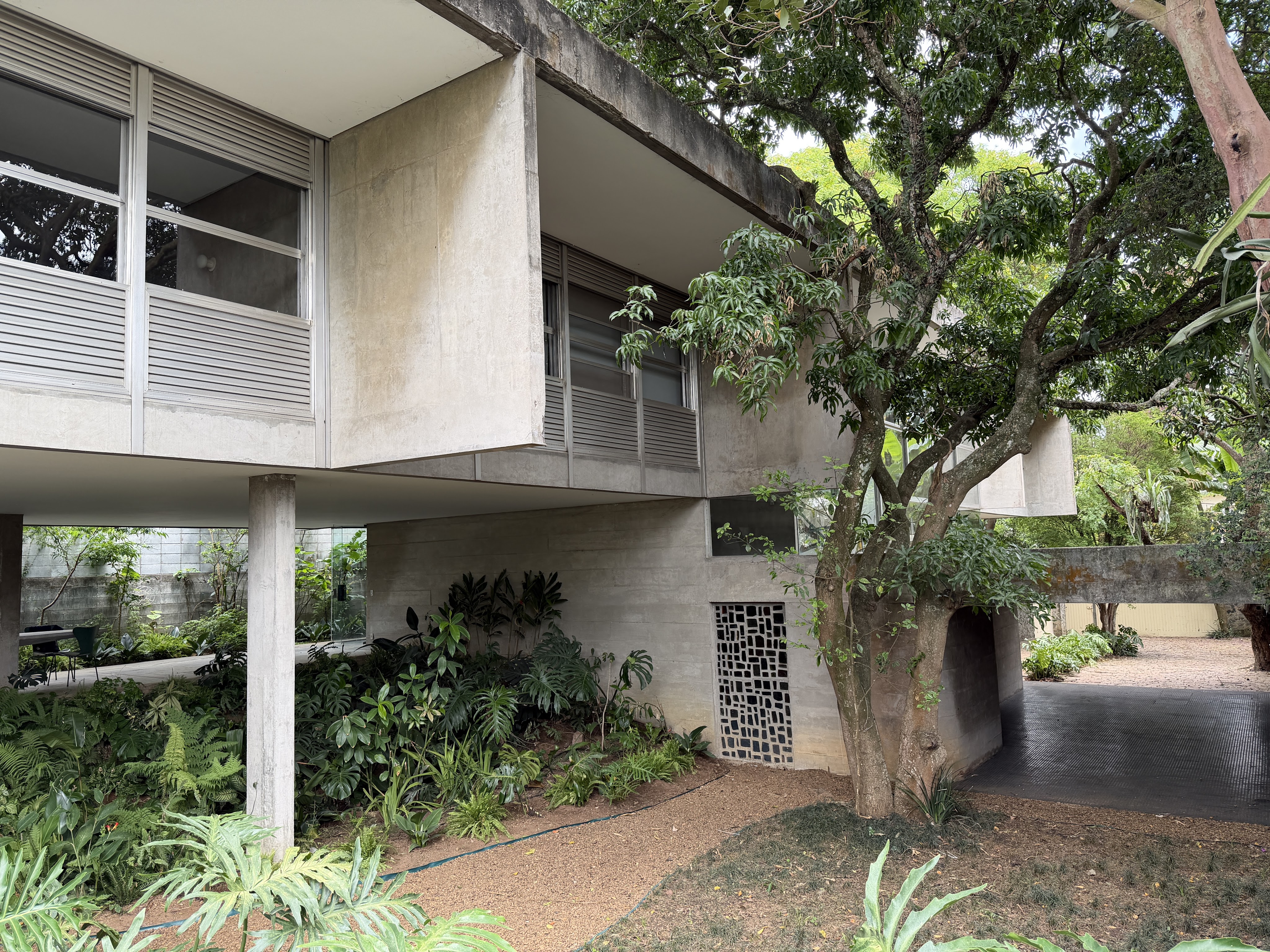
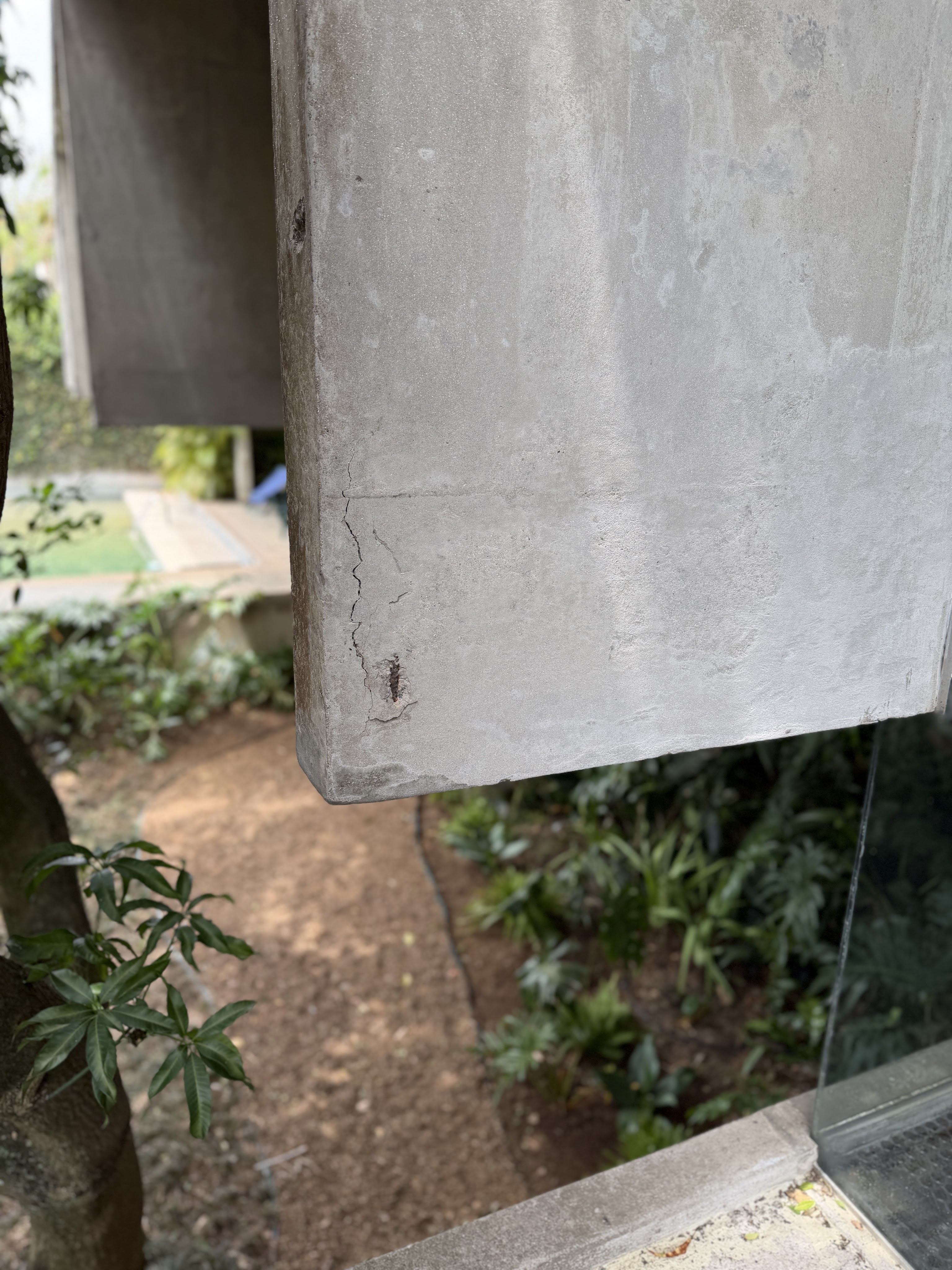
Many demonstrations by Artigas of floating panes in concrete.
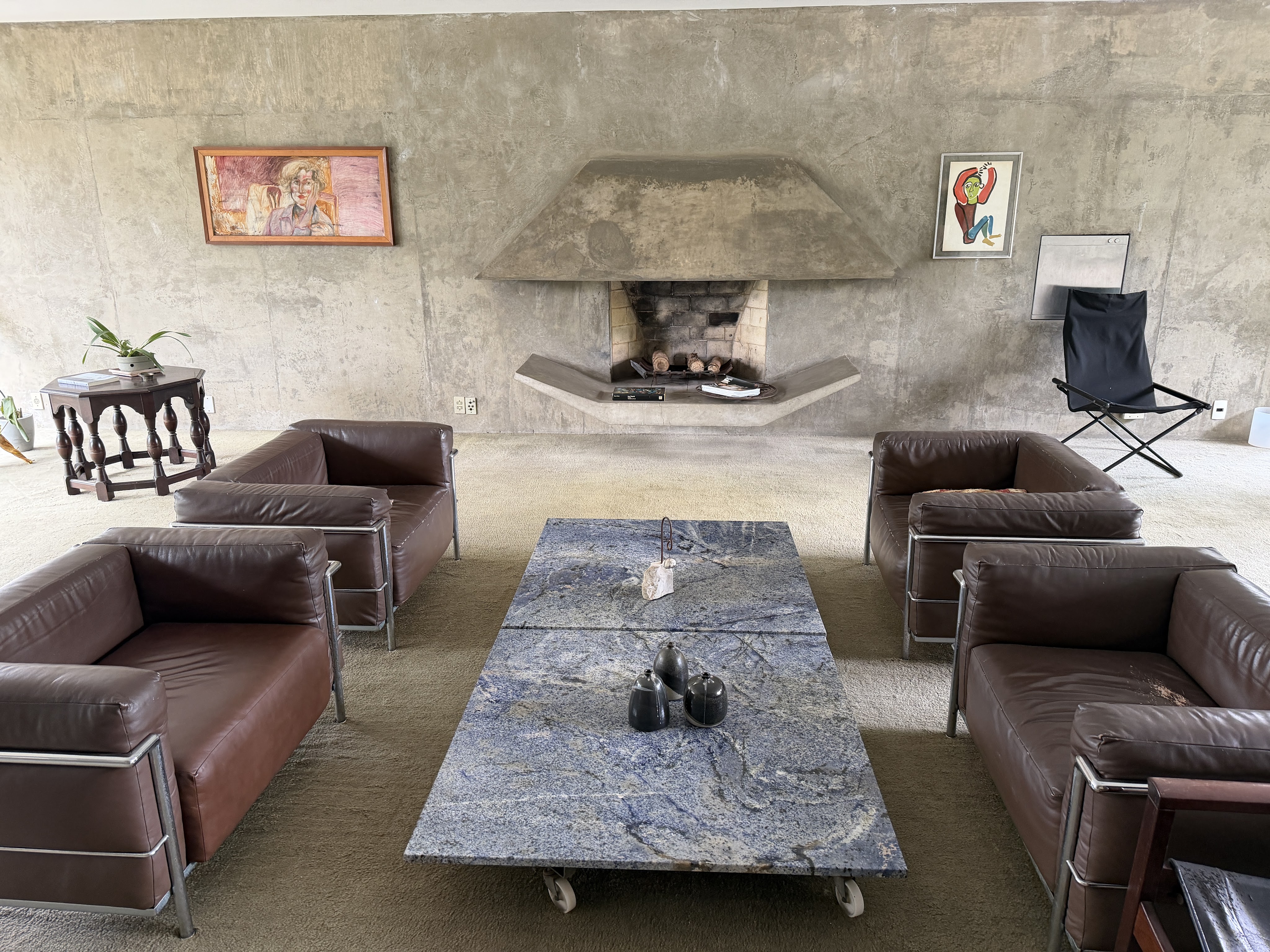
I am not recalling the kitchen too well and there are surprisingly no photos of it- out of all the modernization costs that this house would need (of which there are many) the kitchen would probably be the space most in need. In the photo above behind the black folding chair there is a food dolly that went from the kitchen to the upstairs- I believe there was a story of kids hiding in there… or maybe that was a different house. The layout of splitting the living room from the dining room- the latter being upstairs and the lower being the dining room- was a formalization of these spaces that over contemporary times that was dissolved into a preference of open kitchens into common spaces.
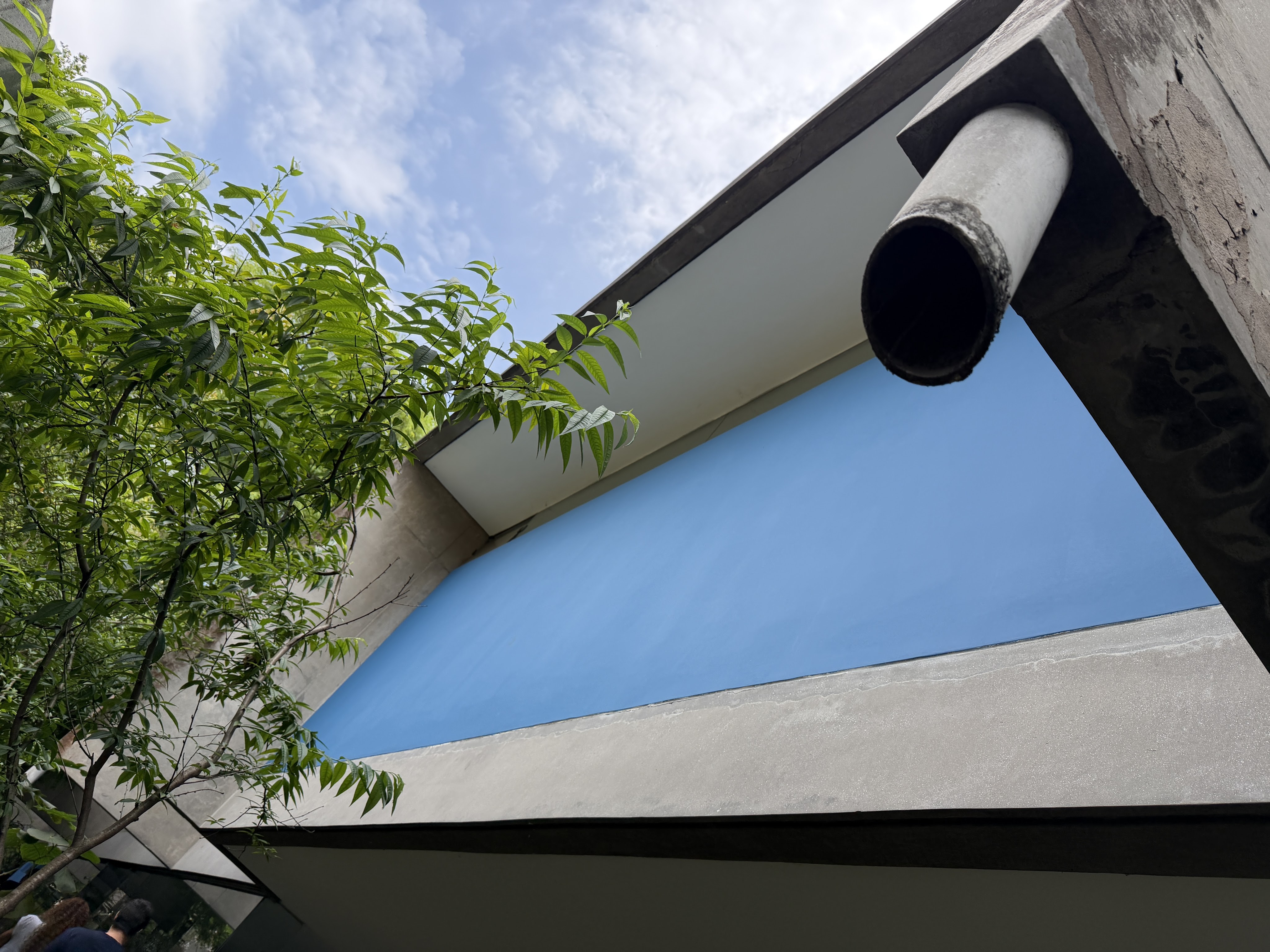
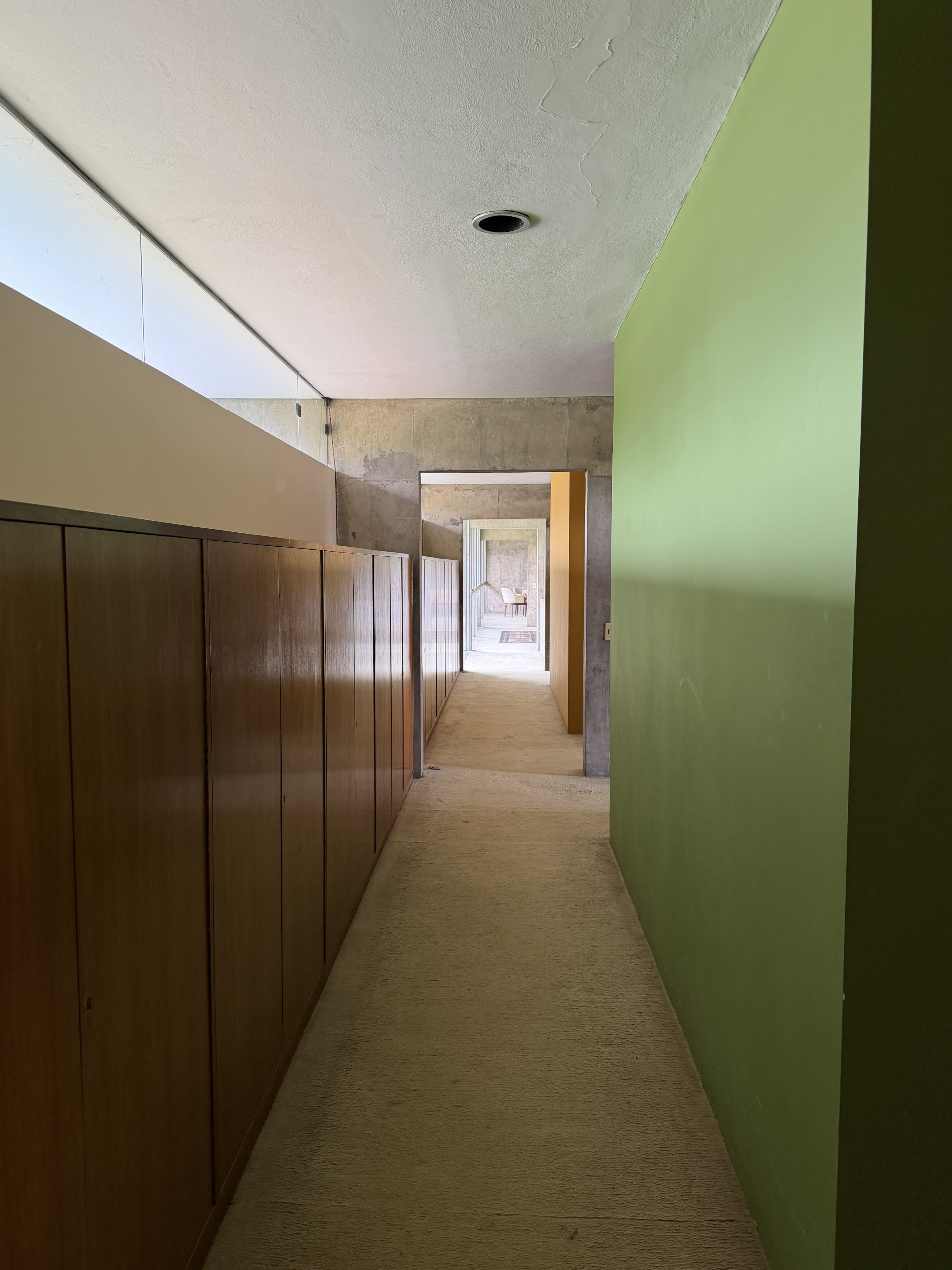
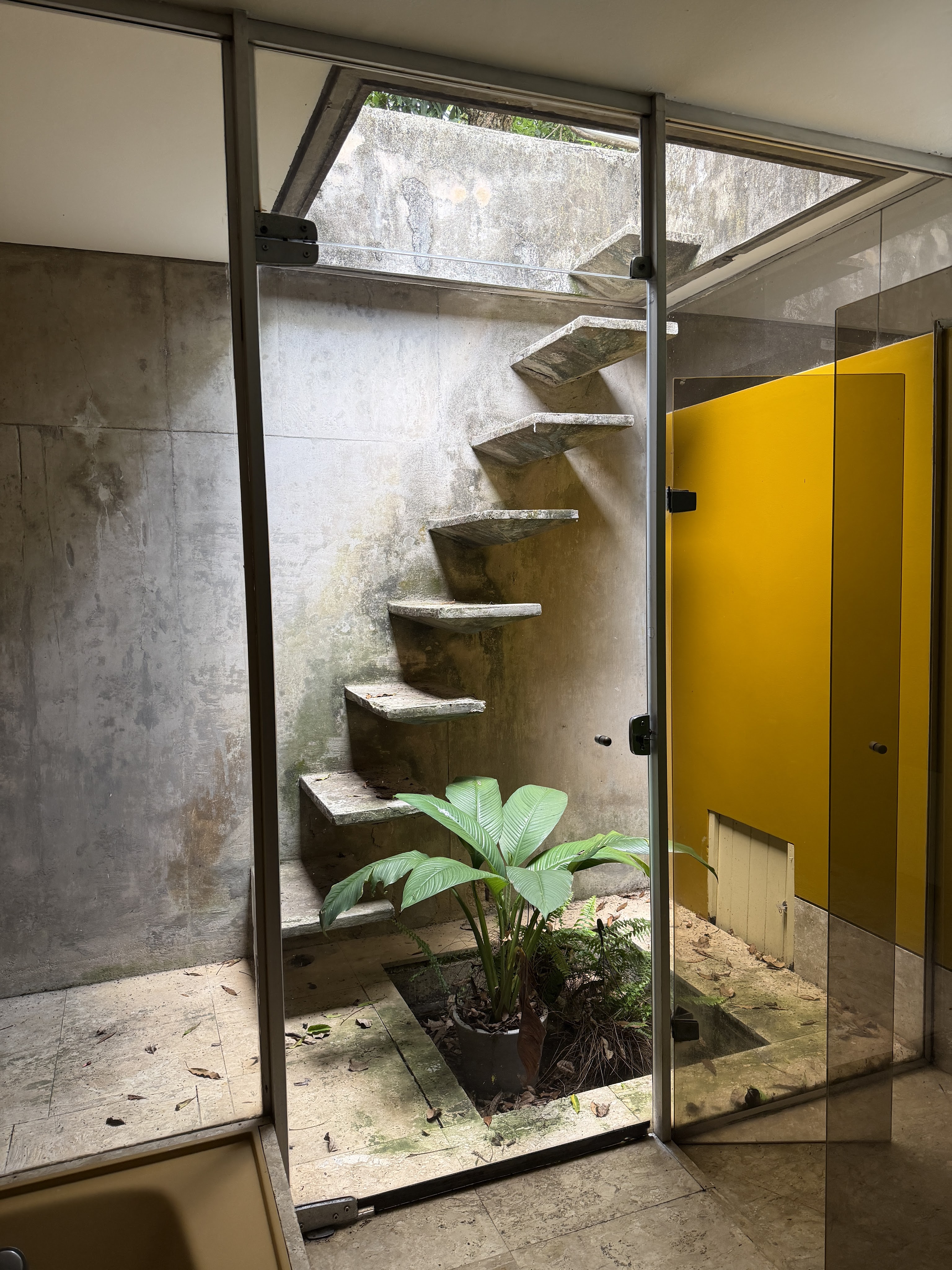
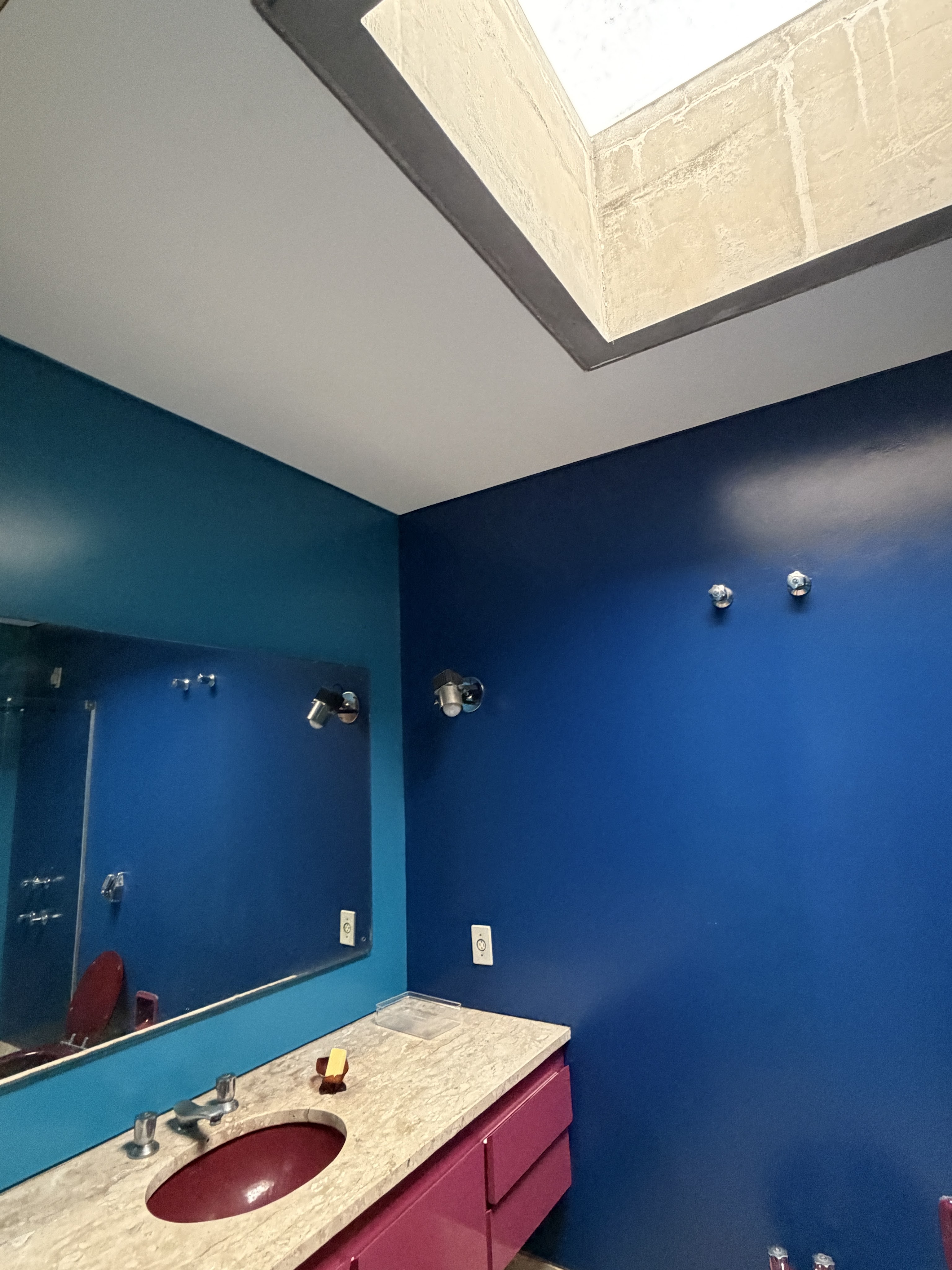
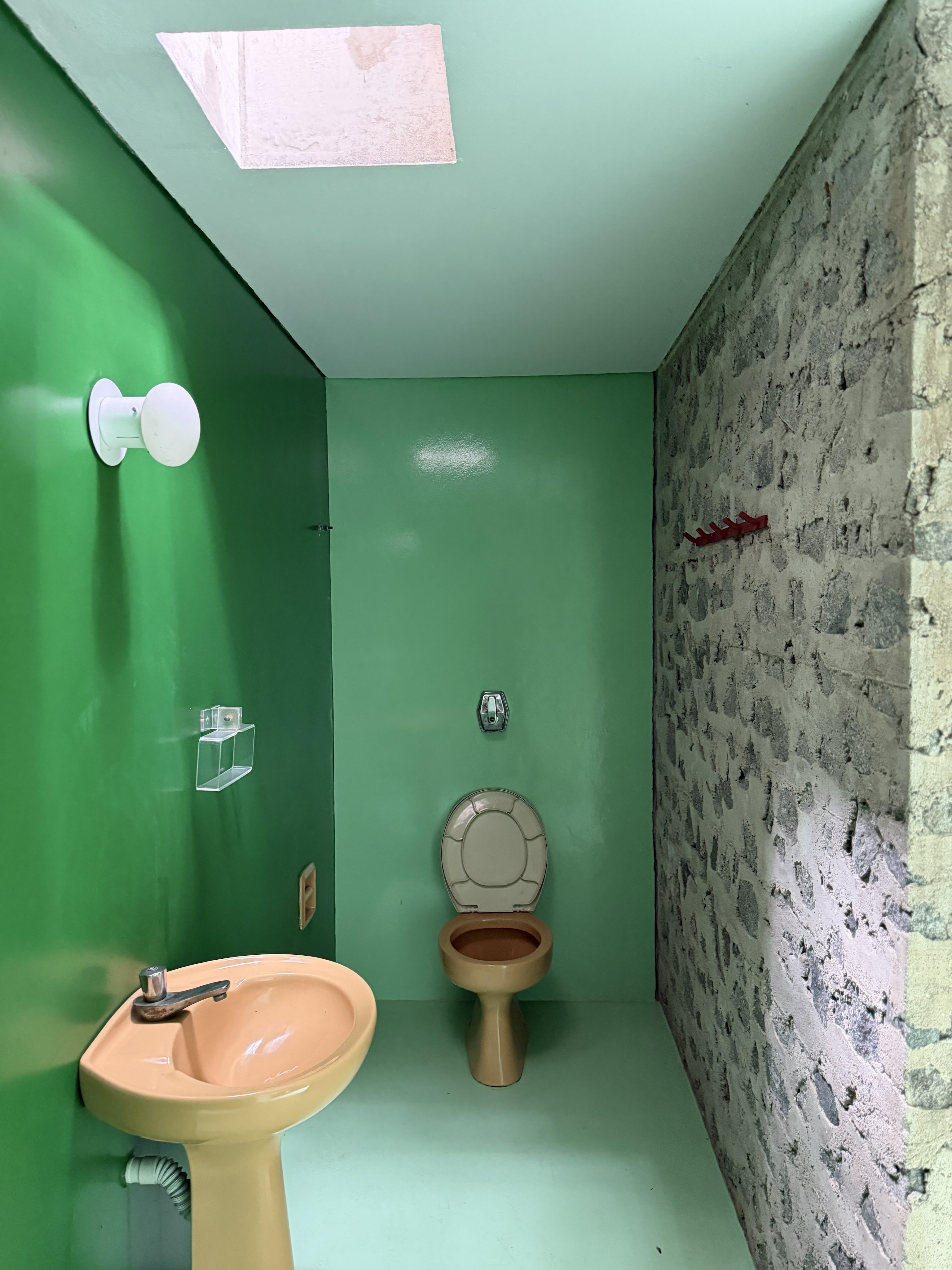
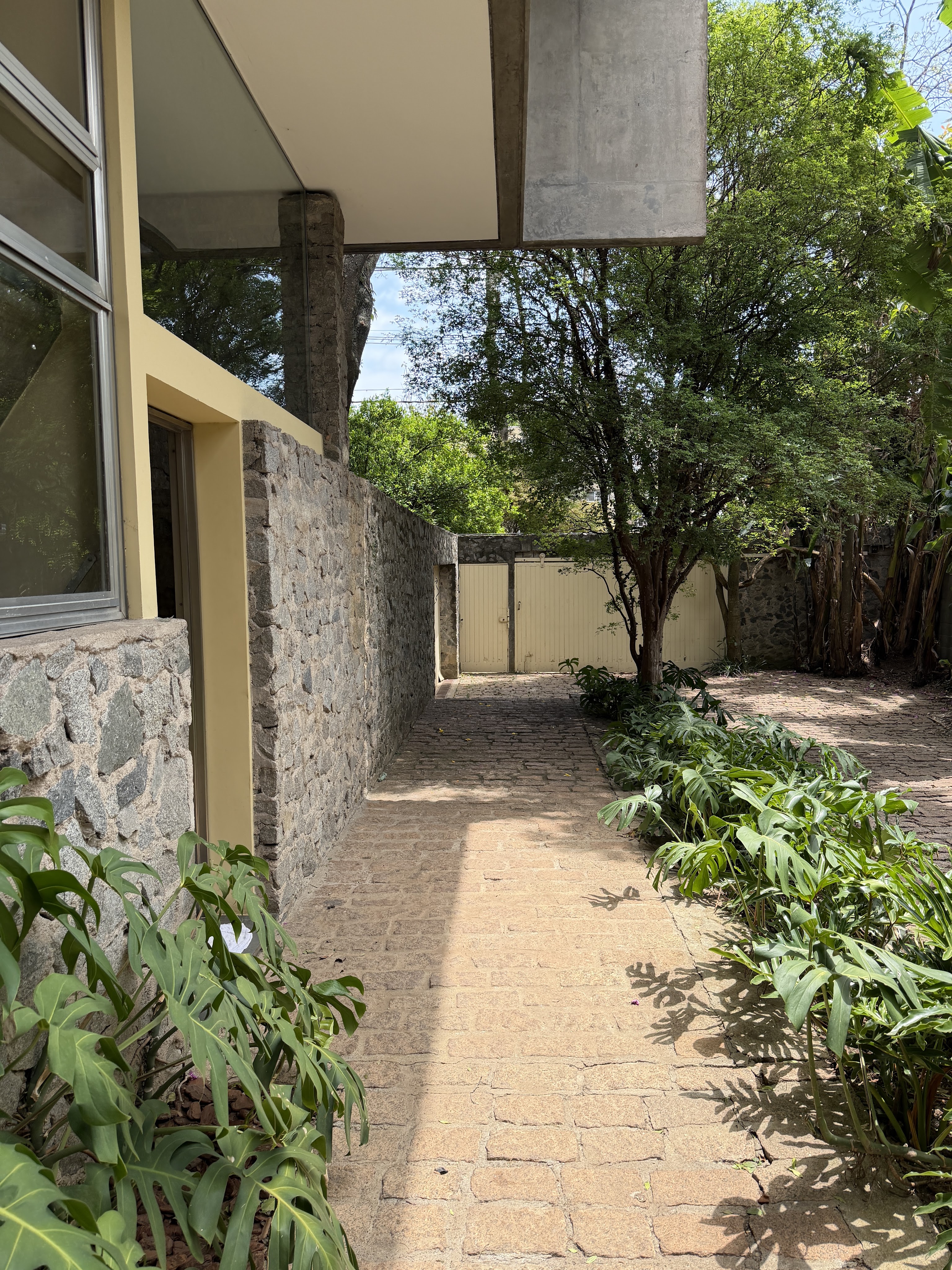
Though the house is devoted to its concrete rawness, there is a strategic use of large planes of wall color – I didn’t mention this in the Faculty of Architecture, but its the same yellow as the one here.
I would be fascinated to come back to Artigas’s work in the evening to see how he approached lighting- note to self that I should ask to turn on more lights when I come to these private viewings. During the day there is extensive use of skylights and clerestory windows- all of which has to be carefully considered in the structural design.
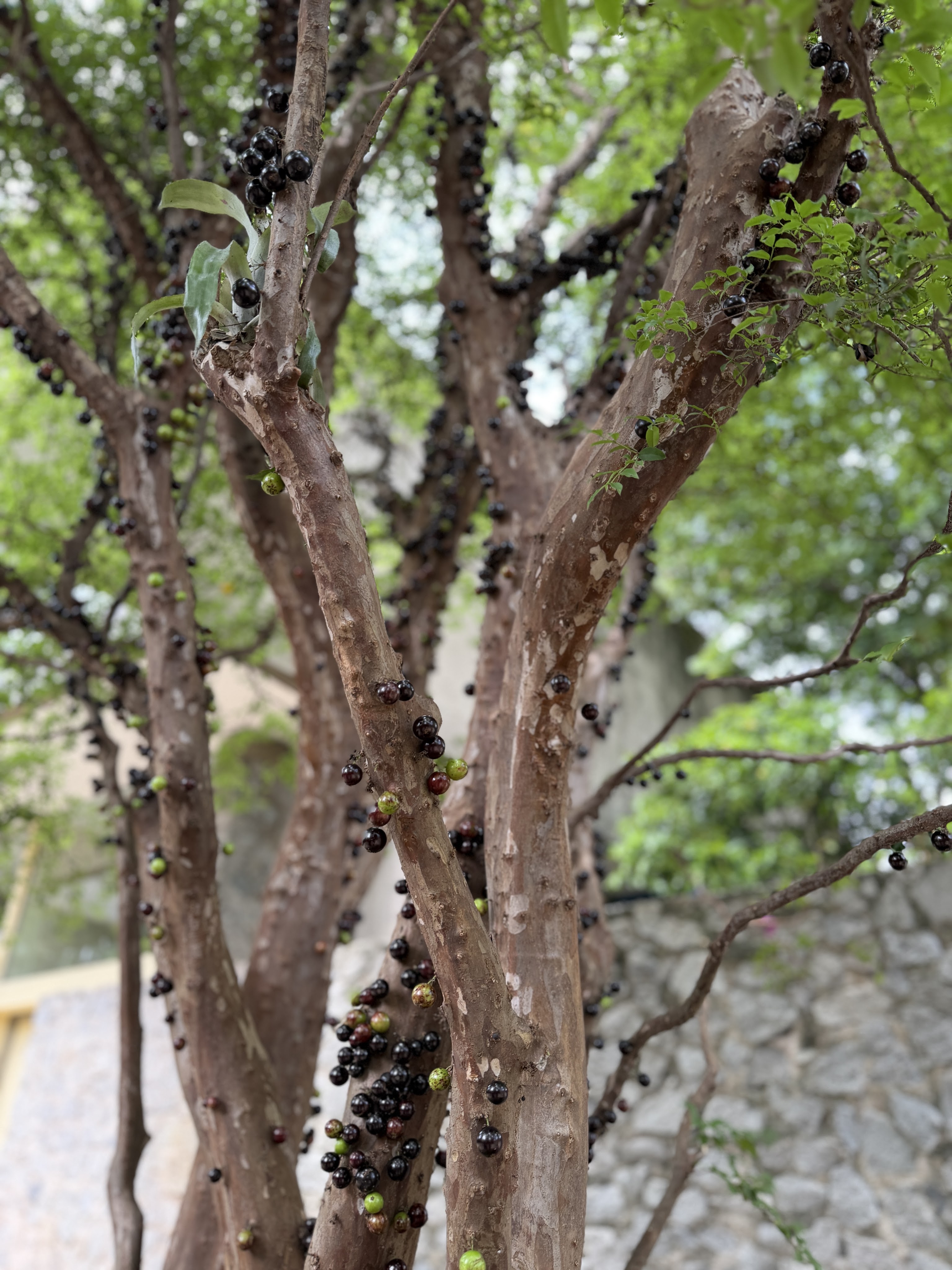
If there is any last note to make of this house- besides gratitude to this family for preserving this house and allowing us to visit- it would be about the local plants and trees. Architecture has the ability to demarcate space- to keep us together, to keep us separate, to invite us to exclude us – to let us know the purpose of where we are but this is nothing without the nature in that context. This tree called the Jabuticaba grew right at the entry courtyard and some did as the locals did, which was to eat it right off the tree (the purplish-black ones only please). Spitting out the seeds with childish pleasure, we took in what every great joy that was given in that moment.
Address: Rua Comendador Elias Zarzur, 2030 – Santo Amaro, São Paulo – SP, 04736-003, Brazil
Website: Casa Domschke Instagram website
Interior
Exterior
 ofallthespaces