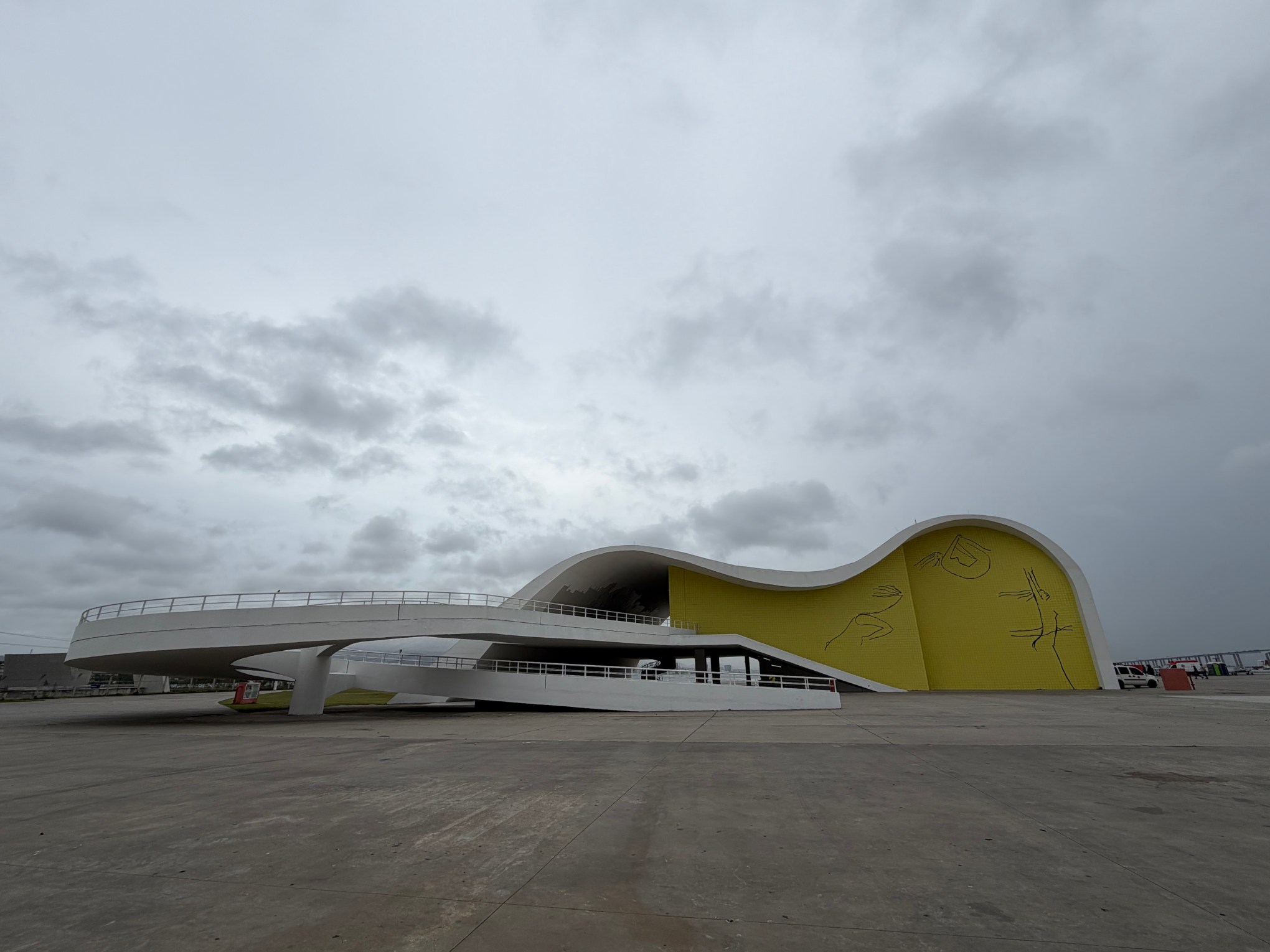
You can learn more on Neimeyer better from any LLM than from me or any other human. It will summarize it, structure it, provide sources for further research. Will LLM enabled accessories like the Meta glasses become new tour guides and navigators becoming a futuristic version of the audio tour at a museum? (for those wary, an app to let you know when these smart glasses nearby)
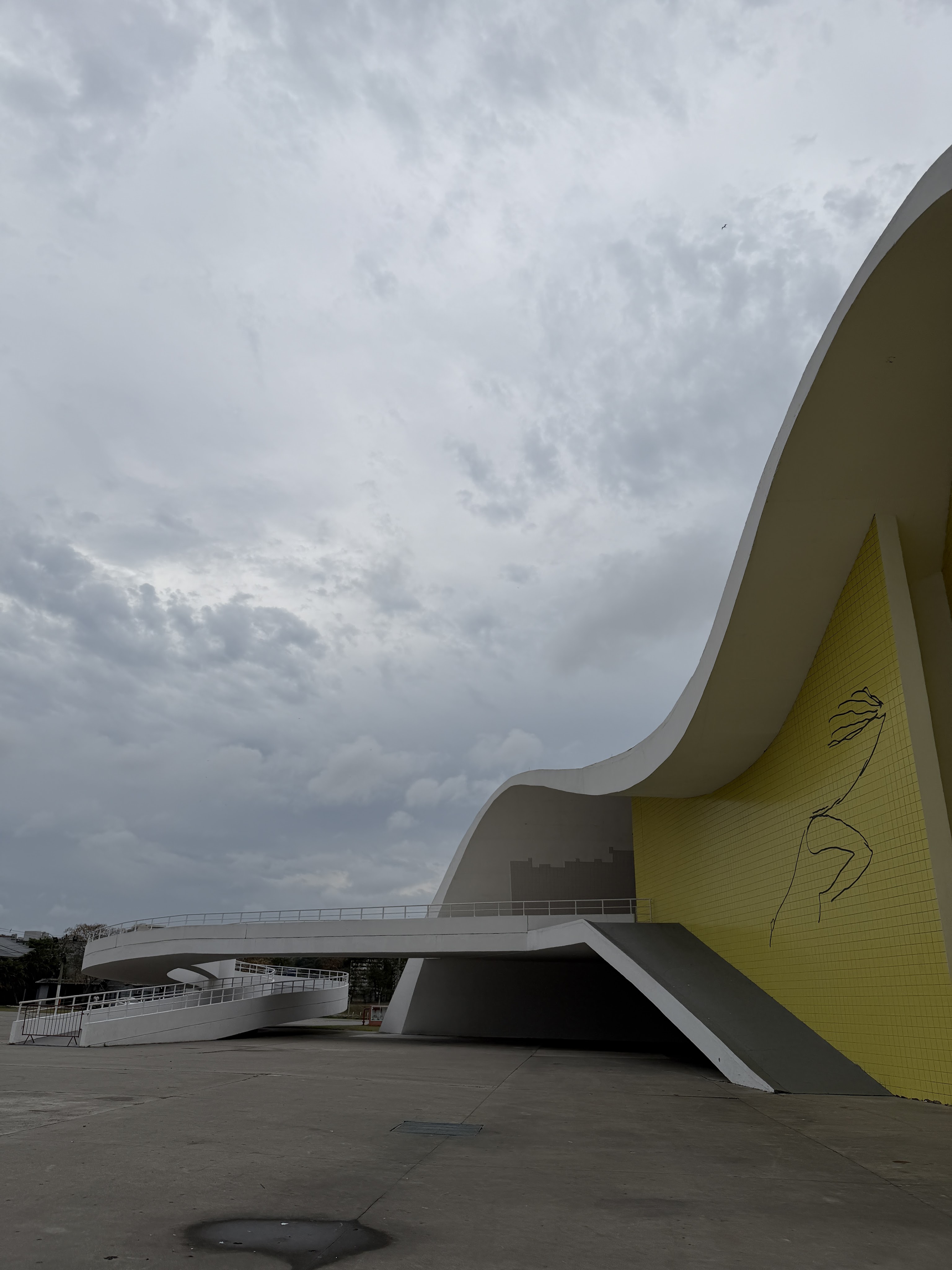
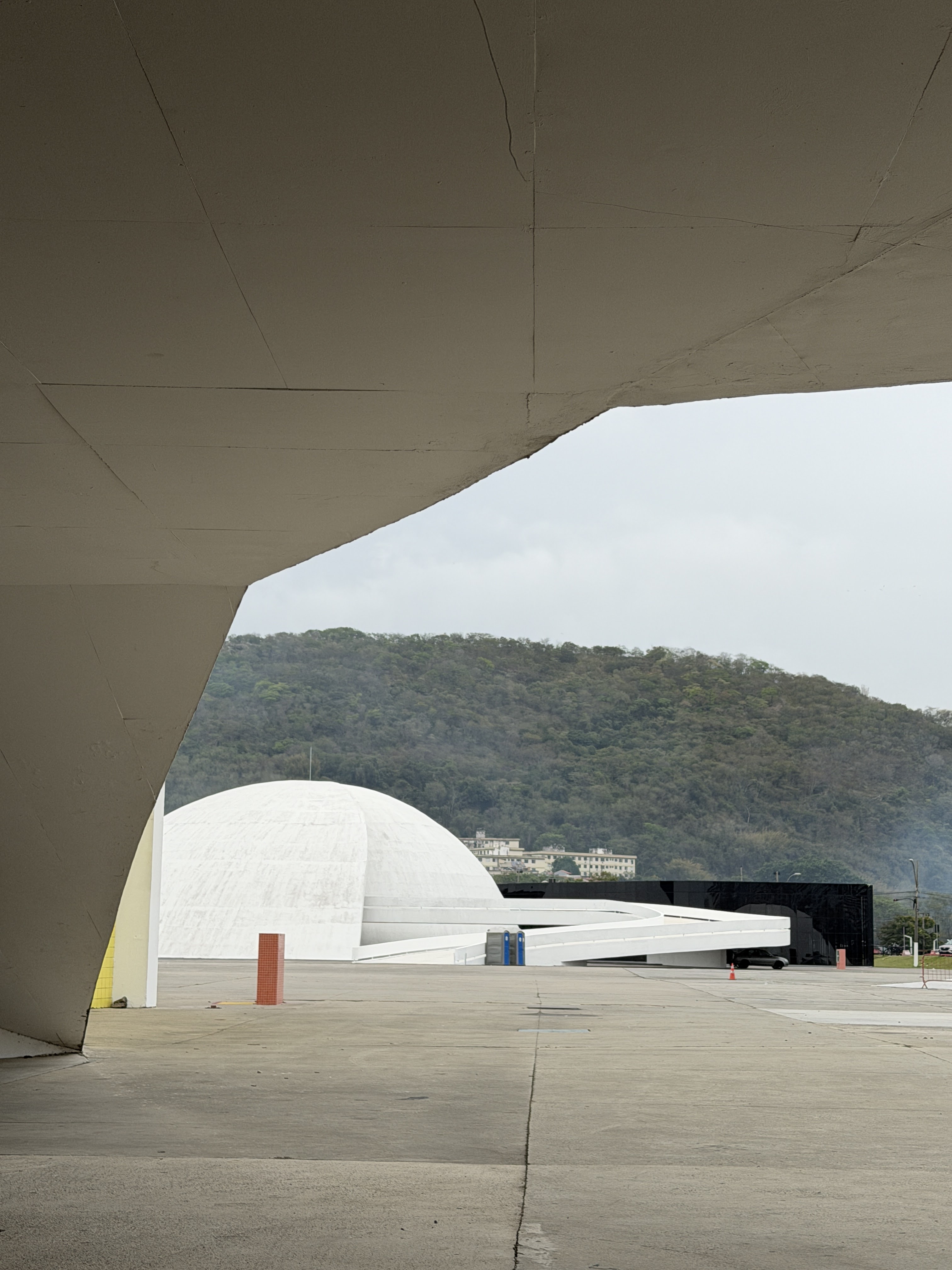
But will it tell you how it feels? Can it give you a sense of scale? Will it make small odd observations about the red boxes that are seemingly randomly placed that contain firehoses… a pattern picked up on building after building exploring the city? As the impact COVID had on motor skills of children – not due to the virus itself but due to the expanded screen time and lack of outdoor activity – the impact of these LLMs on humanity are yet to be known- but who knows what is good or bad.
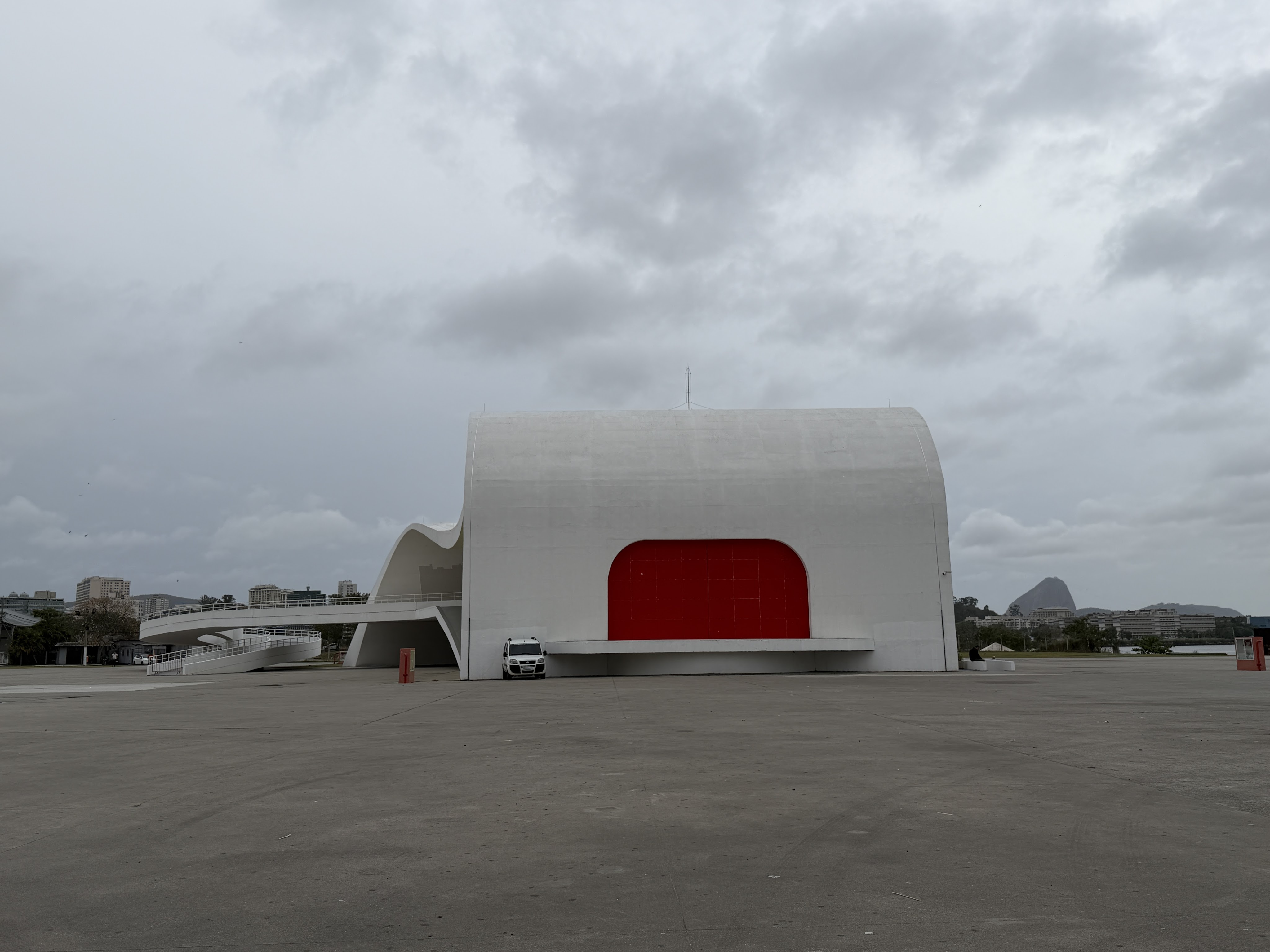
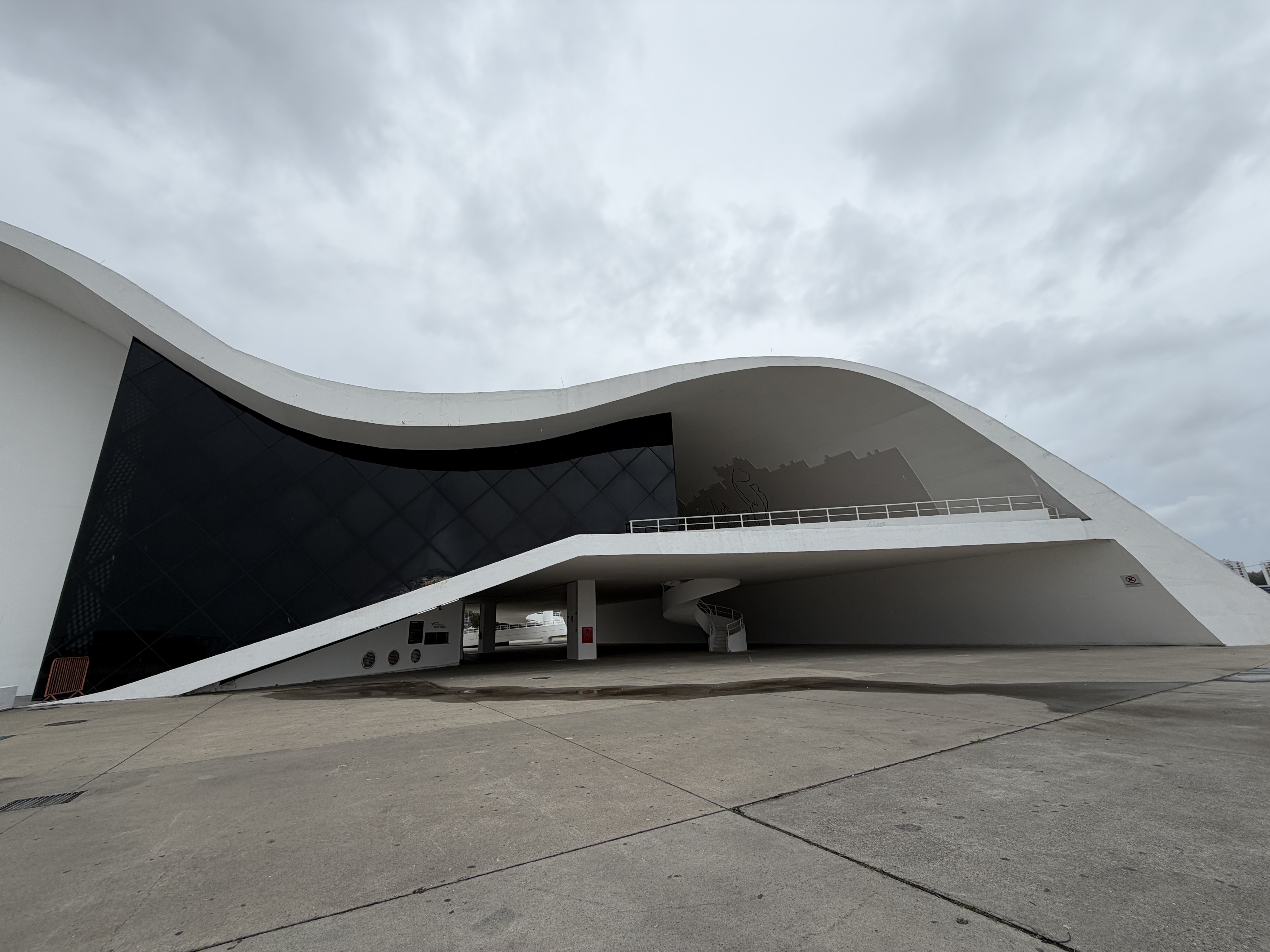
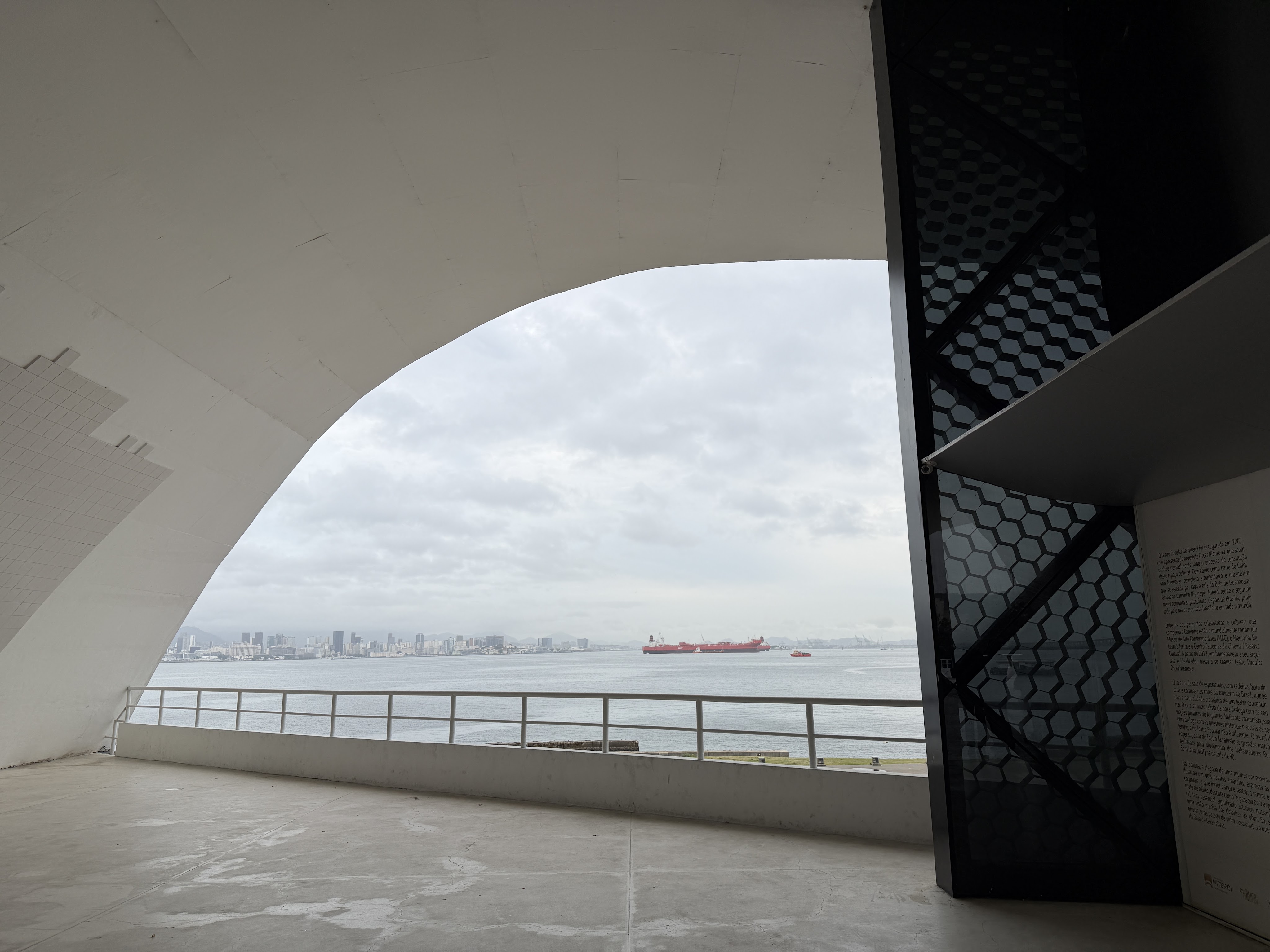
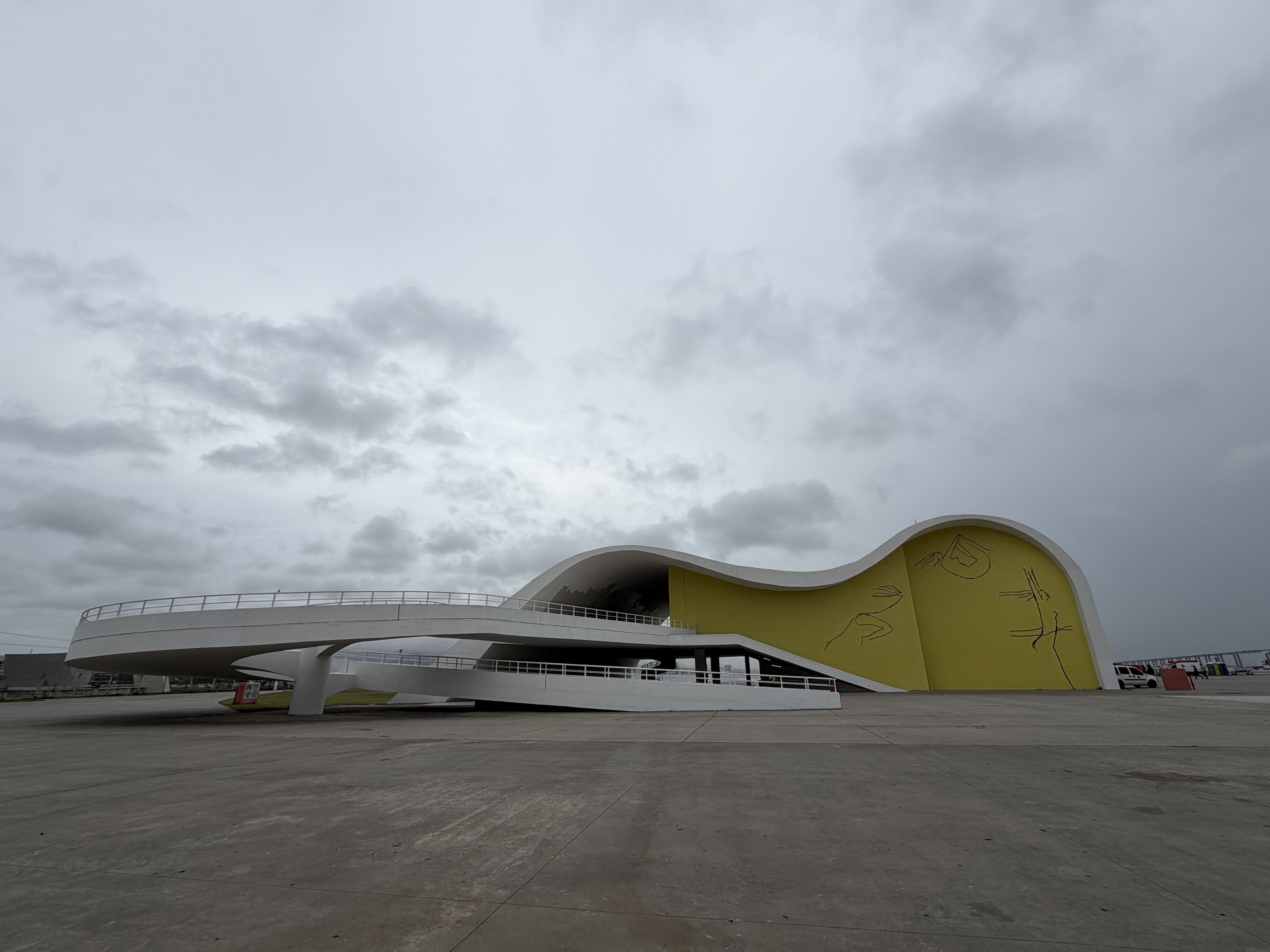
Before I read up on any LLM, let me see what my mind can come up with first. What I can recall is the importance of the connection to nature- and in this position, you can see the reflection of the shape of Sugarloaf Mountain in the shape of roof of the Popular Theater. The curves of the building are an invitation to all.
And indeed, prompting Gemini 3 Pro (dated Feb 23, 2026), it returned this quote (and the quotes noted below):
“I am not attracted to straight angles or to the straight line, hard and inflexible, created by man. I am attracted to free-flowing, sensual curves. The curves that I find in the mountains of my country, in the sinuousness of its rivers, in the waves of the ocean, and on the body of the beloved woman.” — Oscar Niemeyer
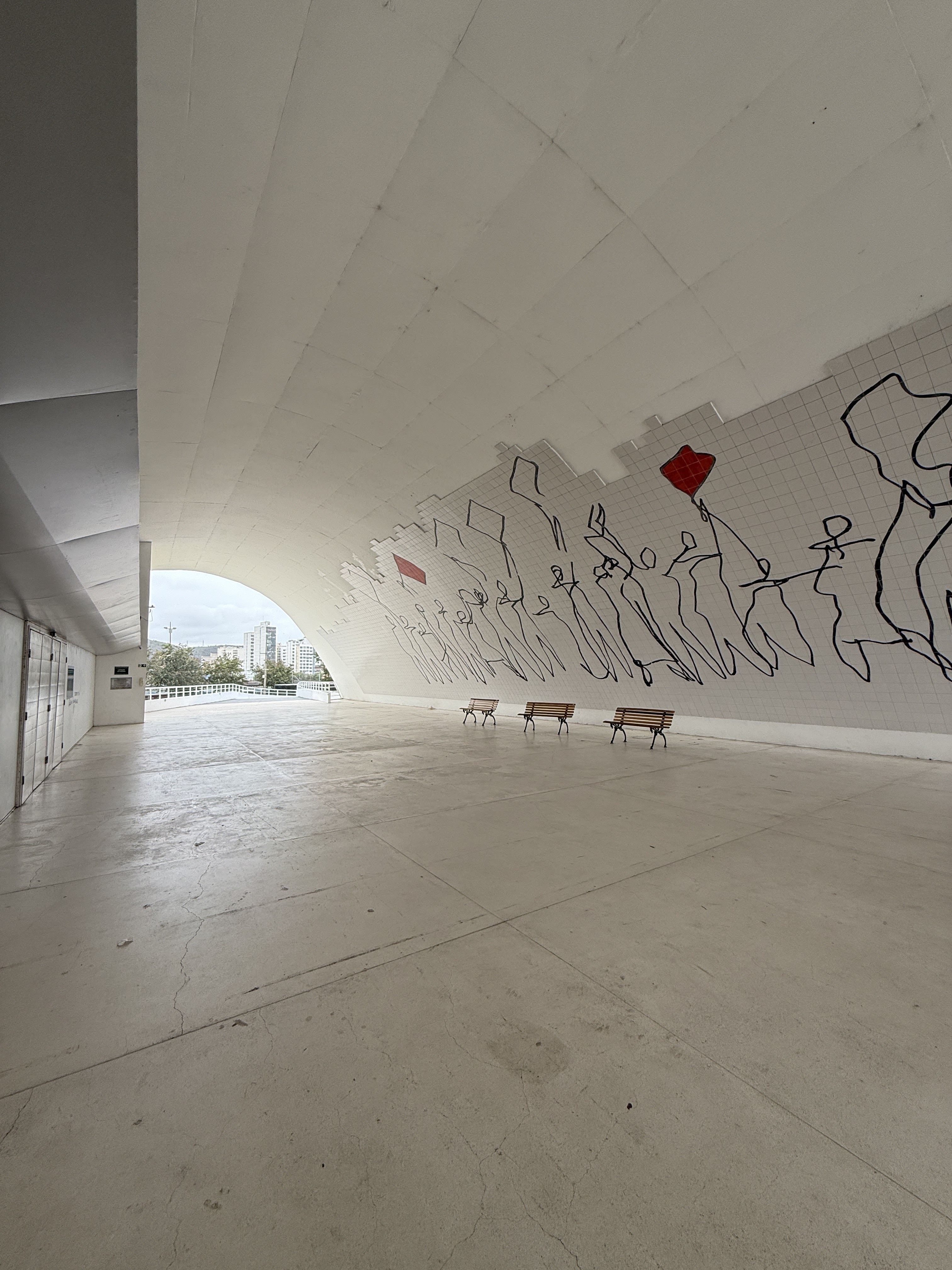
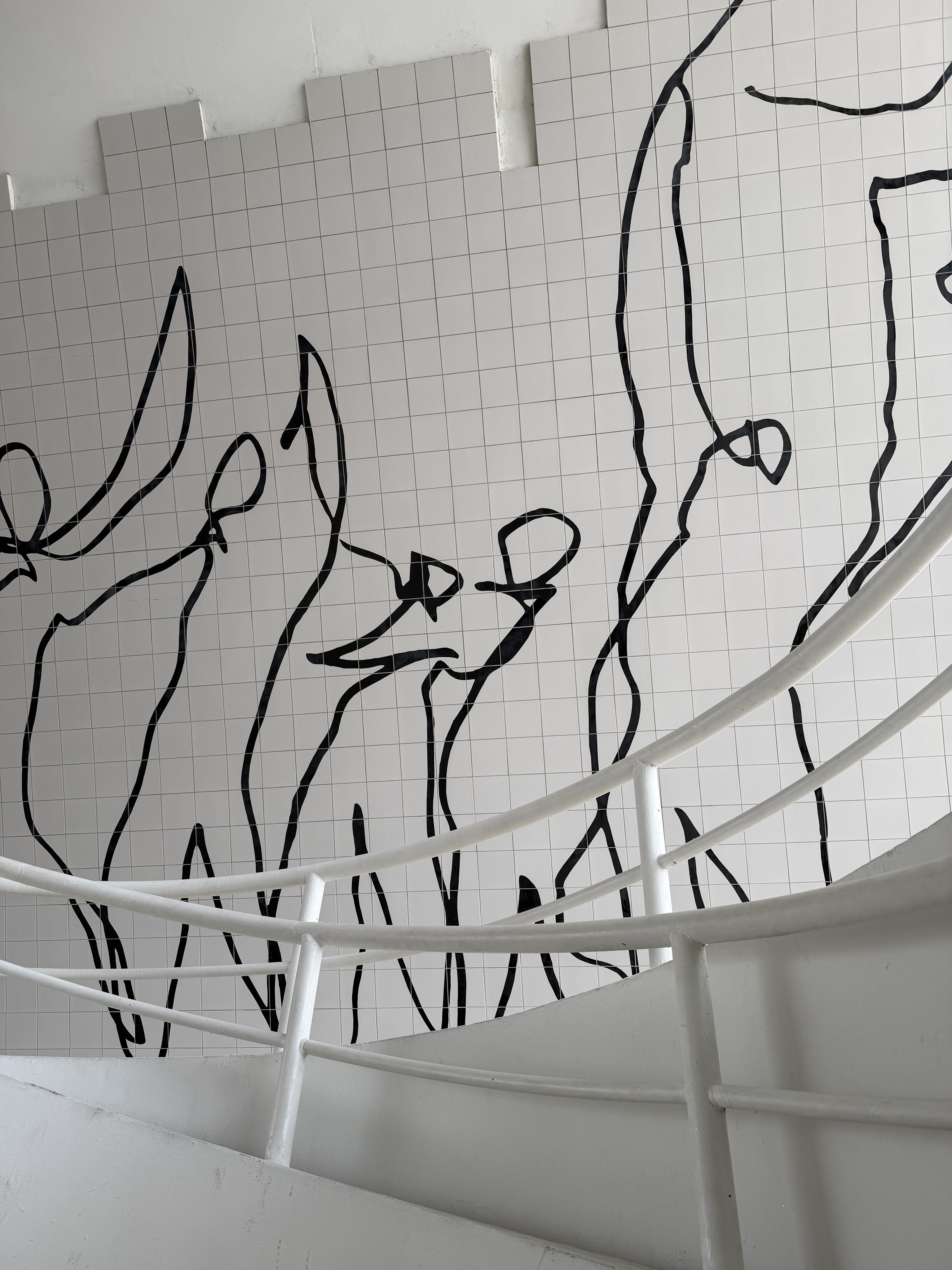
I also remember learning about Oscar’s political positions, being left leaning- notably the red flag in this mural being a representation. This is the photo for this post that I submitted to Gemini:
A Lifelong Communist: Niemeyer was a devout, lifelong communist. He officially joined the Brazilian Communist Party (PCB) in 1945 and remained a committed Marxist until his death at age 104 in 2012. He was close friends with figures like Fidel Castro, who once famously joked, “Niemeyer and I are the last communists.”
Political Exile: His political views were not just theoretical; they had severe real-world consequences for him. When a right-wing military dictatorship took power in Brazil in 1964, Niemeyer’s office was raided, his projects were halted, and he was ultimately forced into exile in Paris. He only returned to Brazil after the dictatorship ended in the 1980s.
Architecture for the Masses: The very nature of this building—a Popular Theater—aligns perfectly with his ideals. Niemeyer believed that monumental, beautiful architecture, culture, and art shouldn’t be gated off for the wealthy elite. The sweeping, open, democratic plaza where this mural sits was designed specifically to invite everyday people in, breaking down class barriers through public space.
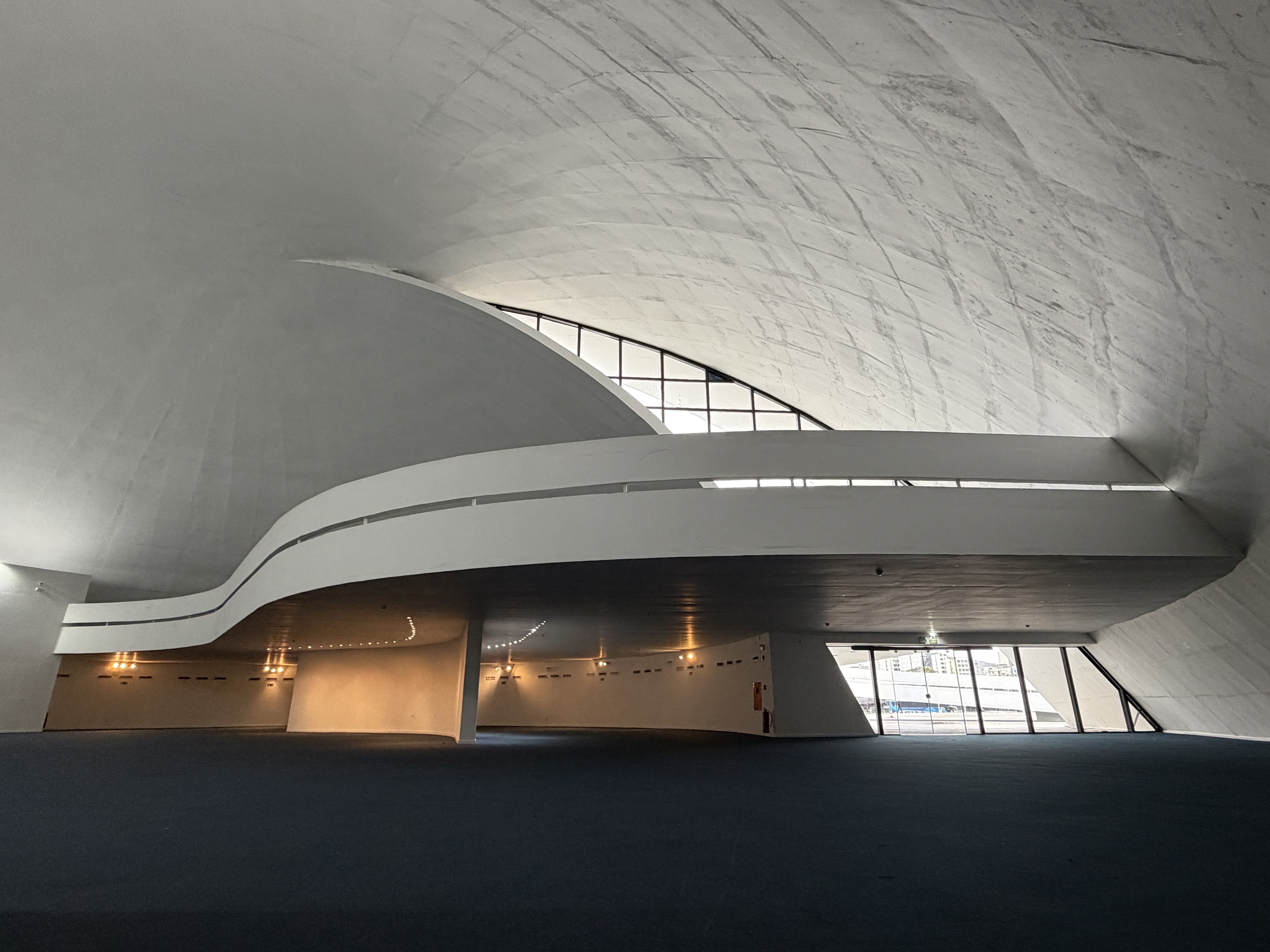
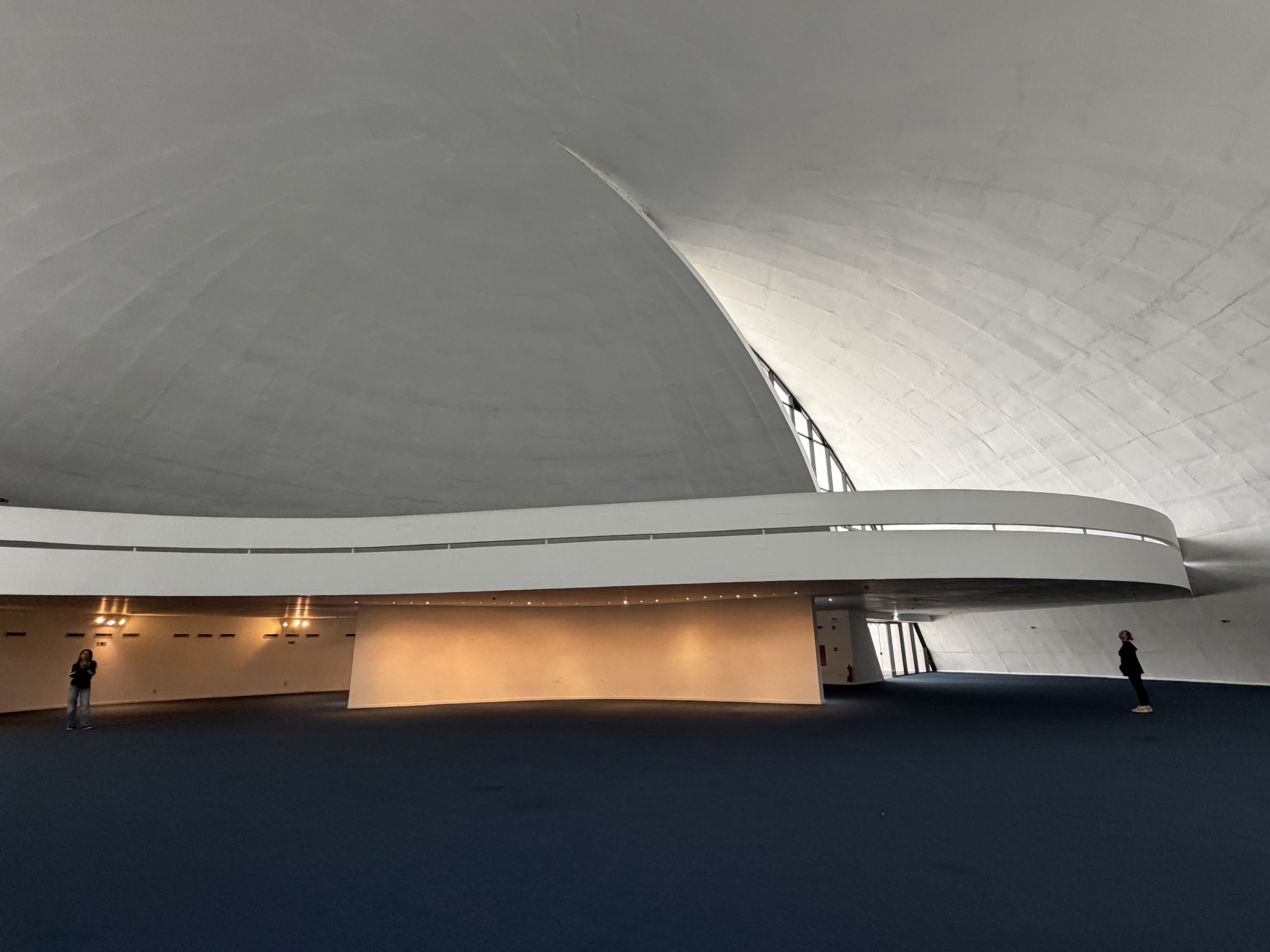
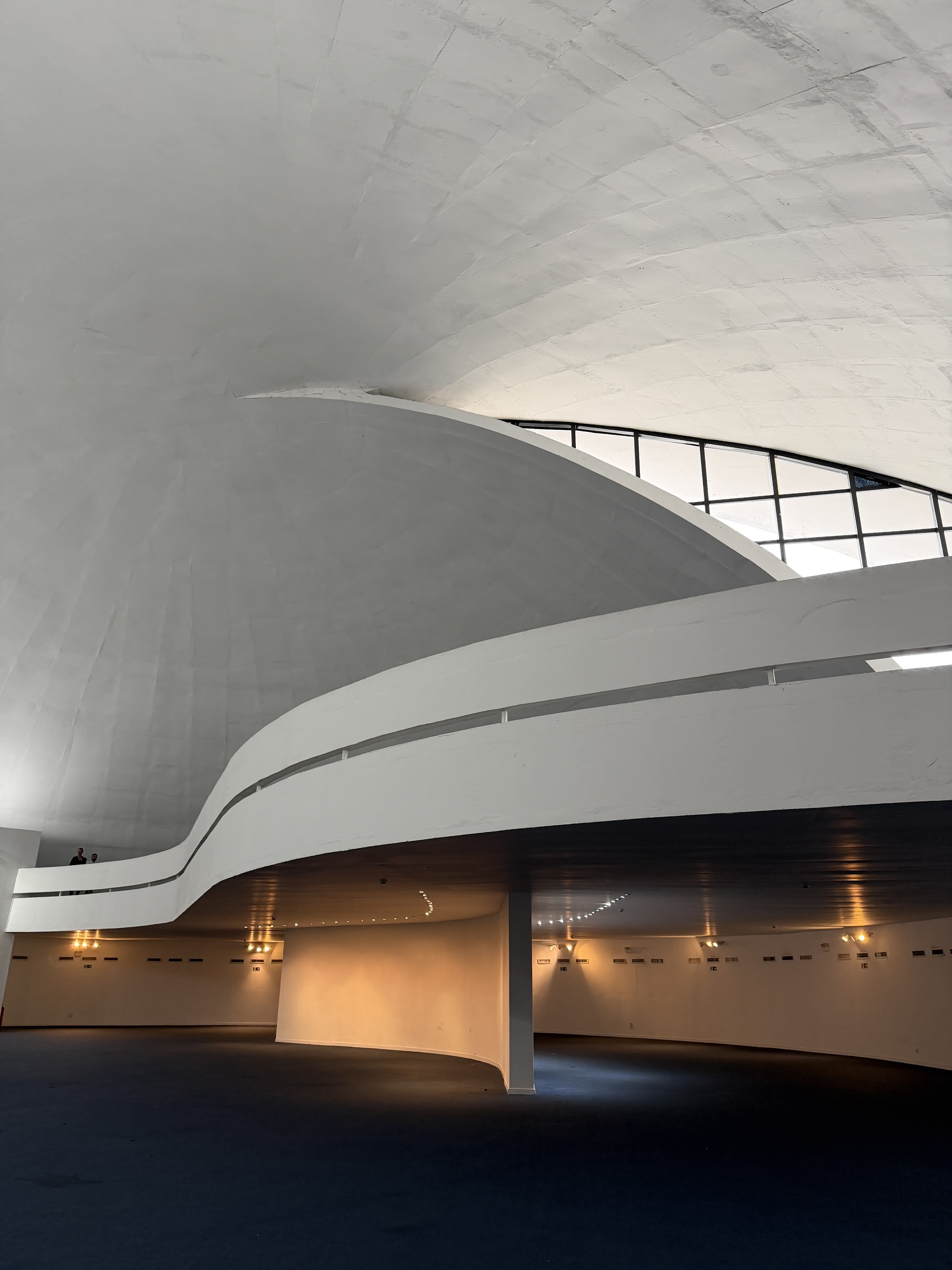
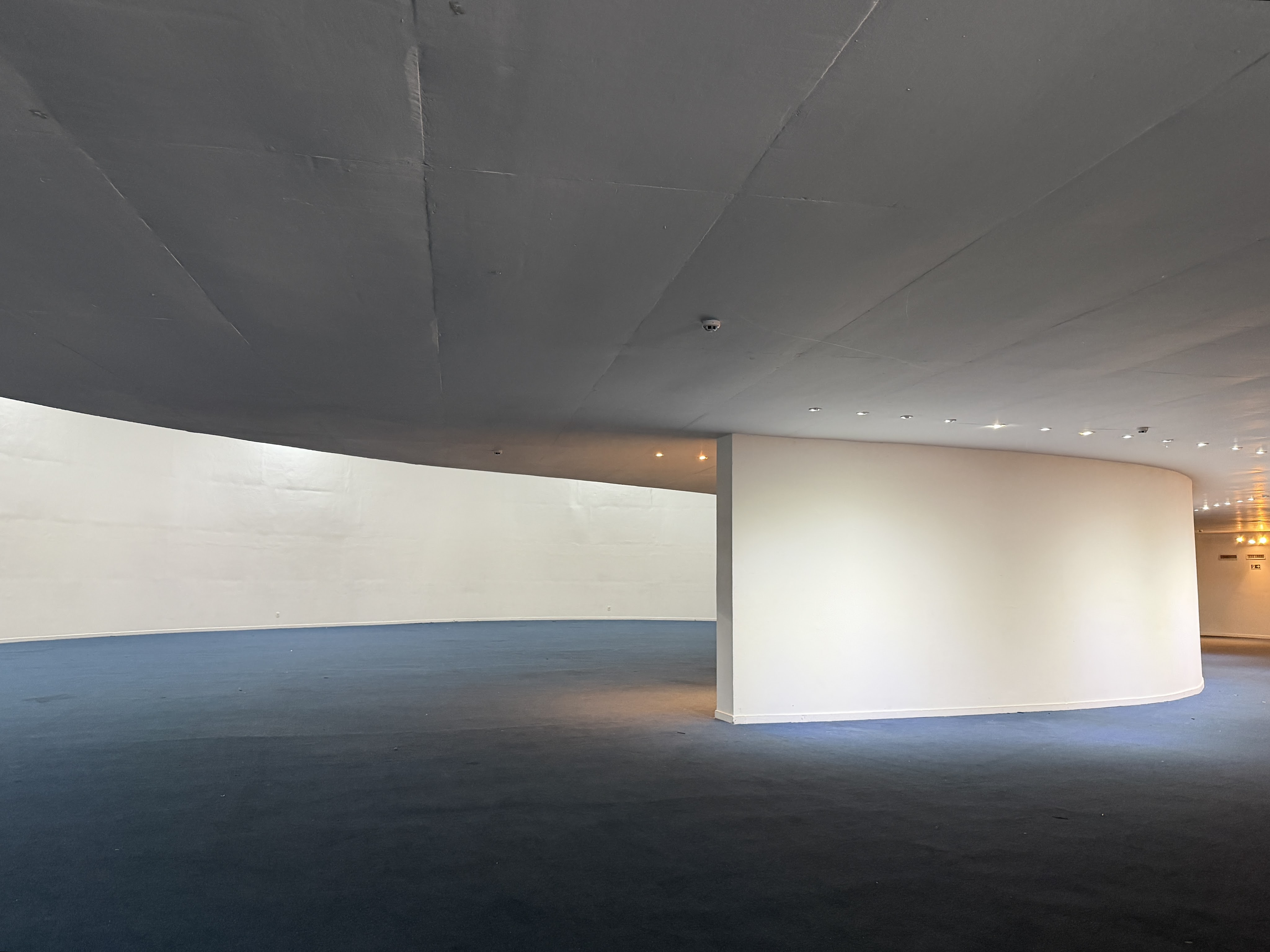
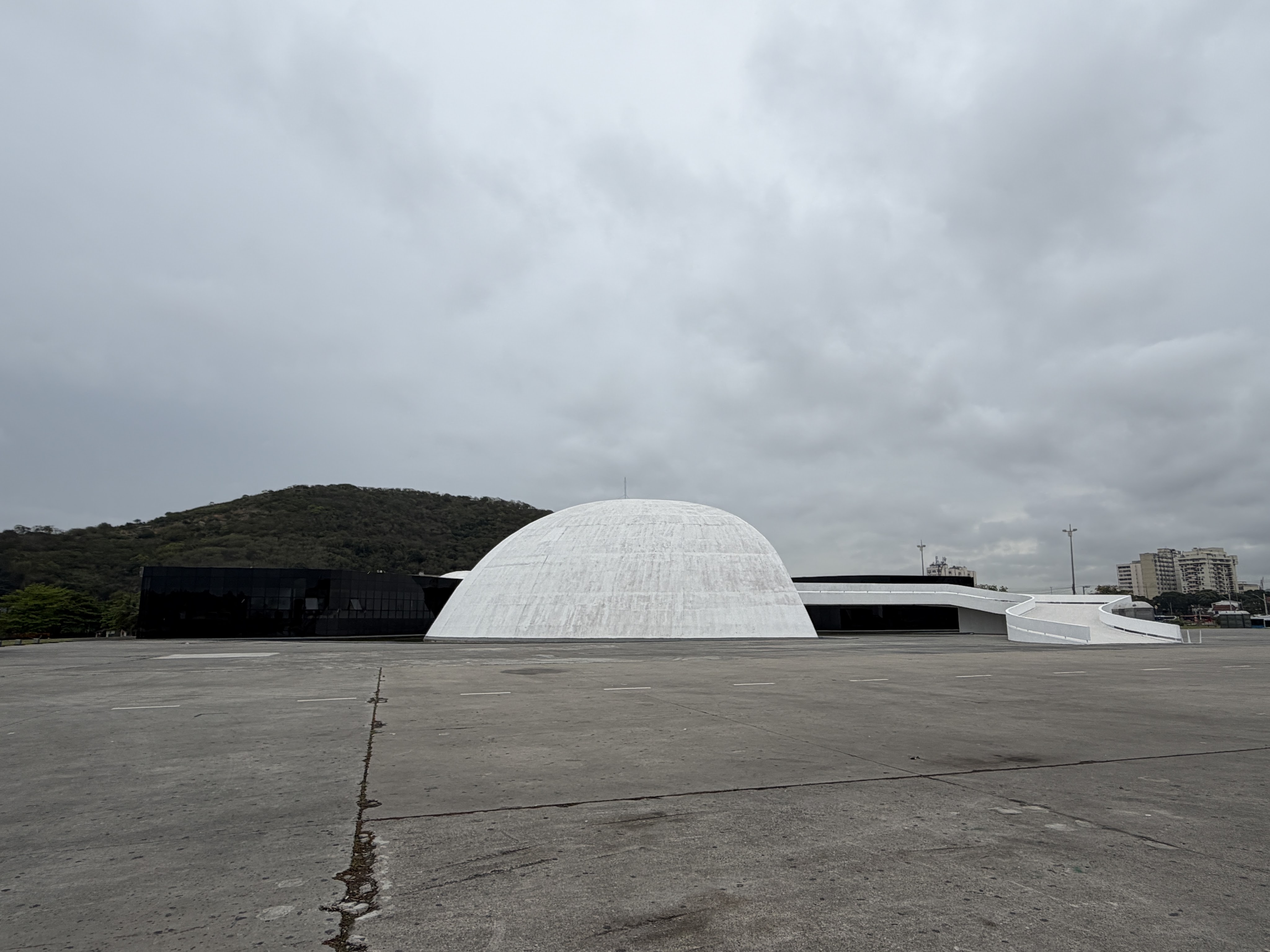
The Memorial and Theater were both closed, but we were fortunate still to have an onsite guide bring us into the Foundation Headquarters which has an acoustically incredible performance space inside.
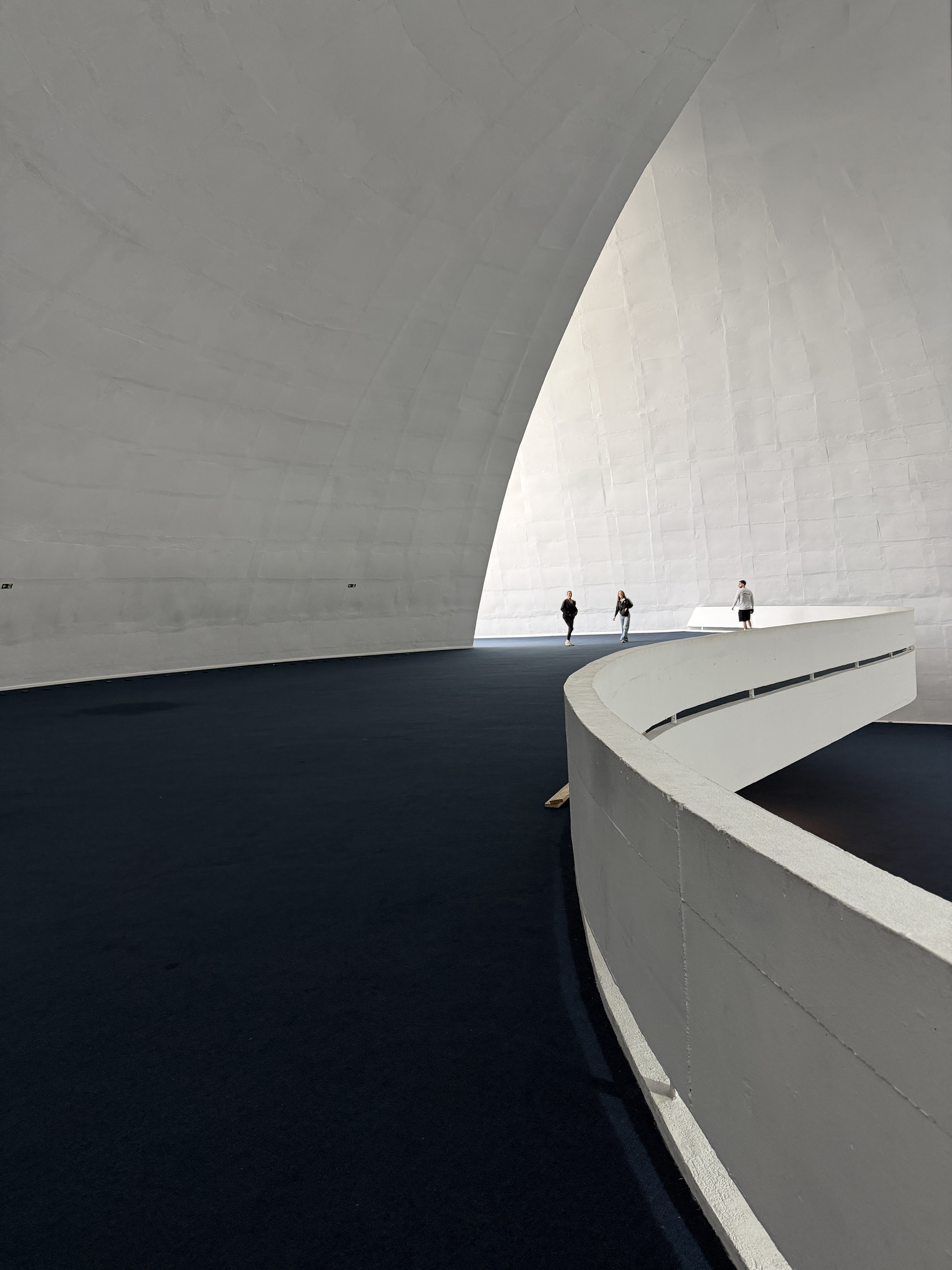
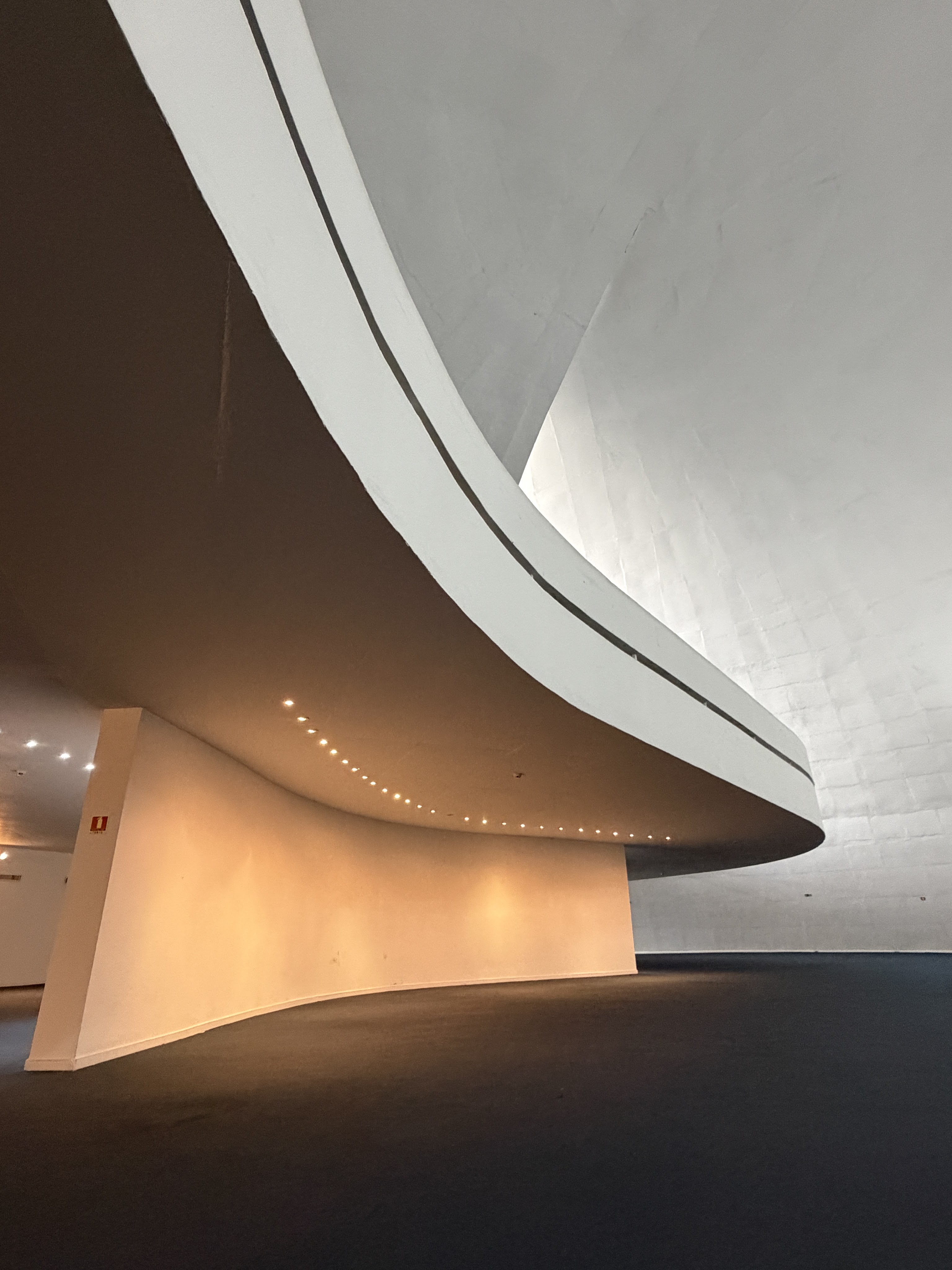
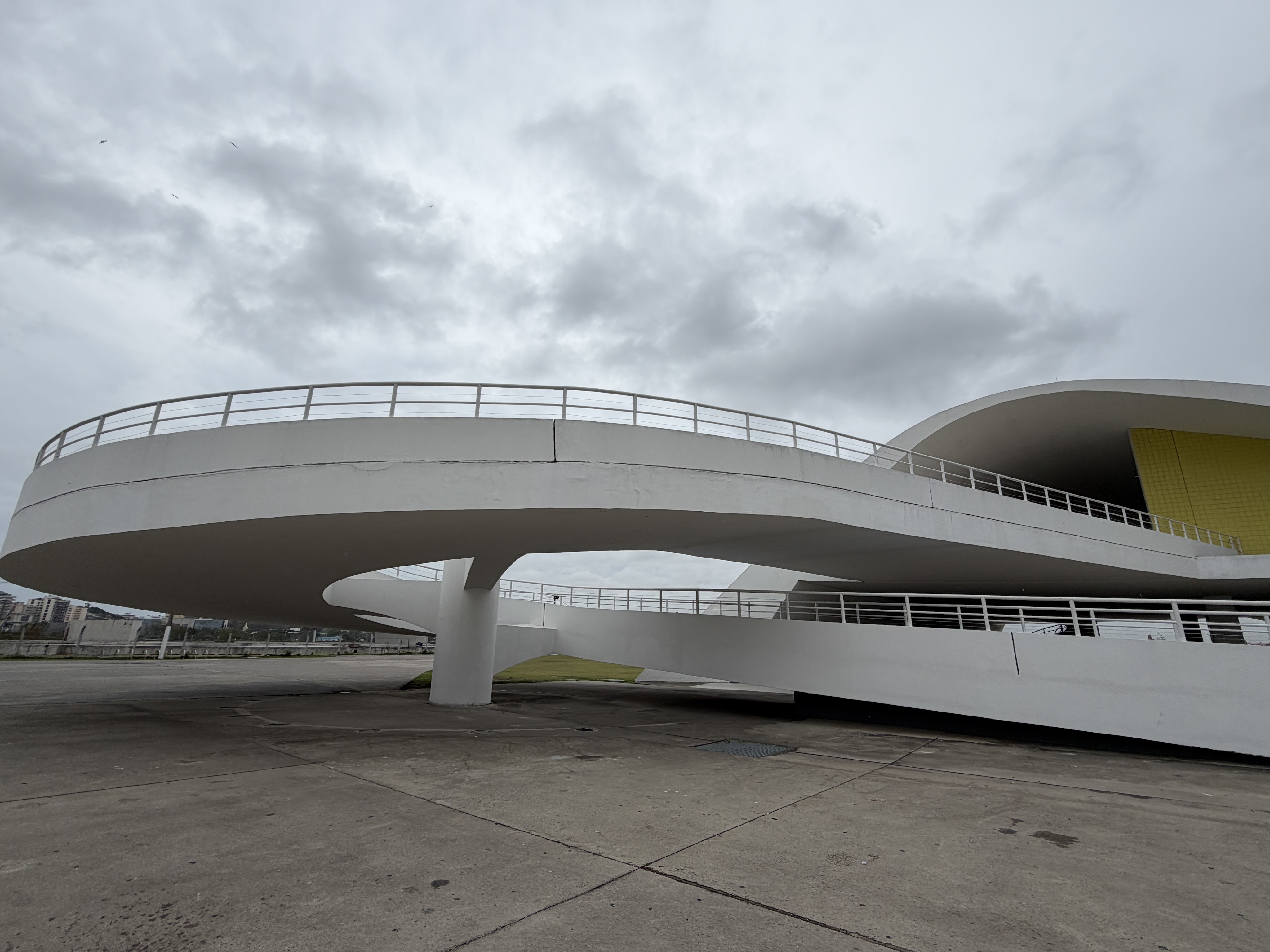
Speaking of scale above, the long sweeping curves of the space are like walking through a giant hand drawing- more elegant in scale than any Gehry. This set of buildings were my first of Neimeyer and I think his legacy is really in his principle and simplicity. This post includes quite a bit of context leading into more to come on Neimeyer.
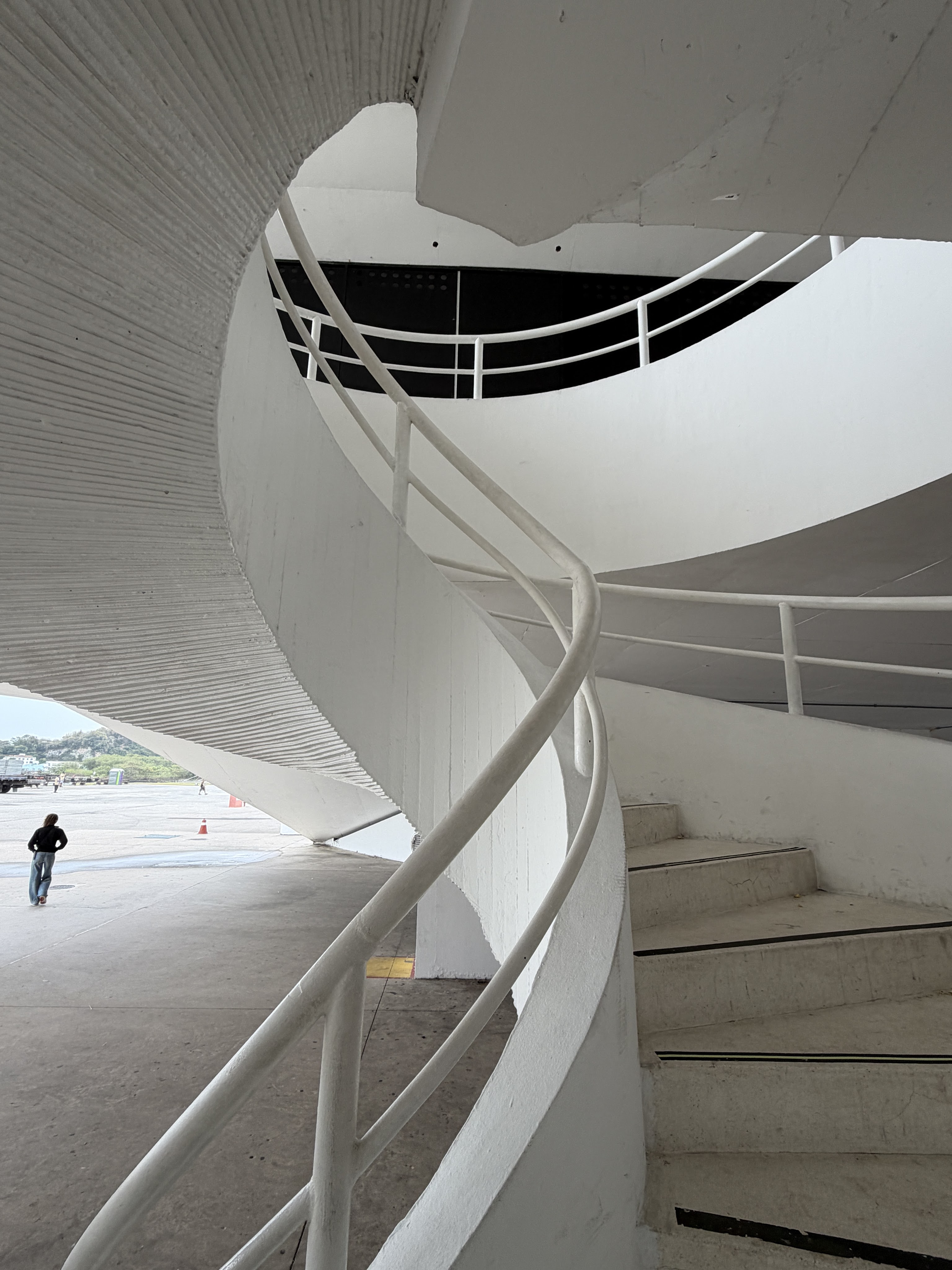
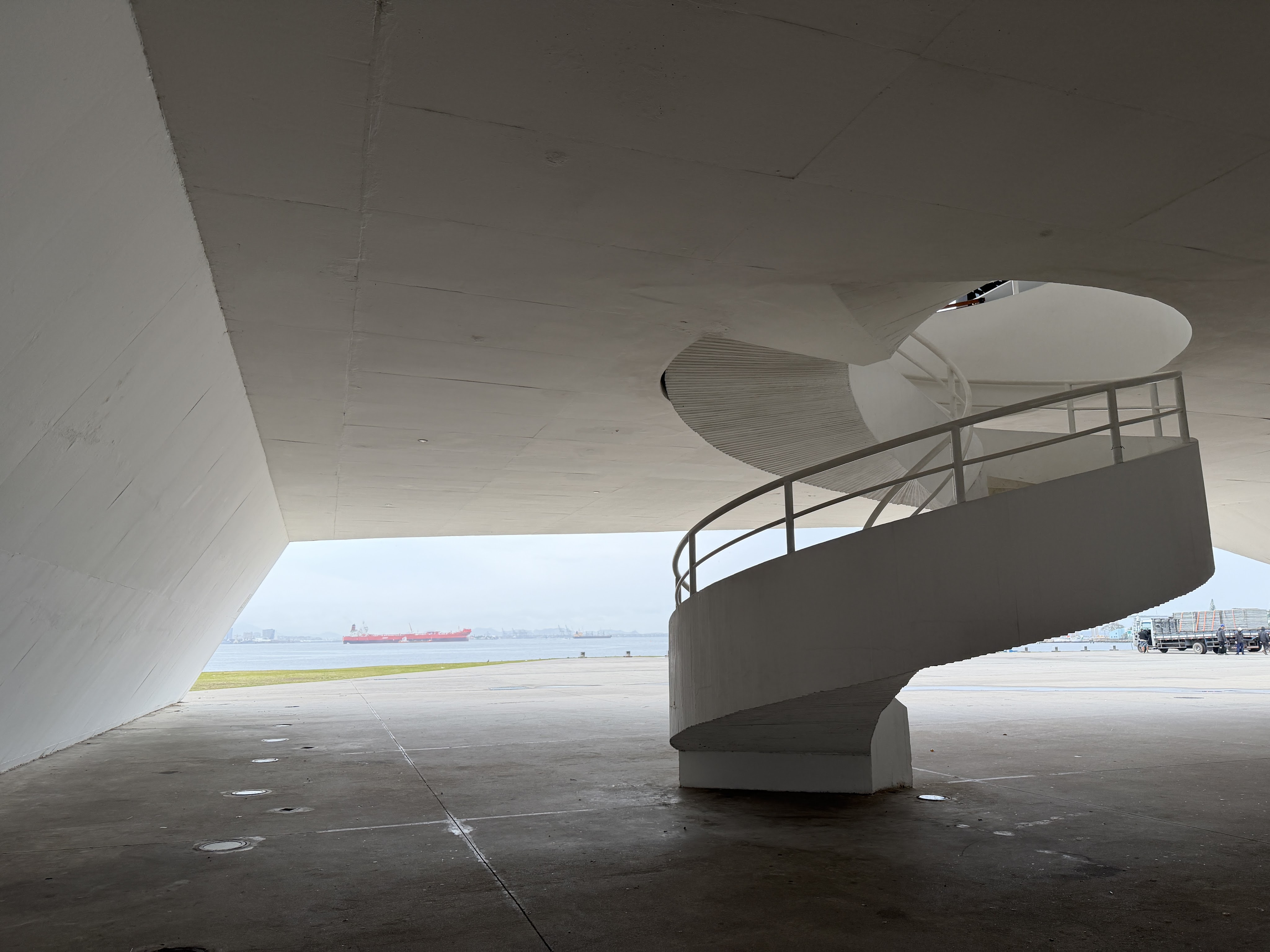
I love the inbetween spaces and Neimeyer has a very particular form of building stairs. The textured surface of the bottom of the stairs is seen also in his more famous Niterói Contemporary Art Museum.
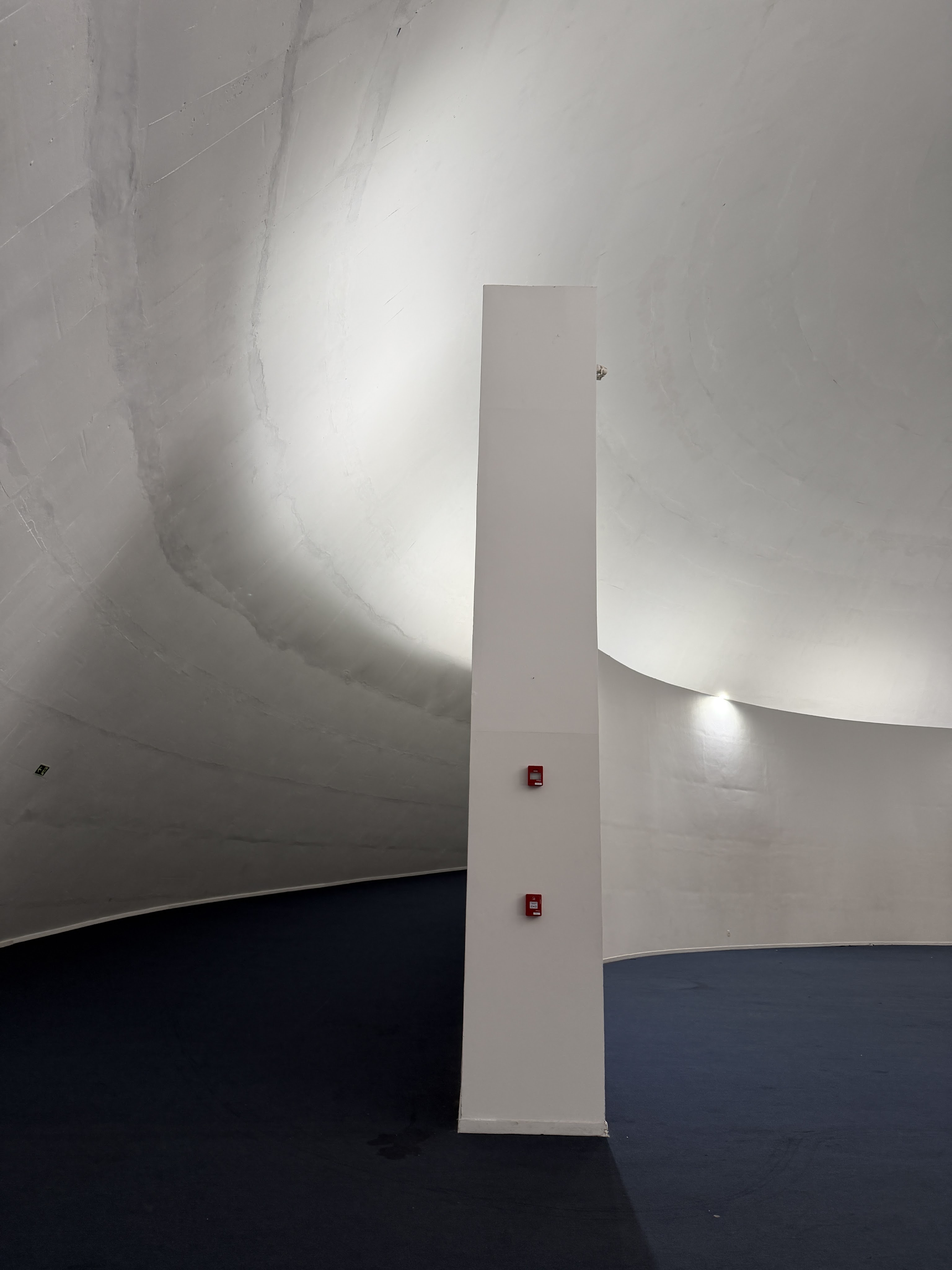
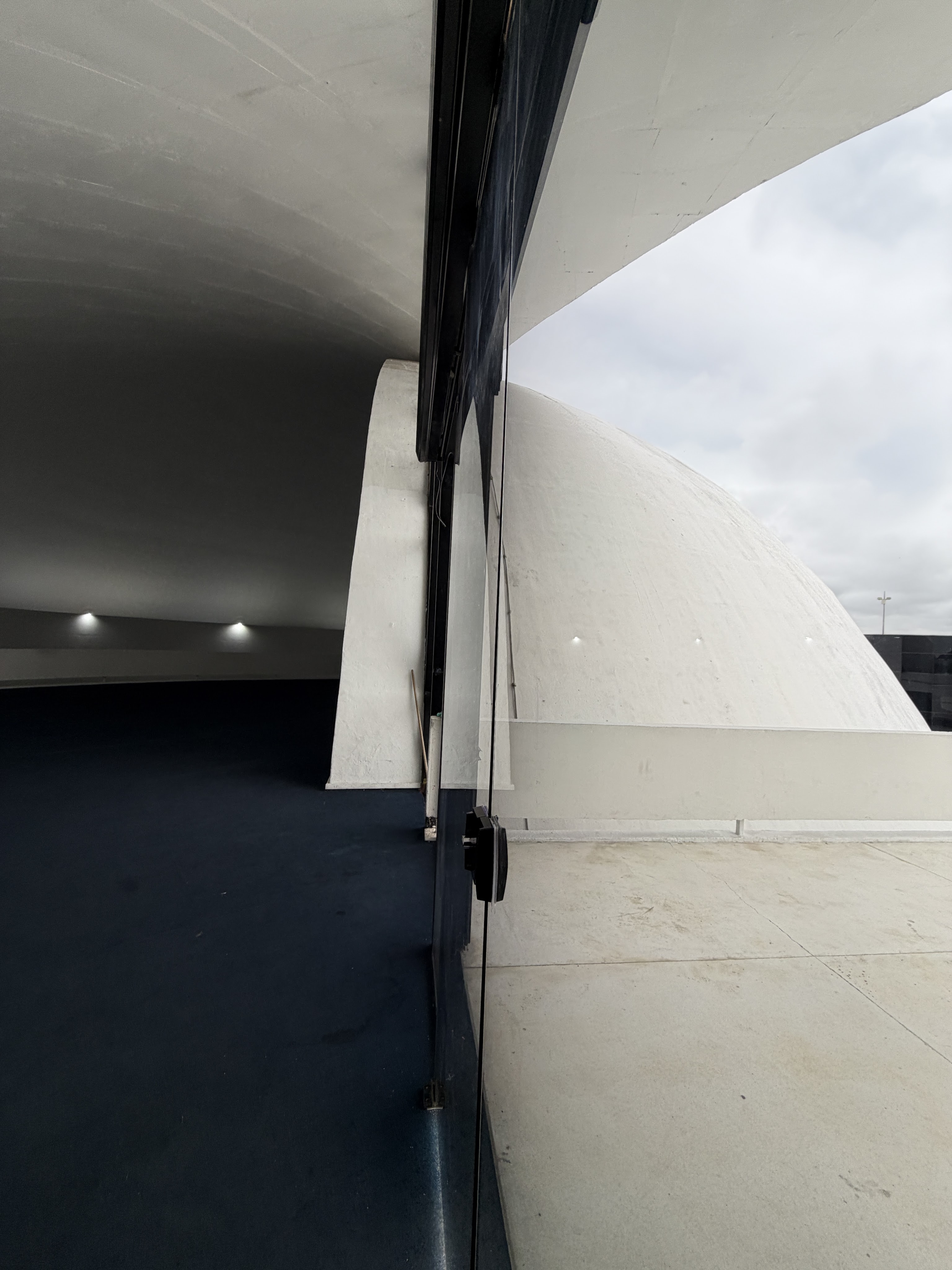
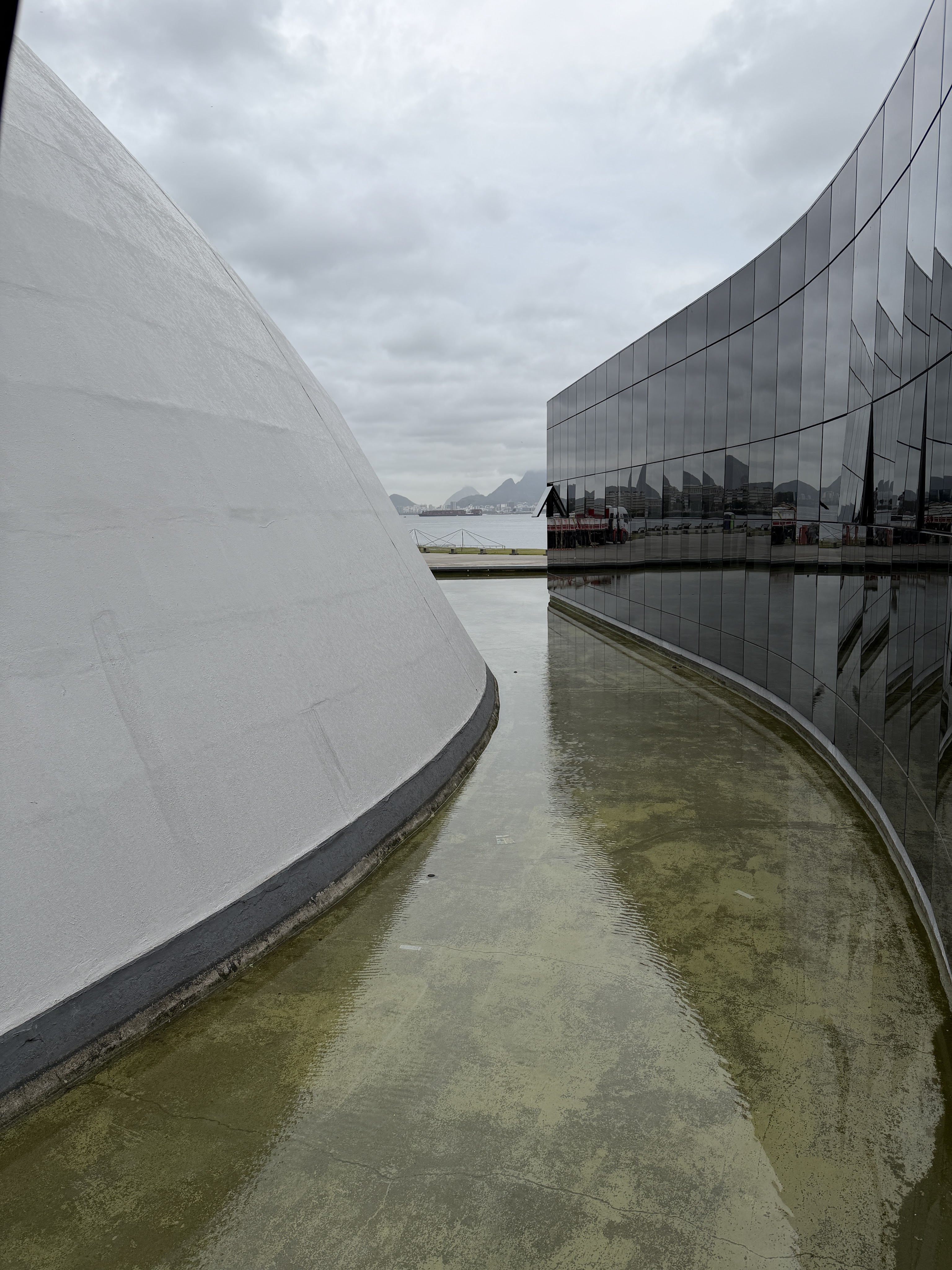
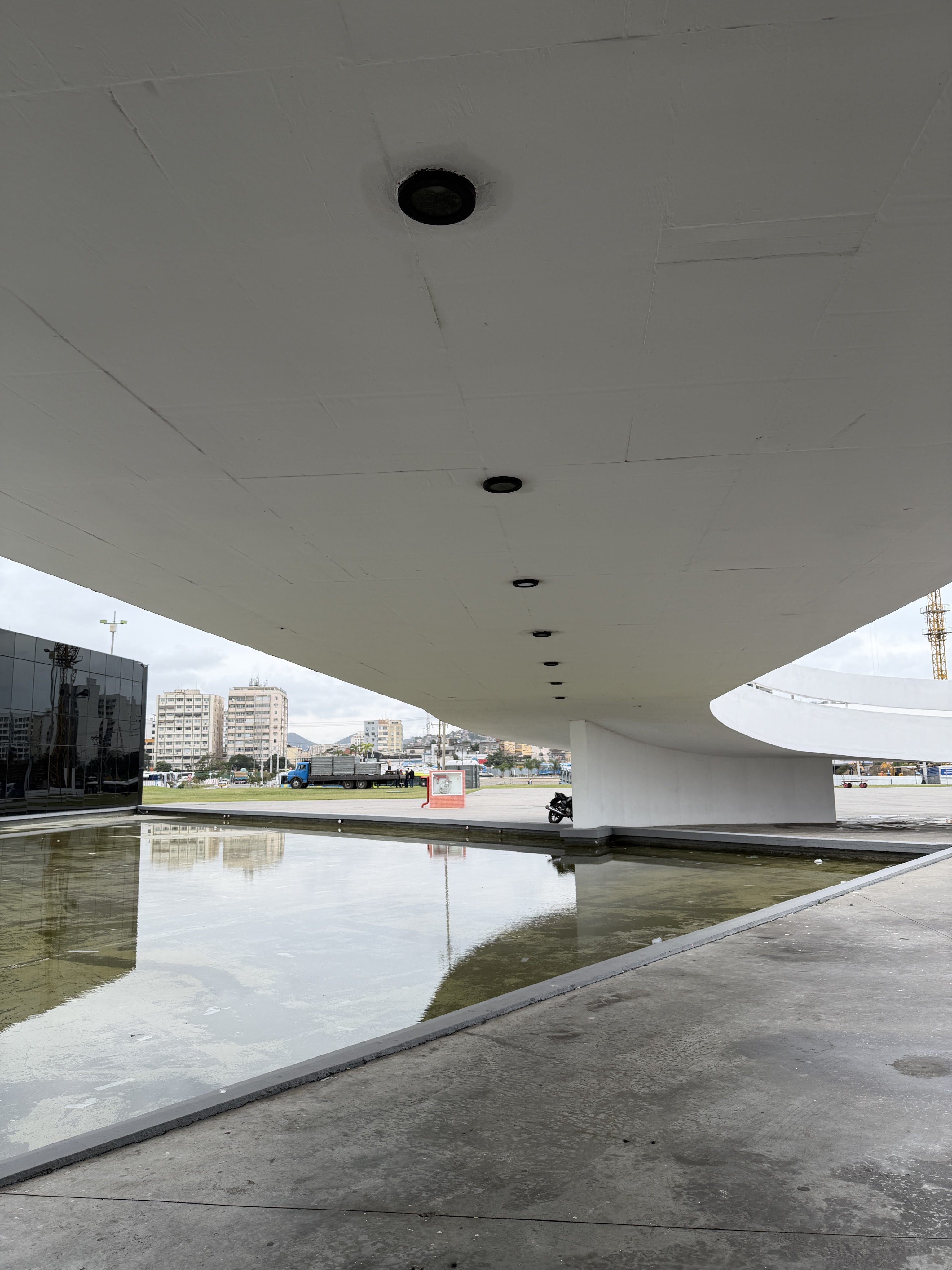
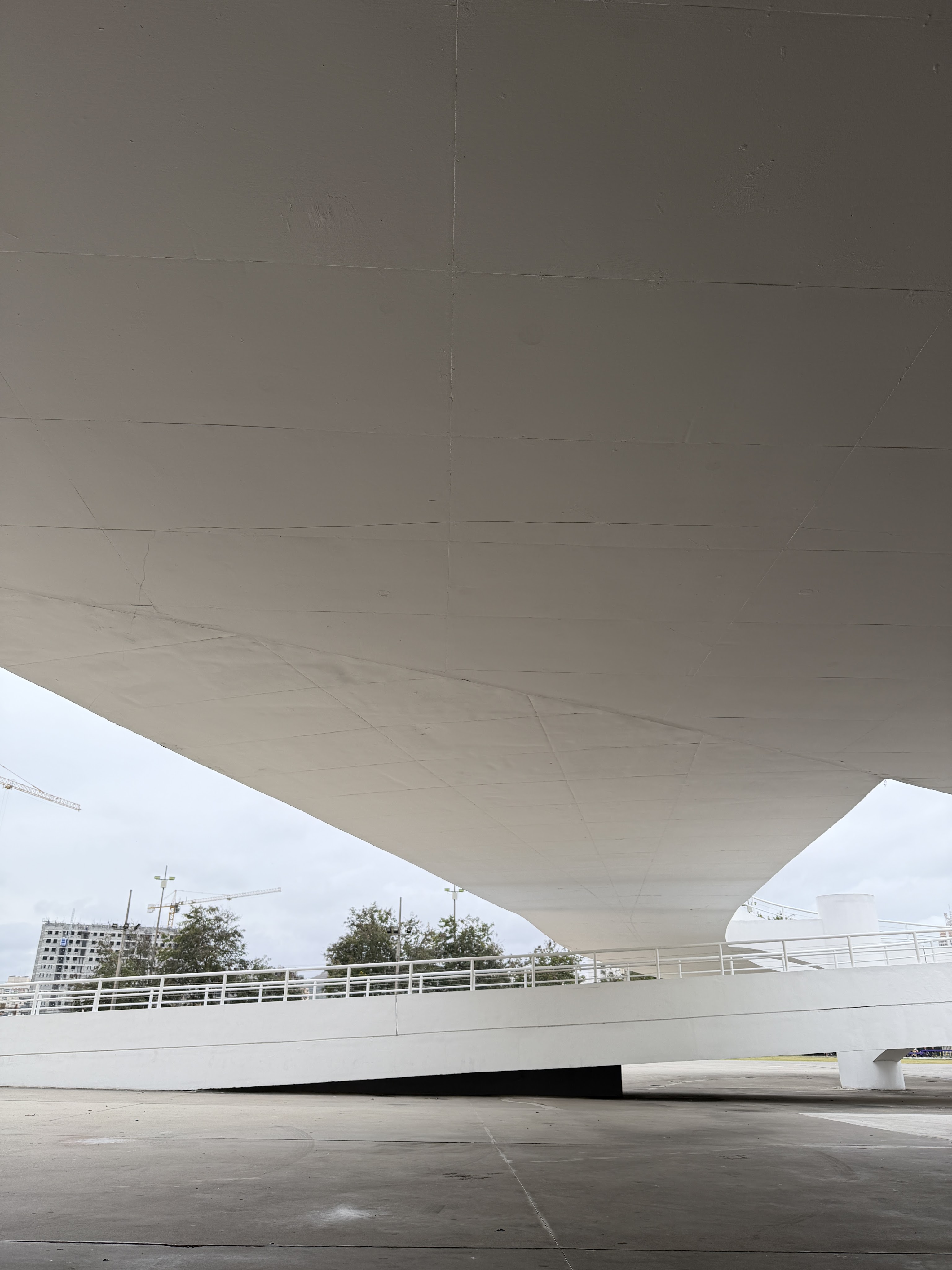
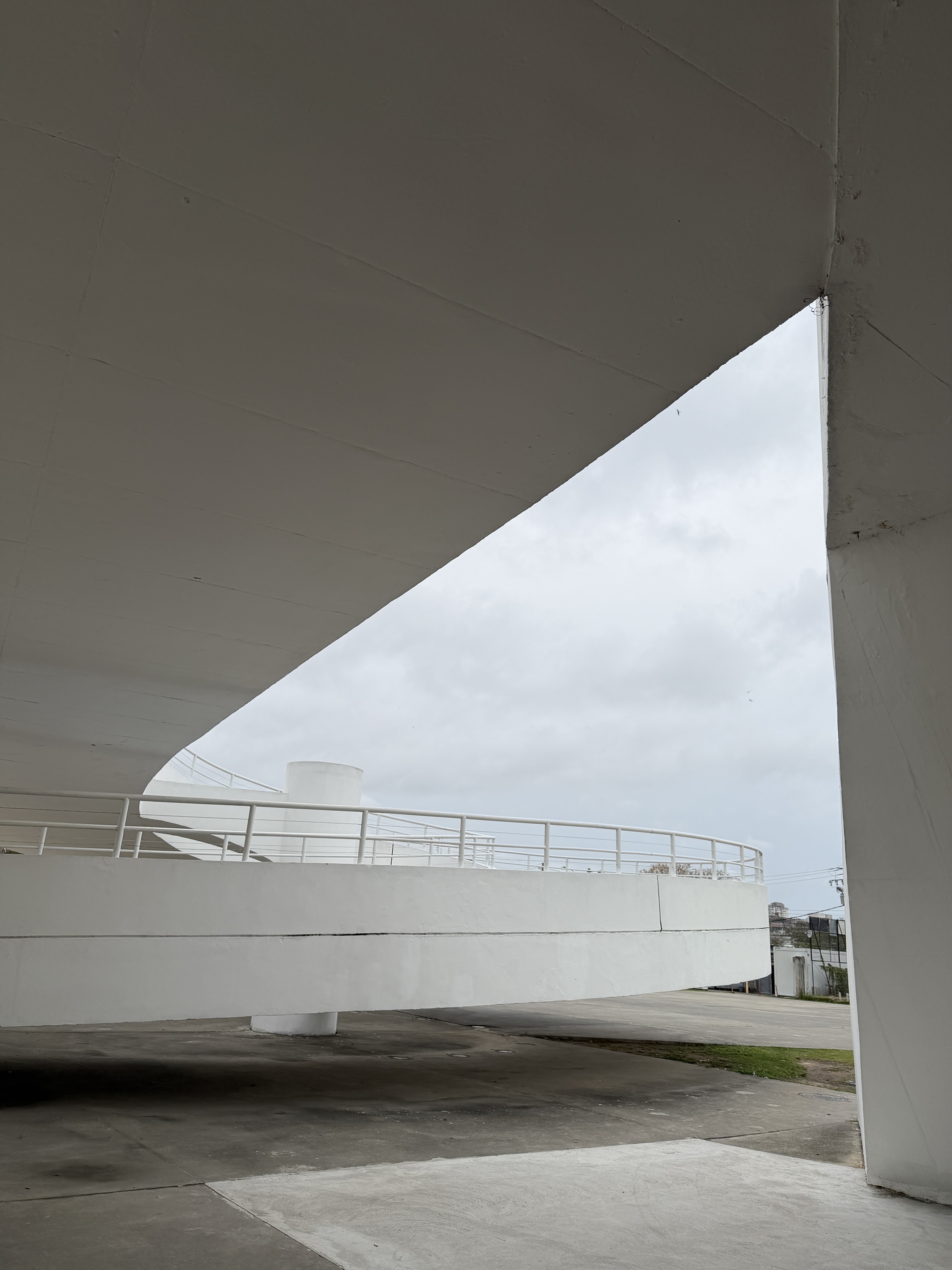
I love catching these shots of spaces split.
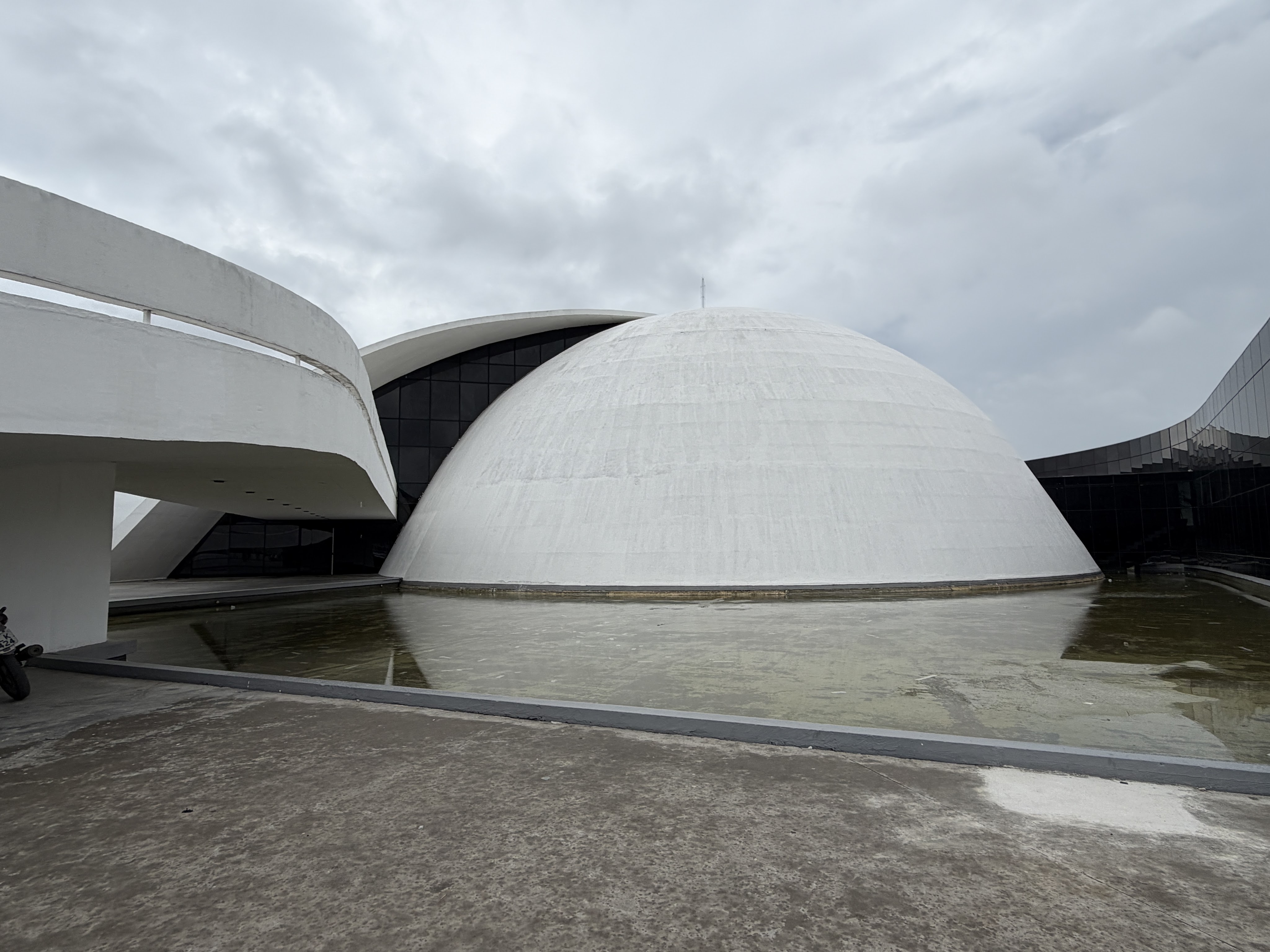
The three buildings at this site with construction dates:
- 2003: Roberto Silveira Memorial
- 2010: Oscar Niemeyer Foundation Headquarters
- 2007: Oscar Niemeyer Popular Theater (Teatro Popular Oscar Niemeyer)
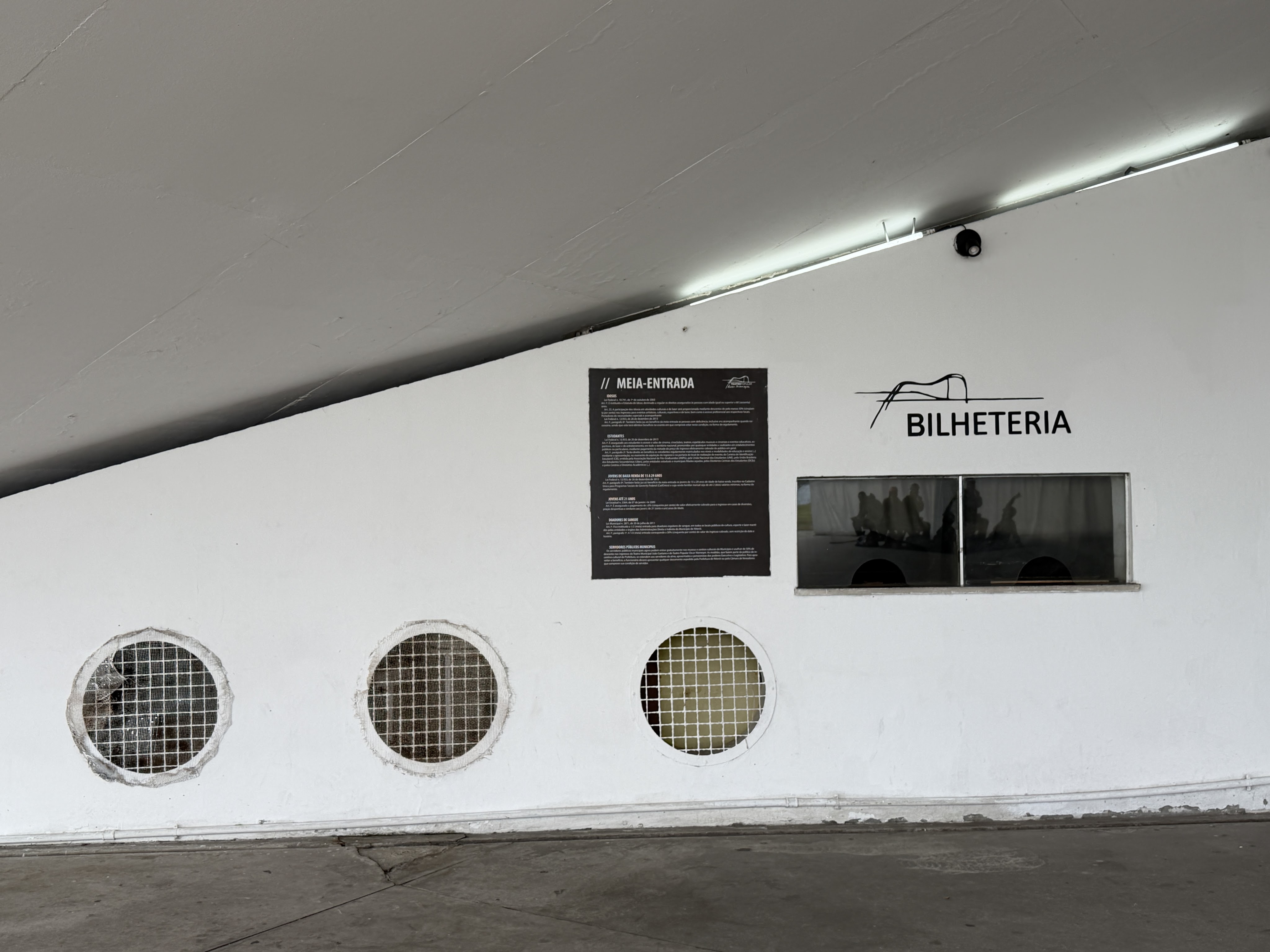
I bring up this information because the buildings are so recent and one of the most lasting impressions of this site is how old the buildings felt. I mean old in a couple of ways: old in the sense of its timelessness- these could be designed perhaps in any decade post WWII but more so old in the sense of the poor condition of these buildings.
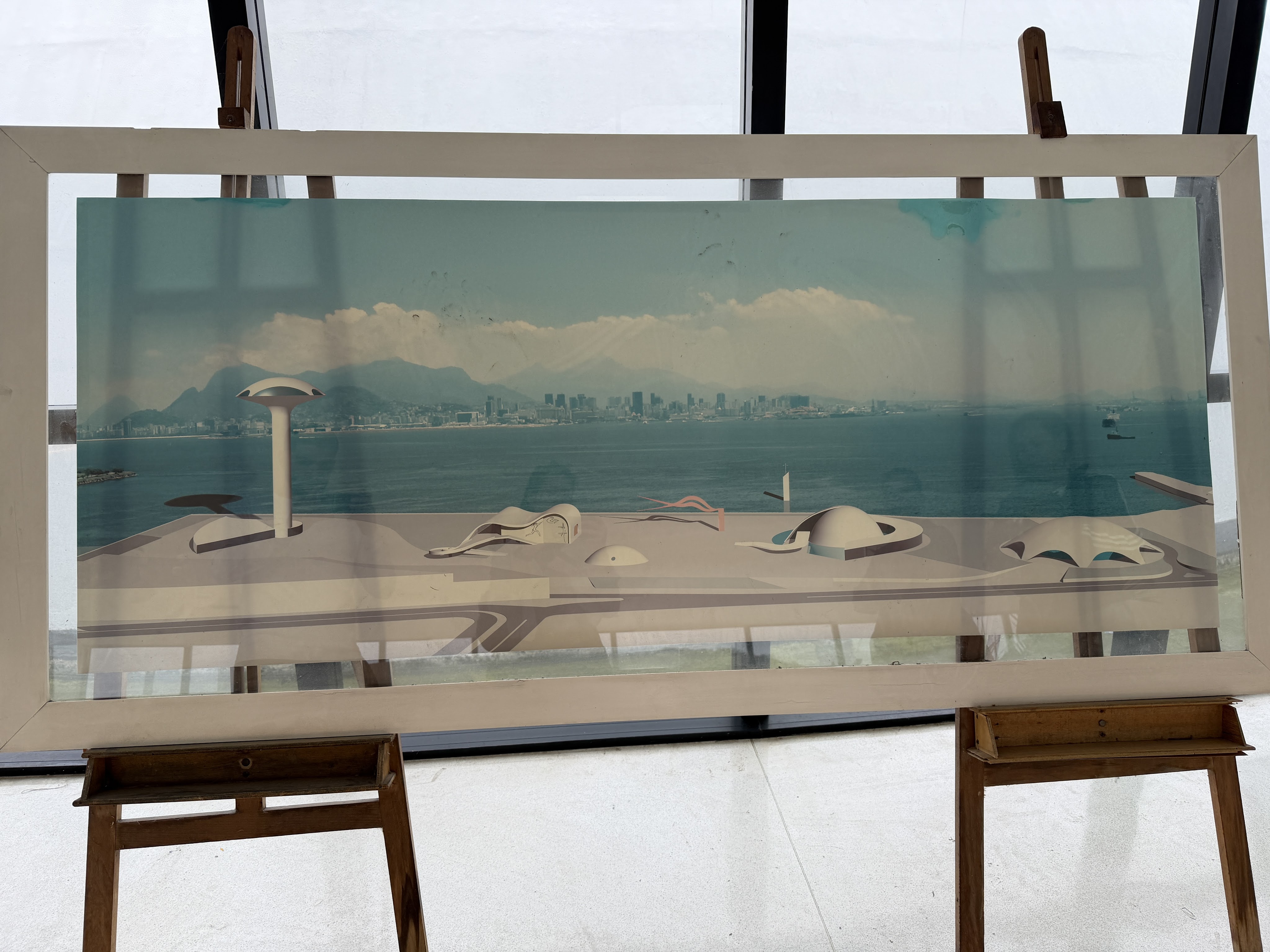
I was curious to inquire how close to the design date was to the construction date, as these buildings do feel in the time of the rise of modernism. But even the designs were of recent date:
In 1997, Niterói’s then-mayor, Jorge Roberto Silveira, approached Niemeyer (who was about to turn 90 years old) to design a new ferry station. Niemeyer, ever the visionary, looked at the abandoned waterfront lots and proposed something much grander: an entire corridor of architectural marvels
In comparison to the Museum of Tomorrow, also part of an effort to revitalize waterfronts of the Rio area, truthfully the Neimeyer effort here felt less successful likely because of its location in Niterói across the way. For his vision of a large democratic plaza, I think few living in Rio come to more than once a year, if that.
Visiting here left me wanting more and the impetus for this plaza of projects, the Niterói Contemporary Art Museum (1989–1991), delivers better. This is a great example of how pictures (and perhaps an LLM) cannot replace direct experience. You have to just go and see if for yourself.
Address: R. Jorn. Rogério Coelho Neto, s/n – Centro, Niterói – RJ, 24020-011, Brazil (Caminho Niemeyer)
Website: Visit Niteroi page
 ofallthespaces