
Intuitively a triangular mesh in 2 dimensions has a high clustering coefficient, many triangles. Where as a hub and spoke architecture or star has a low clustering coefficient- zero triangles. The effective closure of triangles supports the confluence of content that may be traveling along the network edges.
~ Chapter 3, Curious Minds: The Power of Connection
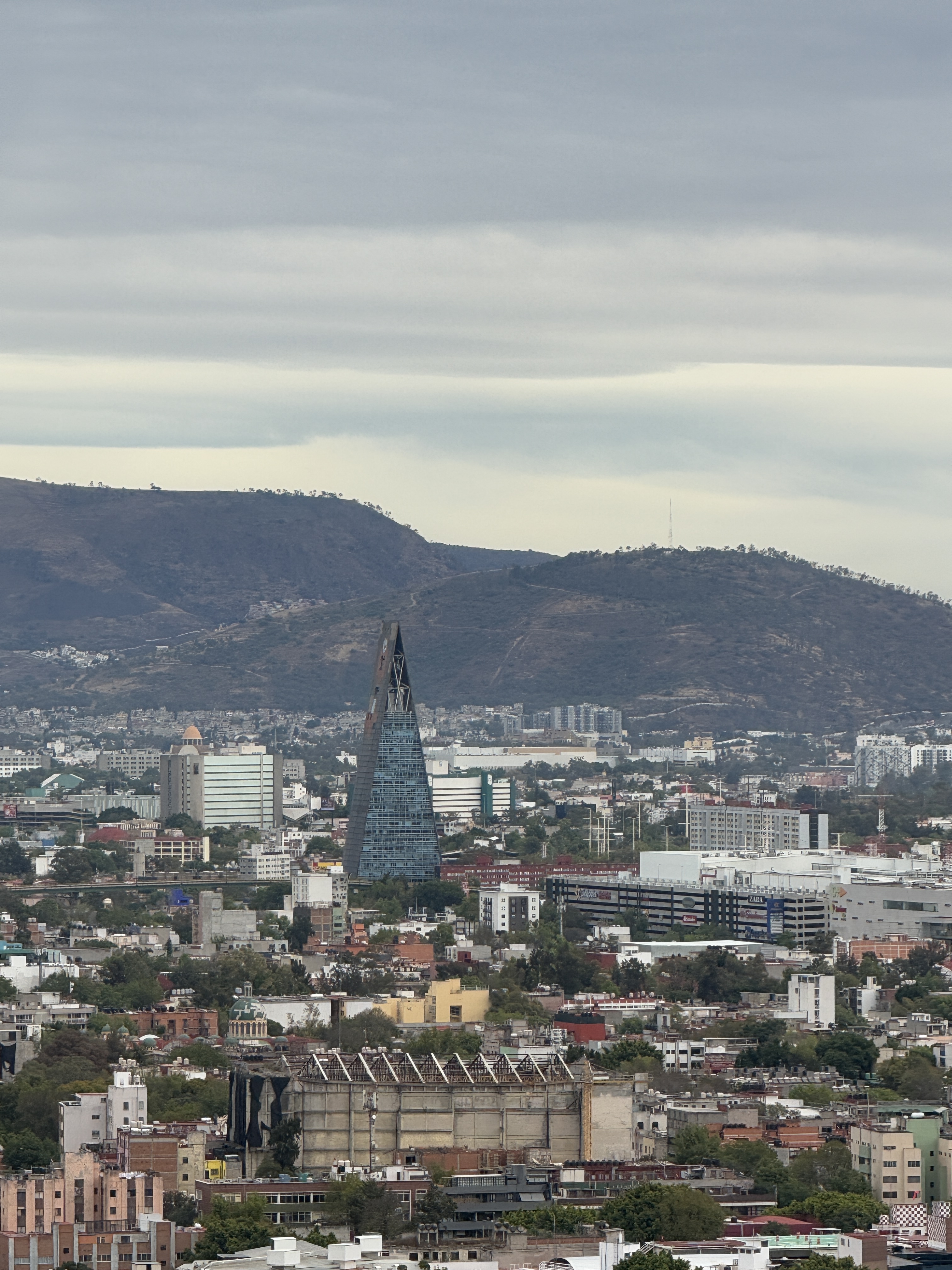
Torre Insignia has fascinated me upon first glance- it raises out of plain of average building heights- serving as a great landmark for orientation. Rare to find a building that is vertically triangular (the Transamerica Pyramid in San Francisco maybe being the only one to come to mind) as most triangular applications in design tend to be along the horizontal.

Seemingly close to Biblioteca Vasconcelos, I had forgotten that I wanted to visit and since I had time allowing I thought why not stretch my legs before sitting down to write. A straight line must certainly be faster than a curve, no? Well, disbelieving the walking navigation instructions – the straight line was neither quicker and definitely not more pleasant (having taking the curved path back for comparison). Further out from the historic and gentrified centers of town, this part of Mexico City felt more genuine to me. A city sprawled.

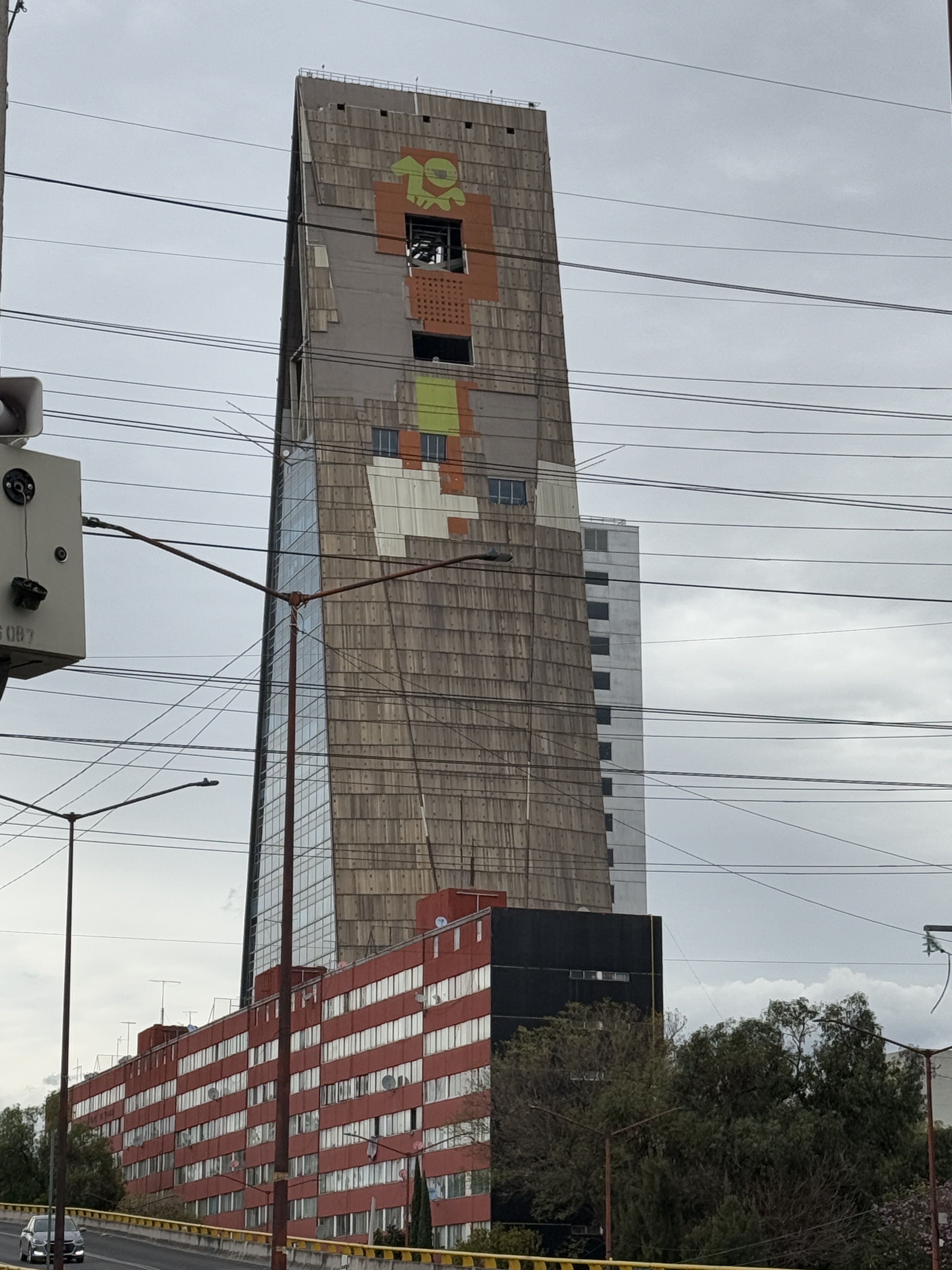
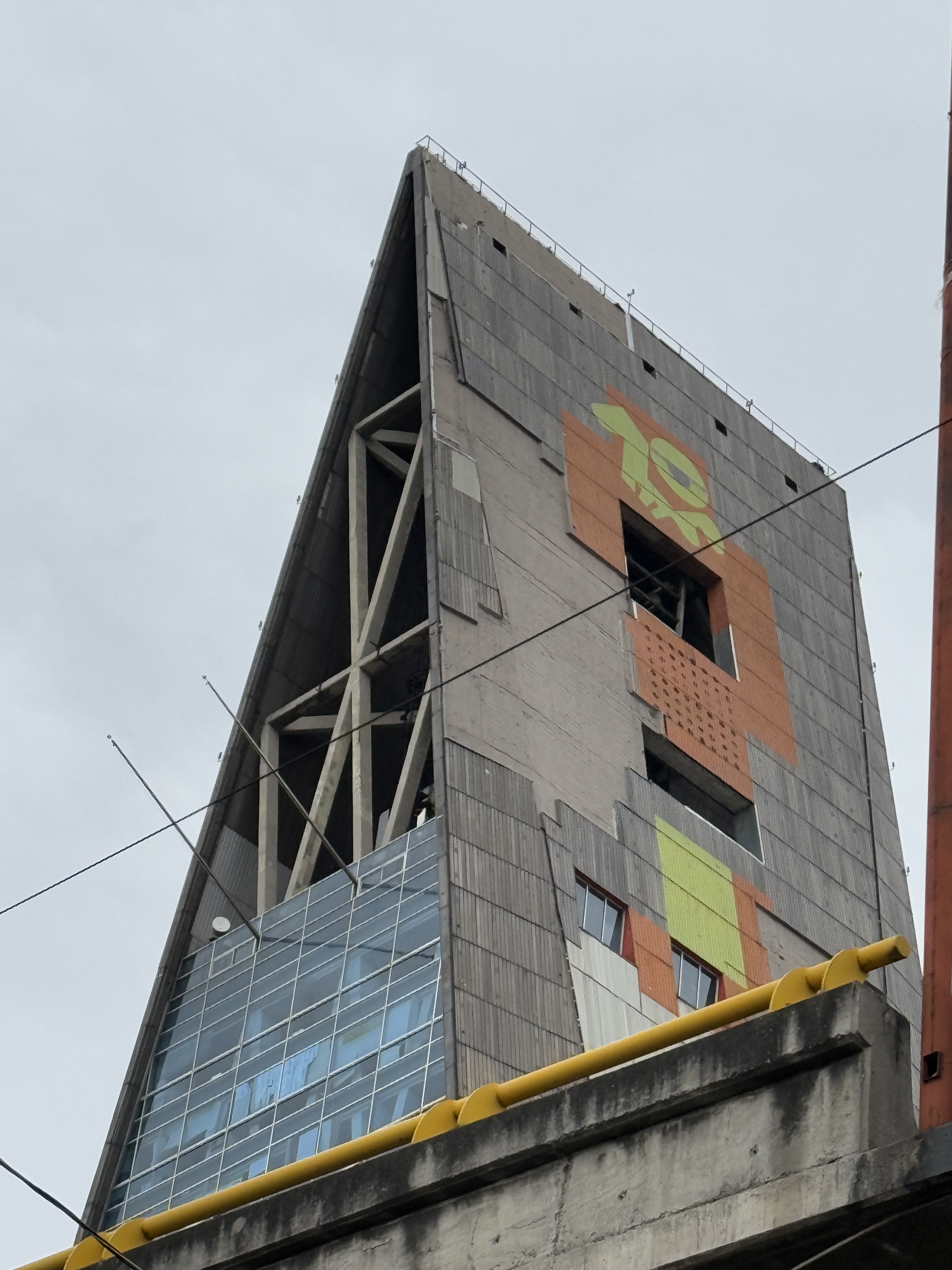
The photo above was about as close as I could get. It is a very heavily gated and guarded building and even taking this photo seemed at risk. From the view above one can see the structural supports crossing multiple floors allowing for the glass facade to minimize the disruption from mullions. How this building intersects with the ground is still an unanswered question after this visit. I recently finished a book called London: A History of 300 Years in 25 Buildings that I greatly enjoyed and the format, tone and level of detail would be a very welcome edition for Mexico City (with this building in that list of course).
I mentioned the Sapir-Whorf hypothesis in a previous post and I continue to come back again and again to how language influences how people think and perceive the world. We use the verb “triangulate” in common language (vs in mathematical) giving a tangibility to a cognitive process and action. In the article The use of triangulation in qualitative research, it refers to Patton from 1999 as a source saying “Triangulation refers to the use of multiple methods or data sources in qualitative research to develop a comprehensive understanding of phenomena.” We triangulate to determine a position, perhaps a conclusion or better yet an understanding and most importantly- in the most efficient manner. I have a new respect for triangles (of which this building subscribes) and I aim to understand these shapes of our neural network, however unpleasant but genuine.
Triangles guide the fruition of the mind.
~ Chapter 3, Curious Minds: The Power of Connection
p.s. We say “triangulate” and definitely “circulate” but never “quadrate” – oh, woe is thee for the square.
Address: Tlatelolco, 06900 Mexico City, CDMX, Mexico
Website: Atlas Obscura write up

 ofallthespaces